Egypt
 Libya
 Morocco
 Sudan
 Tunisia
 Benin
 Burkina Faso
 Cabo Verde
 Côte d'Ivoire
 Ghana
 Guinea
 Guinea-Bissau
 Liberia
 Mali
 Mauritania
 Niger
 Nigeria
 Senegal
 Sierra Leone
 The Gambia
 Togo
 Cameroon
 Central African Republic
 Chad
 DR Congo
 Equatorial Guinea
 Gabon
 Republic of the Congo
 São Tomé and Príncipe
 Burundi
 Comoros
 Djibouti
 Eritrea
 Ethiopia
 Kenya
 Madagascar
 Malawi
 Mauritius
 Mozambique
 Rwanda
 Seychelles
 Somalia
 South Sudan
 Tanzania
 Uganda
 Angola
 Botswana
 Eswatini
 Lesotho
 Namibia
 South Africa
 Zambia
 Zimbabwe
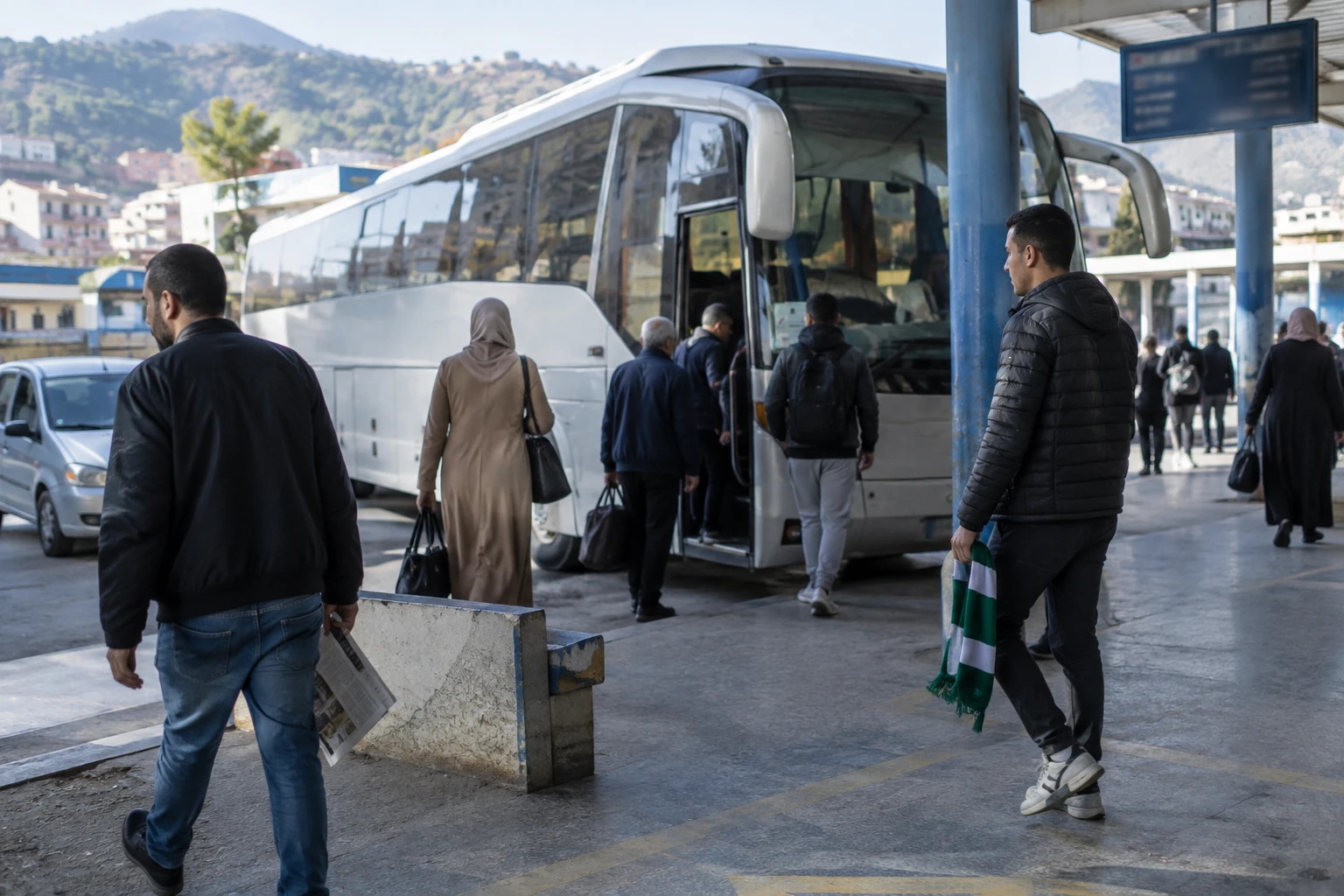
In a case at the intersection of justice, football and Franco-Algerian relations, those close to Christophe Gleizes are seeking support beyond media circles. As his detention approaches 500 days, Zinédine Zidane’s public comments have brought fresh attention to their appeal. They do not, however, change the journalist’s legal situation or the still uncertain outcome of any possible pardon.
A case linked to Kabylia and football
Christophe Gleizes travelled to Algeria in May 2024 to work on Jeunesse sportive de Kabylie (JSK), a club based in Tizi Ouzou, and the history of football in the region. He was arrested and placed under judicial supervision. On 29 June 2025, a court in Tizi Ouzou sentenced him to seven years in prison, notably for “apology for terrorism” and possession of publications deemed harmful to the national interest. His sentence was upheld on appeal on 3 December 2025. Reporters Without Borders traces the journalist’s conviction; the Associated Press reports that the appeal court upheld the sentence.
Algerian authorities accuse the journalist, among other things, of contacts and interviews with JSK officials, some of whom were linked to the Movement for the Self-Determination of Kabylie (MAK), which Algiers classified as a terrorist organisation in 2021. The defence and press freedom organisations dispute the significance attached to these exchanges, which they place within the scope of his journalistic work. It is important to distinguish established judicial facts from each side’s interpretations.
Kabylia, an Amazigh region in northern Algeria, has a distinctive political and cultural history. JSK has a significance there that extends beyond the pitch: its results and popular roots are part of a strong regional identity. This context helps explain the case’s political sensitivity without resolving the question of the journalist’s criminal liability.
Sports figures’ support: symbolism and real impact
Gleizes’s family has approached prominent football figures, including Zinédine Zidane, to raise the profile of his detention. After repeated appeals from his relatives, Zidane publicly expressed his support and said he hoped the journalist would be able to return to his family. Football officials and other sporting figures have also drawn attention to the case. RSF reports on these public statements and the campaign planned as the 500-day mark approaches.
This visibility has human and media value. It reminds people that a journalist remains separated from his loved ones and draws the attention of the sporting public far beyond newsrooms. But a message of support is neither a judicial decision nor a guarantee of clemency. The family, for its part, has continued its efforts with the Algerian and French authorities.
The case also took a new legal turn in 2026. On 5 May, the family announced that Gleizes was withdrawing his appeal to the Court of Cassation, a decision presented as potentially leaving open the possibility of a presidential pardon. That option rests with Algerian President Abdelmadjid Tebboune; it does not mean a pardon has been granted. Meanwhile, his relatives were able to visit him, an essential point of contact as his detention continues. Other media outlets, including L’Équipe, reported on the decision and the family’s efforts.
Bilateral relations under strain
The case comes as relations between Algiers and Paris are going through a period of acute tension. Political and historical disputes weigh on diplomatic exchanges, and the detention of a French citizen can become a bilateral issue. Caution is needed: nothing, on its own, justifies reducing the legal proceedings to a diplomatic lever. But the context is fuelling the family’s concern and making every public gesture more sensitive.
For the Algerian authorities, the case also concerns national security and the treatment of a movement they have banned. For Gleizes’s defenders, it raises a press freedom question: to what extent can interviews conducted for a report be treated as political endorsement? The debate therefore concerns the safeguards offered to journalists, Algerian and foreign alike, when they investigate subjects where sport, regional identity and politics converge.
The regional dimension is the Maghreb, rather than that of an economic community such as ECOWAS or SADC. Algeria is a member of the Arab Maghreb Union, a regional organisation whose activity remains limited. The case’s next steps will depend above all on any presidential decision and on how relations between Algiers and Paris develop. Zidane’s support may keep the case in the public eye; only an act by the competent authorities can change Gleizes’s situation.