Algeria
 Egypt
 Libya
 Morocco
 Sudan
 Tunisia
 Benin
 Burkina Faso
 Cabo Verde
 Côte d'Ivoire
 Ghana
 Guinea
 Guinea-Bissau
 Liberia
 Mali
 Mauritania
 Niger
 Nigeria
 Senegal
 Sierra Leone
 The Gambia
 Togo
 Cameroon
 Central African Republic
 DR Congo
 Equatorial Guinea
 Gabon
 Republic of the Congo
 São Tomé and Príncipe
 Burundi
 Comoros
 Djibouti
 Eritrea
 Ethiopia
 Kenya
 Madagascar
 Malawi
 Mauritius
 Mozambique
 Rwanda
 Seychelles
 Somalia
 South Sudan
 Tanzania
 Uganda
 Angola
 Botswana
 Eswatini
 Lesotho
 Namibia
 South Africa
 Zambia
 Zimbabwe
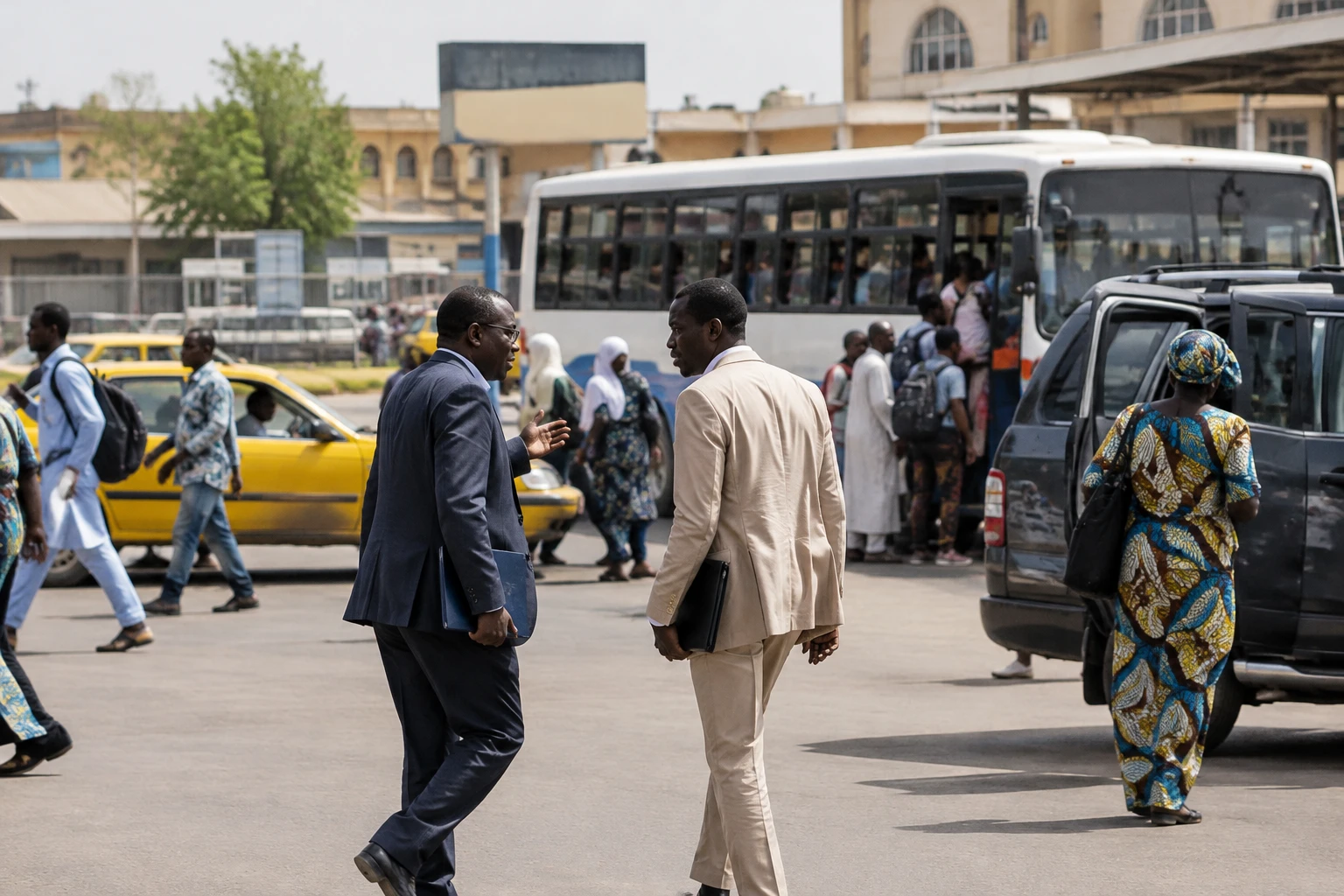
For N’Djamena, the question is no longer simply whether France will return to Chad’s military landscape. It is what conditions would allow cooperation to resume without restoring the former system of bases and permanent presence.
On 13 October 2026 in Paris, Presidents Mahamat Idriss Déby Itno and Emmanuel Macron took a step towards closer ties, following efforts made this year. Their defence ministers signed a declaration of intent on defence capabilities. The text sets out a framework for work, not the official return of French troops to Chad. Tchadinfos reports the areas cited by the authorities; practical arrangements have yet to be specified.
A recent break
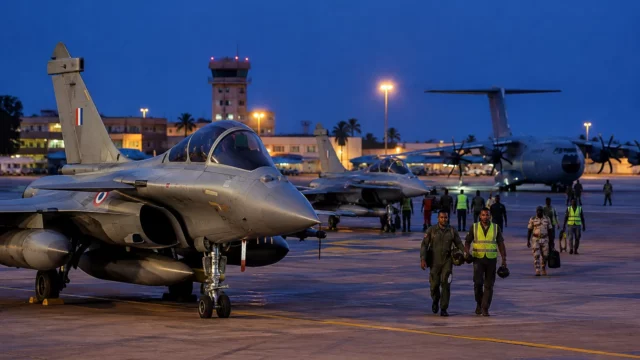
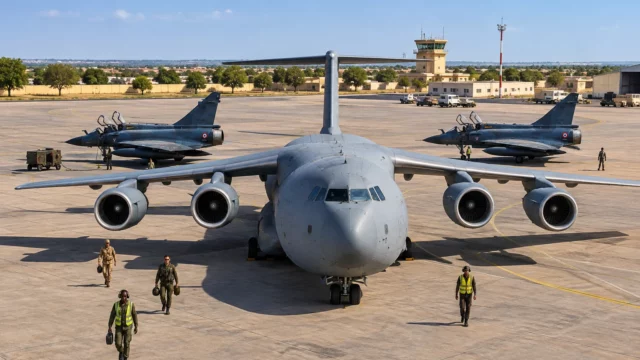
The significance of the signing becomes clear in light of the rupture in November 2024. The Chadian government then announced the end of its defence cooperation agreement with France. The last French forces left the country in early 2025. Paris says it handed back its facilities in N’Djamena, Faya and Abéché by 31 January. The timeline is also set out by the French foreign ministry.
The decision reflected Chad’s desire to redefine a partnership it considered in need of review, after decades of close military cooperation. It also came amid a regional context in which several states had called for French forces to leave. But Chad is not in the central Sahel: it is a Central African country, a member of CEMAC, the economic and monetary community bringing together six states in the sub-region, and a neighbour to multiple areas of tension.
The war in Sudan, which began in April 2023, is affecting border stability and humanitarian needs. Security tensions around the Lake Chad basin are another concern. In January 2026, the two presidents had already discussed regional issues, including the conflict in Sudan, at a meeting at the Élysée Palace. The joint communiqué issued in January gives an account of the meeting.
A framework announced, details still to be negotiated
The declaration signed on 13 October covers training, expertise, industry and defence technology. According to information published in N’Djamena, it is intended in particular to support the development of the capabilities of Chad’s armed forces. These terms encompass very different forms of cooperation: courses and training, technical exchanges, equipment or industrial support.
So far, no detailed timetable or scale of resources has been made public in the announcement of the signing. A declaration of intent sets out political direction; on its own, it is not enough to establish the obligations of a new defence agreement. The diplomatic rapprochement, now visible, must therefore be distinguished from its practical implementation on the ground.
This caution is all the more important because the French presence long extended beyond training alone. For years, France’s military presence in Chad served as a regional hub. Its end marked a clear break. The fact that the two governments are discussing defence again does not mean that this model will be restored.
The two capitals have already stepped up contacts in 2026. Mahamat Idriss Déby and Emmanuel Macron met in January, then at the Africa-France summit in Nairobi in May, before their talks on 13 October in Paris. Defence is also part of a broader revival of bilateral relations, which includes economic exchanges and investment. The report on the 13 October meeting details the steps in this rapprochement.
Sovereignty, security and tangible results
For the Chadian authorities, the challenge is to retain control over military partnerships and choose the areas in which external expertise can meet national needs. The content of future agreements, their transparency and oversight by Chadian institutions will therefore be decisive. N’Djamena can also compare offers from several partners, rather than depend on a single supplier or a single framework for cooperation.
For France, the rapprochement offers the possibility of maintaining defence ties in a region where its military presence has been substantially reduced. However, the resumption cannot be understood as a simple return to the past. The departure of the forces, following the denunciation of the agreement, has changed relations between the two states. Any lasting cooperation will have to take account of this sovereign decision and Chadian expectations.
The effects will not be measured solely by relations between presidents and military chiefs. Equipment choices affect public budgets, the maintenance of materiel and the forces’ ability to operate across the country. Training can strengthen national skills, but its value will depend on continuity and how well it matches the missions assigned to units. For residents, particularly in areas exposed to violence and displacement, the tangible measure will remain security, although military assistance cannot replace political, civilian and humanitarian responses.
A signal that reaches beyond bilateral relations
This resumption of dialogue comes as defence partnerships in Africa are evolving. Several governments are seeking to diversify their support and redefine the conditions for foreign military presence. Chad illustrates this negotiation: the 2024 rupture did not prevent a subsequent rapprochement, but it shifted the debate towards control over the arrangements and the definition of shared interests.
The regional significance will now depend on what happens next. The next developments to watch are the possible publication of more detailed agreements, the areas actually selected and how the Chadian authorities report on them. Until these details are established, the 13 October declaration is an important political signal, but not evidence of a return of French bases or of an operational commitment already agreed.