Algeria
 Egypt
 Libya
 Morocco
 Sudan
 Tunisia
 Benin
 Burkina Faso
 Cabo Verde
 Côte d'Ivoire
 Ghana
 Guinea
 Guinea-Bissau
 Liberia
 Mauritania
 Niger
 Nigeria
 Senegal
 Sierra Leone
 The Gambia
 Togo
 Cameroon
 Central African Republic
 Chad
 DR Congo
 Equatorial Guinea
 Gabon
 Republic of the Congo
 São Tomé and Príncipe
 Burundi
 Comoros
 Djibouti
 Eritrea
 Ethiopia
 Kenya
 Madagascar
 Malawi
 Mauritius
 Mozambique
 Rwanda
 Seychelles
 Somalia
 South Sudan
 Tanzania
 Uganda
 Angola
 Botswana
 Eswatini
 Lesotho
 Namibia
 South Africa
 Zambia
 Zimbabwe
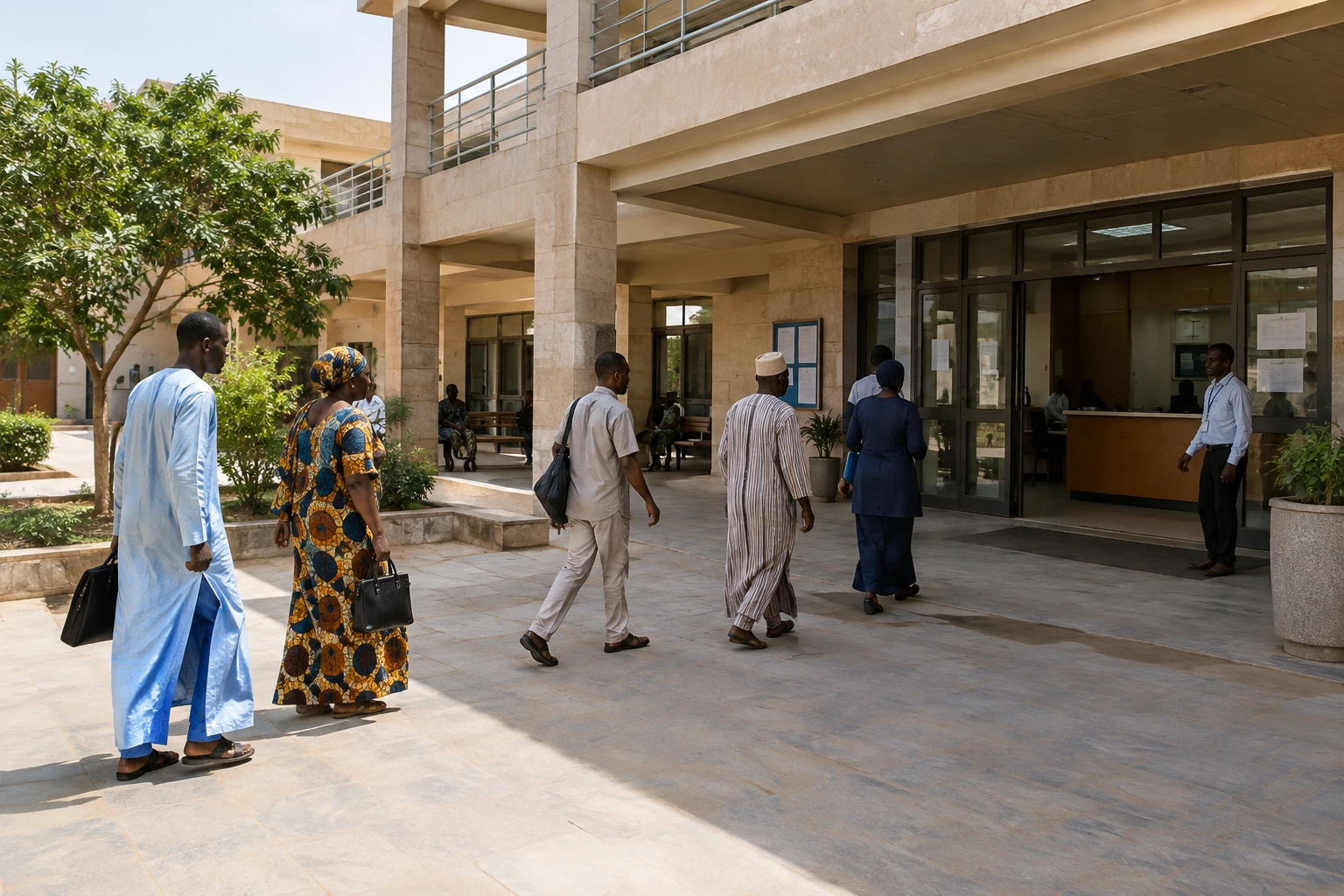
For families fleeing violence in the central Sahel, the Malian border can become a place of refuge. But hosting uprooted people while hundreds of thousands of Malians remain displaced raises a practical question: how can some be protected without leaving others without essential services?
A country of refuge and departure
Mali is caught up in displacement that crosses borders. It hosts people arriving notably from Burkina Faso. At the same time, hundreds of thousands of Malians are still in exile or have been forced to leave their homes within the country.
This reality is part of a regional crisis. Burkina Faso, Mali and Niger form the heart of the central Sahel, where insecurity, climate shocks and weakening livelihoods are driving families to leave. UNHCR, the United Nations refugee agency, estimates that nearly four million people are displaced across the three countries. Of these, more than 818,000 are refugees or asylum seekers.
The regional political context also matters. Mali, Burkina Faso and Niger have left ECOWAS, the West African economic community, and strengthened their cooperation within the Alliance of Sahel States. Displacement, however, does not stop at institutional borders: protection, registration and aid require coordination between neighbouring countries.
More than 322,000 refugees and asylum seekers
As at 30 September 2026, Mali had 322,584 refugees and asylum seekers, as well as 414,524 people displaced within the country. These figures were presented in Geneva at the 77th session of UNHCR’s Executive Committee, held from 12 to 16 October. The Malian government and the APA news agency report the same figures.
In one month, the number of refugees and asylum seekers hosted rose by 5,396. The total number of internally displaced people remained stable compared with the previous month. These categories describe different situations: refugees have crossed an international border, while internally displaced people have fled their homes without leaving Mali.
The country also had 343,091 Malian refugees abroad and 90,648 people who had returned, according to figures presented by the authorities. Repatriation does not necessarily mean that a family has regained stable living conditions: return may still require housing, access to services and livelihoods.
The Koro region in central Mali illustrates the pressure on local communities. UNHCR counted about 86,000 Burkinabè refugees there in July 2026. Their presence directly affects host communities, particularly in terms of access to water, land, healthcare and economic activity. Needs are therefore not distributed solely between the capital and the regions: they are also concentrated in localities where services are already under strain.
Beyond the figures, the challenge of services and return
In Geneva, Mali’s Minister of Territorial Administration, Issa Ousmane Coulibaly, reaffirmed Bamako’s commitment to hosting refugees, voluntary repatriation and the reintegration of returning Malians. These are distinct objectives, requiring responses tailored to the people concerned and the places where they settle.
The government has also highlighted the adoption, in 2024, of a law on stateless status and the creation of a dedicated national commission. Statelessness means not being recognised as a citizen by any state. This legal framework addresses another aspect of protection, but does not replace daily access to healthcare, education and security.
The effects differ among populations. Refugees need protection and services in their host country. Internally displaced people often have to rebuild their lives elsewhere in Mali. Returning families may find that infrastructure or livelihoods in their home region have been disrupted. Residents of host areas share these services and resources, but their own needs do not disappear.
The ability to sustain these responses also depends on available funding. As at 9 October, UNHCR said its Sahel response was funded at just 27% of the $329.6 million needed for the year. This regional shortfall alone cannot measure the needs of each Malian municipality, but it points to the risk of cuts to protection activities and services.
A regional response to watch
For the Malian authorities, the challenge is to combine hosting, voluntary returns and protection for people displaced within their own territory. For humanitarian partners and neighbouring countries, the task is to support solutions that do not simply shift pressure from one border to another.
What happens next will depend in particular on turning the commitments announced in Geneva into concrete resources, and on coordination among the states of the central Sahel. The next assessment will show whether arrivals continue to rise and whether returns are accompanied by lasting reintegration. For now, the figures are a reminder that Mali is simultaneously a country of refuge, internal displacement and exile.
Sources consulted: Malian government statement on the UNHCR session, APA report on September figures, UNHCR press briefing on displacement in the central Sahel and earlier data published by L’Essor.