
 Algeria
 Egypt
 Libya
 Morocco
 Sudan
 Tunisia
 Benin
 Burkina Faso
 Cabo Verde
 Côte d'Ivoire
 Ghana
 Guinea
 Guinea-Bissau
 Liberia
 Mali
 Mauritania
 Niger
 Nigeria
 Senegal
 Sierra Leone
 The Gambia
 Togo
 Cameroon
 Central African Republic
 Chad
 Equatorial Guinea
 Gabon
 Republic of the Congo
 São Tomé and Príncipe
 Burundi
 Comoros
 Djibouti
 Eritrea
 Ethiopia
 Kenya
 Madagascar
 Malawi
 Mauritius
 Mozambique
 Rwanda
 Seychelles
 Somalia
 South Sudan
 Tanzania
 Uganda
 Angola
 Botswana
 Eswatini
 Lesotho
 Namibia
 South Africa
 Zambia
 Zimbabwe
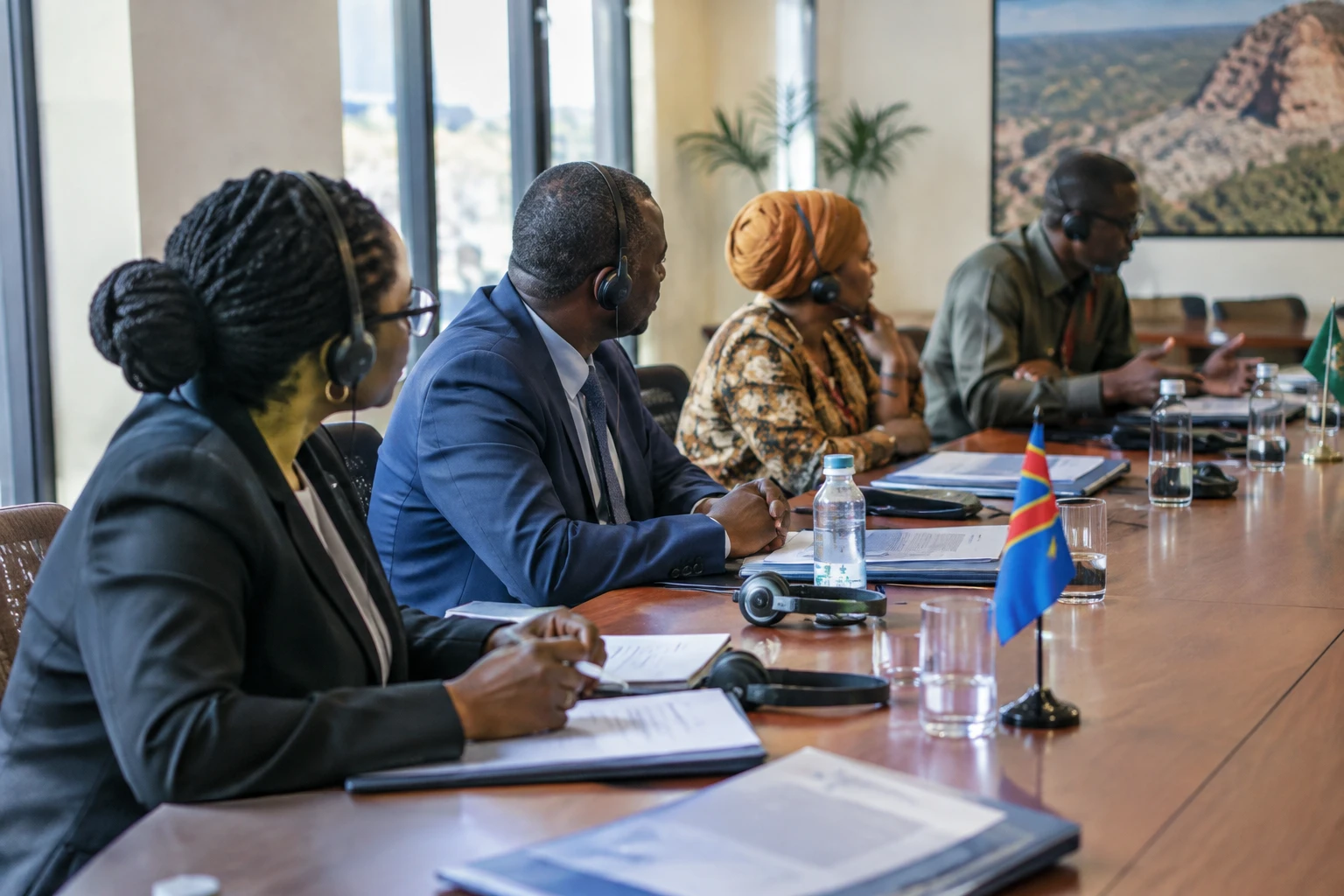
At Upemba, the issue goes beyond the boundary between a mining concession and a protected area: it concerns water quality, local livelihoods and the Congolese state’s ability to enforce its rules. In the south-east of the Democratic Republic of the Congo, a coalition of organisations is calling on the authorities to respond to reported extractive activities around the park.
A park at the crossroads of three provinces
Established in 1939, Upemba National Park stretches across the provinces of Lualaba, Haut-Katanga and Haut-Lomami. It is home to wild zebras, savannah elephants and buffalo, among other species. The Lufira basin, associated with the park, is recognised as a wetland of international importance under the Ramsar Convention.
This ecological wealth is located in a region where mining plays a major role in the economy. Copper and cobalt feed supply chains that extend well beyond the DRC’s borders. But national economic returns alone do not show who bears the environmental risks: communities living near sites, waterways and ecosystems may be the first affected.
Upemba is also located in a regional area where conservation and natural-resource issues do not stop at borders. The Democratic Republic of the Congo is a member of the Southern African Development Community (SADC), a regional organisation that includes several neighbouring countries. Protecting watersheds and biodiversity therefore also involves regional cooperation.
Reported activities, but boundaries to establish
Twenty-four civil society organisations and environmental associations are calling on the authorities to suspend the mining activities they say are taking place in and around the park. They say they have been monitoring the situation for several months and refer to gold and coltan exploration and extraction operations, as well as the presence of heavy machinery and infrastructure.
The organisations are particularly concerned about deforestation and the pollution of rivers by chemicals used to process minerals. Their concerns relate to possible effects on animal and aquatic species, as well as on people who depend on these waters. These risks have been raised by the coalition; the public information consulted does not yet provide an independent assessment to measure their extent on the ground.
One point requires particular attention: the available information does not describe the situation in the same way. The coalition reports activities in areas of the park and its surroundings. The park’s communications officer, for his part, says mining activities concern peripheral areas, not the park’s core. This divergence makes it necessary to verify precisely which boundaries are involved, whether any mining permits exist and what operations are actually being carried out.
In a report published on 2 October, Radio Okapi said the organisations had also called for an investigative mission to be sent. The date of the correspondence varies across the available accounts: the text provided for this reconstruction refers to 8 October, while Radio Okapi says it received the letter on 1 October. The exact date it was sent is therefore not established by this information.
The law and on-the-ground oversight
The Congolese mining framework provides for restrictions in protected areas. The Mining Regulations name national parks, including Upemba, and state that no mining or quarrying rights may be granted there under the conditions they define. The central question is therefore whether the reported activities are taking place within the park’s legal boundaries or in peripheral areas, and on what administrative basis they are being conducted.
The park’s management says an development and management plan is being implemented to address the threats. The existence of a plan, however, does not in itself resolve disputes over the activities observed. A joint mission involving the relevant agencies, the park and civil society representatives could clarify boundaries, check permits and document the alleged impacts. This is an issue of public oversight as much as conservation.
A blanket suspension would have consequences for the operators and workers concerned. Conversely, a lack of oversight could expose neighbouring populations to damage that would be difficult to repair if waterways or habitats were affected. A sound decision should therefore be based on verifiable data and distinguish activities inside the park from those taking place around its boundaries, without conflating exploration, industrial mining and artisanal work.
For residents, the issue is not simply a choice between protecting nature and economic activity. Transparency over permits, environmental checks and risks to water is essential to understanding who benefits from resources and who bears the consequences. The next developments to watch are the authorities’ response to the coalition’s request, clarification of the areas concerned and the findings of any inspections.
A test of governance for the region
The Upemba case is part of a broader debate in southern and central Africa: how to reconcile the extraction of minerals sought around the world with the protection of territories and resources on which communities depend. For the DRC, the question is particularly pressing in the south-eastern mining provinces, where concession governance and enforcement of environmental rules are crucial.
In Kinshasa, an official response based on on-the-ground checks would help move beyond contradictory statements. For the provinces concerned, it could establish whether activities are taking place inside the park or on its outskirts and specify the measures required. At regional level, the quality of Upemba’s management is a reminder that preserving natural environments and conducting extractive activities are also shared responsibilities among neighbouring states.



