Algeria
 Egypt
 Libya
 Morocco
 Sudan
 Benin
 Burkina Faso
 Cabo Verde
 Côte d'Ivoire
 Ghana
 Guinea
 Guinea-Bissau
 Liberia
 Mali
 Mauritania
 Niger
 Nigeria
 Senegal
 Sierra Leone
 The Gambia
 Togo
 Cameroon
 Central African Republic
 Chad
 DR Congo
 Equatorial Guinea
 Gabon
 Republic of the Congo
 São Tomé and Príncipe
 Burundi
 Comoros
 Djibouti
 Eritrea
 Ethiopia
 Kenya
 Madagascar
 Malawi
 Mauritius
 Mozambique
 Rwanda
 Seychelles
 Somalia
 South Sudan
 Tanzania
 Uganda
 Angola
 Botswana
 Eswatini
 Lesotho
 Namibia
 South Africa
 Zambia
 Zimbabwe
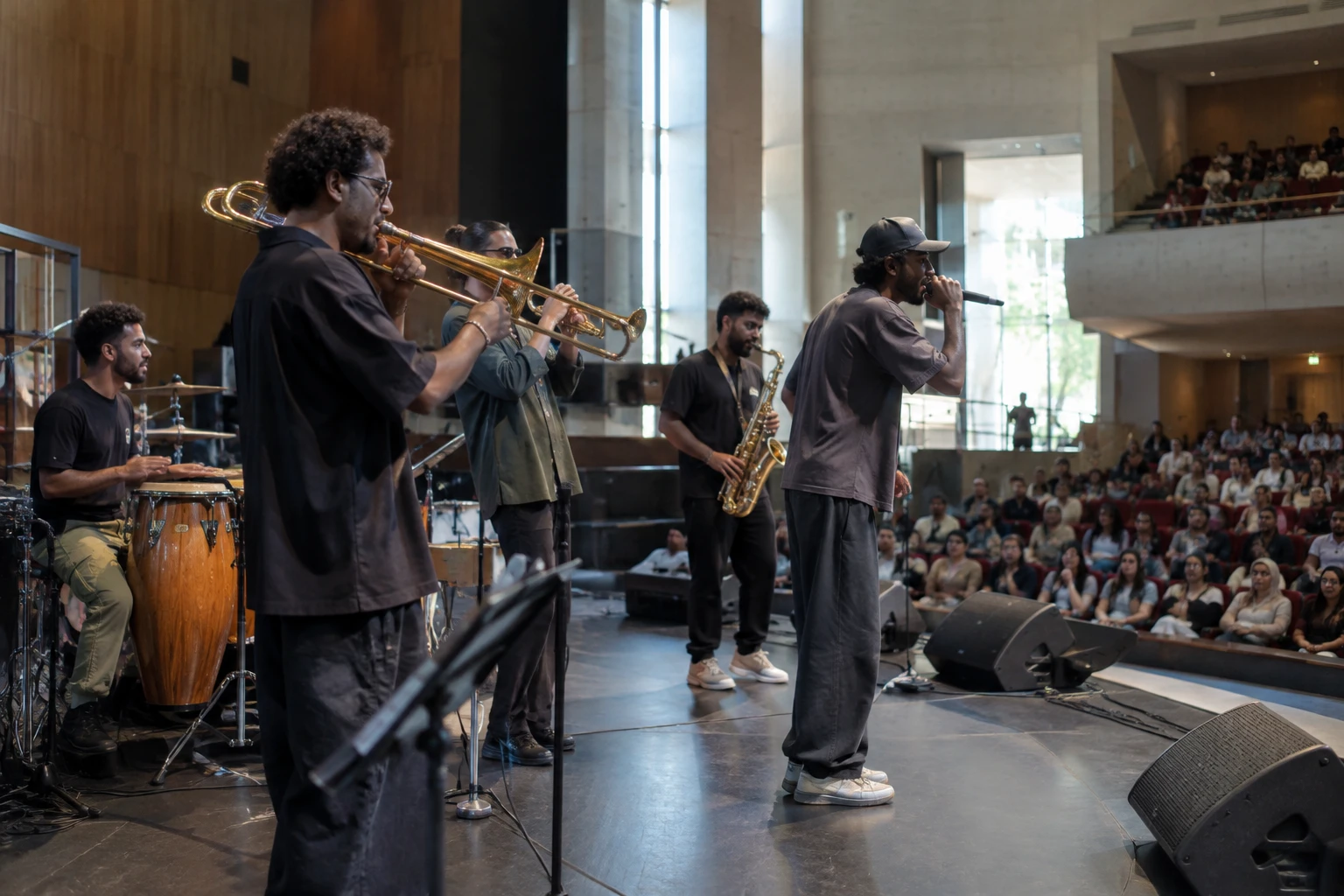
In Tunis, a rapper flanked by twenty musicians, a metal band infused with North African sounds and a show blending pop, electro and Arabic music set the tone: the Carthage Music Days are backing Tunisian creativity while opening it up to international exchange. This edition also highlights a practical question: how can a festival become a lasting launchpad for artists?
Tunisian artists take centre stage in Tunis
The 11th edition of the Carthage Music Days (JMC) took place from 3 to 10 October 2026, after nearly two years without a new edition. The event brought together projects from 15 countries. Of 378 applications, 26 were selected for showcases, short performances intended in particular to introduce artists to industry professionals.
At least 60% of the programme was reserved for Tunisian artists. This choice does not shut out outside influences; it puts the country’s creations at the heart of a broader musical gathering, spanning African, Arab and international scenes. The selection figures and the share allocated to Tunisian artists were reported by the organisers and the Tunisian press.
Among the acts, Tunisian rapper Kaïs Kekli, known as VIPA, presented “OBOS – One Band One Sound” at the Opera Theatre in the City of Culture. The show brought together 20 musicians and was performed to a crowd reported to have filled the 1,800-seat venue. The project brings rap, brass, voices and rhythms into conversation. For VIPA, the audience completed the collective: “there was only one element left, and that element was the audience”.
Tunisian band Saharage, meanwhile, presented “Apex Africa”, in which distorted guitars and North African sounds accompany a science-fiction story. Molka Aouij presented “Back To My Roots”, a show combining Arabic music, electro, pop, dance and visual storytelling. These projects reflect different approaches, but share a desire to bring local influences into contemporary formats.
A festival caught between showcase and launchpad
The JMC are part of a Tunisian cultural calendar shaped by several major events dedicated to cinema, theatre and music. Their significance, therefore, goes beyond staging concerts in Tunis. For emerging artists, selection can bring visibility, professional contacts and opportunities to perform. But appearing on stage does not, by itself, guarantee regular income or a tour.
The distinction matters in a sector where opportunities are not always distributed evenly. Established artists often have networks and an existing audience. Younger acts depend more on selection schemes, access to venues and links with producers. Moreover, an event concentrated in the capital does not automatically reach audiences in the regions. The programme can become a more lasting lever only if contacts made in Tunis lead to further dates, partnerships and opportunities to work elsewhere.
The prominence given to Tunisian projects is therefore a useful, but incomplete, indicator. The number of applications received points to interest in the festival; on its own, it cannot measure musicians’ working conditions or the economic impact. Following the selected projects after the JMC will say more about the festival’s role as a professional platform.
Regional exchanges to strengthen
Tunisia is a member of the Arab Maghreb Union (AMU), a regional organisation in North Africa. Yet cultural cooperation does not follow automatically from membership of an institutional framework. It is built through the movement of artists, works and professionals, as well as concrete partnerships between festivals and venues.
The participation of 15 countries gives the JMC an international dimension. For Tunisian artists, these encounters can open up networks beyond Tunis and national borders. For audiences, they bring different scenes into contact without reducing Tunisian creativity to a mere showcase. In future editions, the challenge will be to turn this openness into sustained collaborations and better connect the capital’s event with scenes in the regions.
The selection of 26 projects from 378 applications sets out an ambition, not yet a lasting record of achievement. What follows will be measured by artists’ ability to find stages, partners and audiences after the festival. That is where the JMC can prove their worth: not only by presenting Tunisian music in Tunis, but by helping it circulate across the region and beyond.