Algeria
 Egypt
 Libya
 Morocco
 Sudan
 Tunisia
 Benin
 Burkina Faso
 Cabo Verde
 Côte d'Ivoire
 Ghana
 Guinea
 Guinea-Bissau
 Liberia
 Mali
 Mauritania
 Niger
 Nigeria
 Senegal
 Sierra Leone
 The Gambia
 Togo
 Cameroon
 Central African Republic
 Chad
 Equatorial Guinea
 Gabon
 Republic of the Congo
 São Tomé and Príncipe
 Burundi
 Comoros
 Djibouti
 Eritrea
 Ethiopia
 Kenya
 Madagascar
 Malawi
 Mauritius
 Mozambique
 Rwanda
 Seychelles
 Somalia
 South Sudan
 Tanzania
 Uganda
 Angola
 Botswana
 Eswatini
 Lesotho
 Namibia
 South Africa
 Zambia
 Zimbabwe
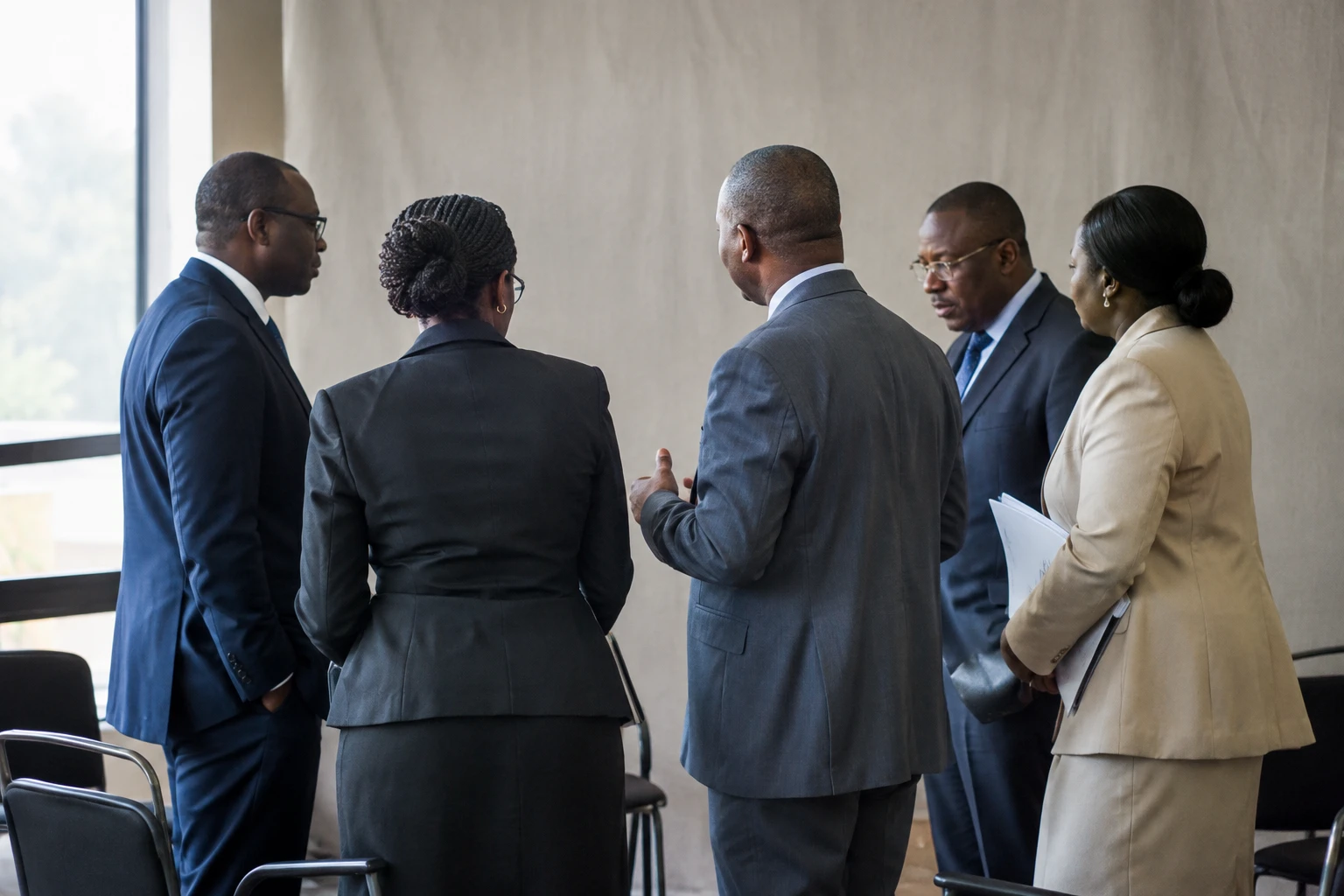
In the Democratic Republic of the Congo (DRC), the question of national dialogue now pits two competing narratives against each other: one of a process led by the authorities and another of consultations that the opposition considers insufficiently inclusive. Joseph Kabila’s return to the public stage on Friday 9 October 2026 has brought this dispute back to the fore, as the security crisis in the east remains a national and regional issue.
A dialogue whose rules remain contested
The controversy concerns not only the principle of dialogue, but also its participants, agenda and guarantees that its conclusions will be implemented. These questions carry particular weight in a country where political and security crises intersect, and where mediation initiatives come and go without durably resolving disputes.
The DRC is a member of the Southern African Development Community (SADC) and the East African Community (EAC), two regional organisations involved in diplomatic efforts around the crisis in the east. The African Union has also appointed facilitators to support the peace process. On 9 October, their panel arrived in Kinshasa, according to an Opinion Info report on the context of the address.
These regional and continental efforts do not erase the domestic debate. On the contrary, they make the question of how they relate to dialogue among Congolese more pressing: who can take part, and how can discussions be prevented from having no impact on security and political life?
Kabila’s accusations and the government’s response
In an address shared on social media on 9 October, Joseph Kabila described a national situation that he considers to have deteriorated. The former president criticised the handling of the war in the east and violations of civil liberties, without directly naming his successor, Félix Tshisekedi. He also said that his proposals made in May 2025 had not been taken into account and called for inclusive national dialogue.
According to the Congolese media outlet UNE.CD, the address lasted about 20 minutes. Kabila said he would set out his approach in the coming days or weeks. The announcement nevertheless leaves the substance of his proposals, and the conditions under which he would accept a consultation process, unclear.
Patrick Muyaya, the government spokesman, responded the same day in a post on X. He called Kabila a “man of the past” and said he had “nothing else to offer but chaos”. He also accused him of links to the AFC/M23, a politico-military coalition associated with the March 23 Movement. These are the minister’s accusations; they do not, in themselves, constitute an independent finding about the former president’s responsibility.
Muyaya also defended the dialogue led by Félix Tshisekedi, which the authorities present as a means of restoring peace and preserving territorial integrity. The Congolese media outlet Cable.cd reported his response. An earlier statement by the minister, on 17 July according to the information available, said that those who refused to publicly denounce the Rwandan aggression would not be included. This position could exclude Kabila’s camp, but the final arrangements for participation remain to be clarified.
Confrontation compounded by the court case
The political dispute is also unfolding against the backdrop of an exceptional legal case. On 30 September 2025, the High Military Court sentenced Joseph Kabila to death in absentia, including for treason and participation in an insurrectionary movement. The verdict was reported by the Congolese news agency ACP and by Associated Press. Kabila was not present at the trial; his camp challenged the proceedings and denounced the decision as politically motivated.
On 30 April 2026, the US Treasury announced sanctions against the former president, accusing him of supporting the AFC/M23. This is the justification put forward by Washington, not a Congolese court ruling on the alleged actions. The US Treasury statement confirms the date and stated grounds for the sanctions.
The layering of proceedings, sanctions and public accusations narrows the space for trust between the camps. It also raises a question of method: can a dialogue bring together actors when some dispute the legitimacy of the process, while the government highlights accusations of support for a rebellion? The answer will depend as much on the agreed rules as on the parties’ ability to distinguish political debate from criminal responsibility.
Issues beyond Kinshasa
The consequences are not limited to leaders. For people in the east, diplomatic and political discussions matter first and foremost if they help reduce violence and displacement. In Kinshasa, they affect freedom of expression, the place of the opposition and trust in institutions. For businesses and workers, political uncertainty can complicate activity, while security disruptions directly affect local economies in the areas concerned.
The presence of the EAC, SADC and African Union facilitators also underscores that the crisis extends beyond the DRC’s borders. Regional responses must nevertheless take account of the positions of Congolese actors and tensions between neighbouring states, without reducing the conflict to a single external rivalry.
The next step, then, will be less about another statement than about practical clarification: who organises the dialogue, who takes part, what subjects are discussed and how its decisions would be implemented? Joseph Kabila has promised to set out his proposals in detail. The government, for its part, says it is pursuing its own process. Until the two efforts converge on mutually accepted rules, dialogue will remain both a political rallying cry and a test of the DRC’s institutions’ credibility.