
 Algeria
 Egypt
 Libya
 Morocco
 Sudan
 Tunisia
 Benin
 Burkina Faso
 Cabo Verde
 Ghana
 Guinea
 Guinea-Bissau
 Liberia
 Mali
 Mauritania
 Niger
 Nigeria
 Senegal
 Sierra Leone
 The Gambia
 Togo
 Cameroon
 Central African Republic
 Chad
 DR Congo
 Equatorial Guinea
 Gabon
 Republic of the Congo
 São Tomé and Príncipe
 Burundi
 Comoros
 Djibouti
 Eritrea
 Ethiopia
 Kenya
 Madagascar
 Malawi
 Mauritius
 Mozambique
 Rwanda
 Seychelles
 Somalia
 South Sudan
 Tanzania
 Uganda
 Angola
 Botswana
 Eswatini
 Lesotho
 Namibia
 South Africa
 Zambia
 Zimbabwe
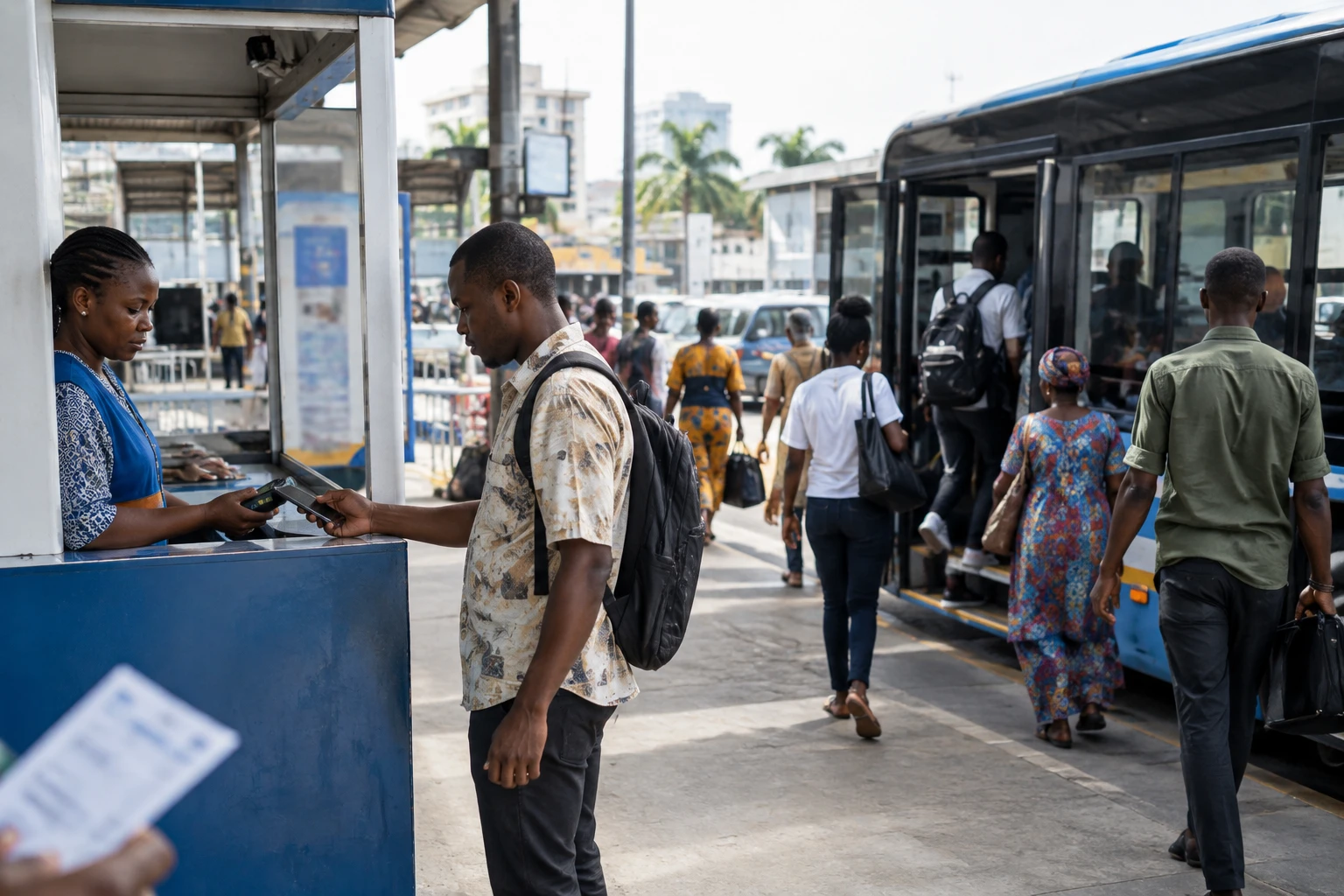
A mobile wallet can receive a transfer in seconds. But getting suitable credit, insuring a business or saving on good terms is another matter. It is in this shift from payments to more comprehensive financial services that part of the battle for financial inclusion in Côte d’Ivoire is now being fought.
On 6 October 2026, in Abidjan-Plateau, Ivorian authorities launched a support project for financial technology companies, or fintechs. The initiative aims to strengthen a sector that is already prominent in everyday use but still faces obstacles related to funding, skills and regulation.
Digital use is growing rapidly
Côte d’Ivoire is part of the West African Economic and Monetary Union (UEMOA), where the BCEAO oversees payment services and electronic money, among other areas. This regional framework matters for start-ups: their innovations must meet local needs while complying with rules shared across several markets.
The project was launched by the Ministry of Economy, Finance and Budget through the Agency for the Promotion of Financial Inclusion in Côte d’Ivoire (APIF-CI). It is supported by the African Development Bank (AfDB) under the Programme to Support the Improvement of the Business Climate in Côte d’Ivoire, or PACA-CI. APIF describes the initiative as support for fintech companies’ technical and managerial capabilities.
The growth of digital payments provides an immediate backdrop. Data attributed to the BCEAO for Côte d’Ivoire indicate that the density of electronic money service points rose from 574 per 1,000 sq km in 2019 to 1,325 in 2024. The rate of use of these services is said to have risen over the same period from 61% to 84.2%. These indicators show that services are spreading, but do not mean that every person has an active account or uses one regularly.
Across the UEMOA, the central bank confirms that digital activity increased in 2024: accounts, merchant locations and transactions all grew across the union. These regional figures should not, however, be confused with data specific to Côte d’Ivoire. The distinction also highlights that a network of service points and effective access to useful products are two different things.
Beyond money transfers
The authorities want to help fintechs diversify their offerings, which remain heavily associated with payments and transfers. The potential is broader: facilitating savings, providing management tools for small businesses or improving access to certain financial services. But moving into these new products requires skills, capital and regular dialogue with supervisory authorities.
At the launch, Dely Soumahoro, a technical adviser representing the minister, highlighted the role of mobile technologies, data, digital platforms and artificial intelligence in reducing barriers to access. This statement sets out the government’s ambition; it does not in itself demonstrate that the tools concerned have already been deployed on a large scale or benefit different groups equally.
A World Bank assessment of Côte d’Ivoire’s ecosystem had already identified difficulties with funding, commercial and digital skills, and a complex regulatory environment for start-ups. The project launched in October therefore addresses a recognised challenge. Its test will be whether the support announced can be turned into concrete solutions suited to companies with different needs and capabilities.
Financial inclusion figures must also be interpreted precisely. APIF reports a rate of 58% in 2024, compared with 41% in 2017 and 51% in 2021, based on the Global Findex 2025. This is an indicator of access to financial services, distinct from the rate of electronic money use. The datasets and definitions are therefore not interchangeable.
The national average may also conceal differences between urban and rural areas, women and men, or formal businesses and activities that operate mainly in cash. In its 2022 report on financial inclusion, APIF had already noted differences by gender and place of residence. Digital coverage is not enough if costs, network quality, digital literacy or access to credit remain obstacles.
A test for the regional ecosystem
For users, the practical question is whether new services will be accessible, reliable and affordable. For small businesses, they could simplify some payments or cash-flow management, provided the products meet their needs. For fintechs, support will also need to clarify compliance requirements and facilitate access to skills and funding, without weakening customer protection.
The implications extend beyond the Ivorian market. Across the UEMOA, common monetary rules and growing digital use create opportunities for more integrated services. ECOWAS, which brings together West African countries, is another relevant economic and political space, but its payment and supervisory frameworks are not the same as those of the UEMOA. For companies considering expansion beyond their domestic market, this distinction is decisive.
The project’s launch therefore marks an institutional step, not yet a measurable outcome for households. The next developments to watch will be which companies receive support, what products are developed and how they are used outside major urban centres. The growth of electronic money has widened the entry points; the challenge now is whether the ecosystem can connect them to more diverse and useful financial services.
The project was announced by the Ivorian authorities and its launch was reported by the Ivorian Press Agency. Regional electronic money indicators are published by the BCEAO; background data on fintechs and inclusion also come from APIF and the World Bank. The Ivorian government’s statement on the fintech project, the Ivorian Press Agency’s report, the BCEAO report on digital financial services in the UEMOA, the financial inclusion indicators published by APIF and the World Bank’s assessment of Ivorian fintechs provide information for verification and context.



