
 Algeria
 Egypt
 Libya
 Sudan
 Tunisia
 Benin
 Burkina Faso
 Cabo Verde
 Côte d'Ivoire
 Ghana
 Guinea
 Guinea-Bissau
 Liberia
 Mali
 Mauritania
 Niger
 Nigeria
 Senegal
 Sierra Leone
 The Gambia
 Togo
 Cameroon
 Central African Republic
 Chad
 DR Congo
 Equatorial Guinea
 Gabon
 Republic of the Congo
 São Tomé and Príncipe
 Burundi
 Comoros
 Djibouti
 Eritrea
 Ethiopia
 Kenya
 Madagascar
 Malawi
 Mauritius
 Mozambique
 Rwanda
 Seychelles
 Somalia
 South Sudan
 Tanzania
 Uganda
 Angola
 Botswana
 Eswatini
 Lesotho
 Namibia
 South Africa
 Zambia
 Zimbabwe
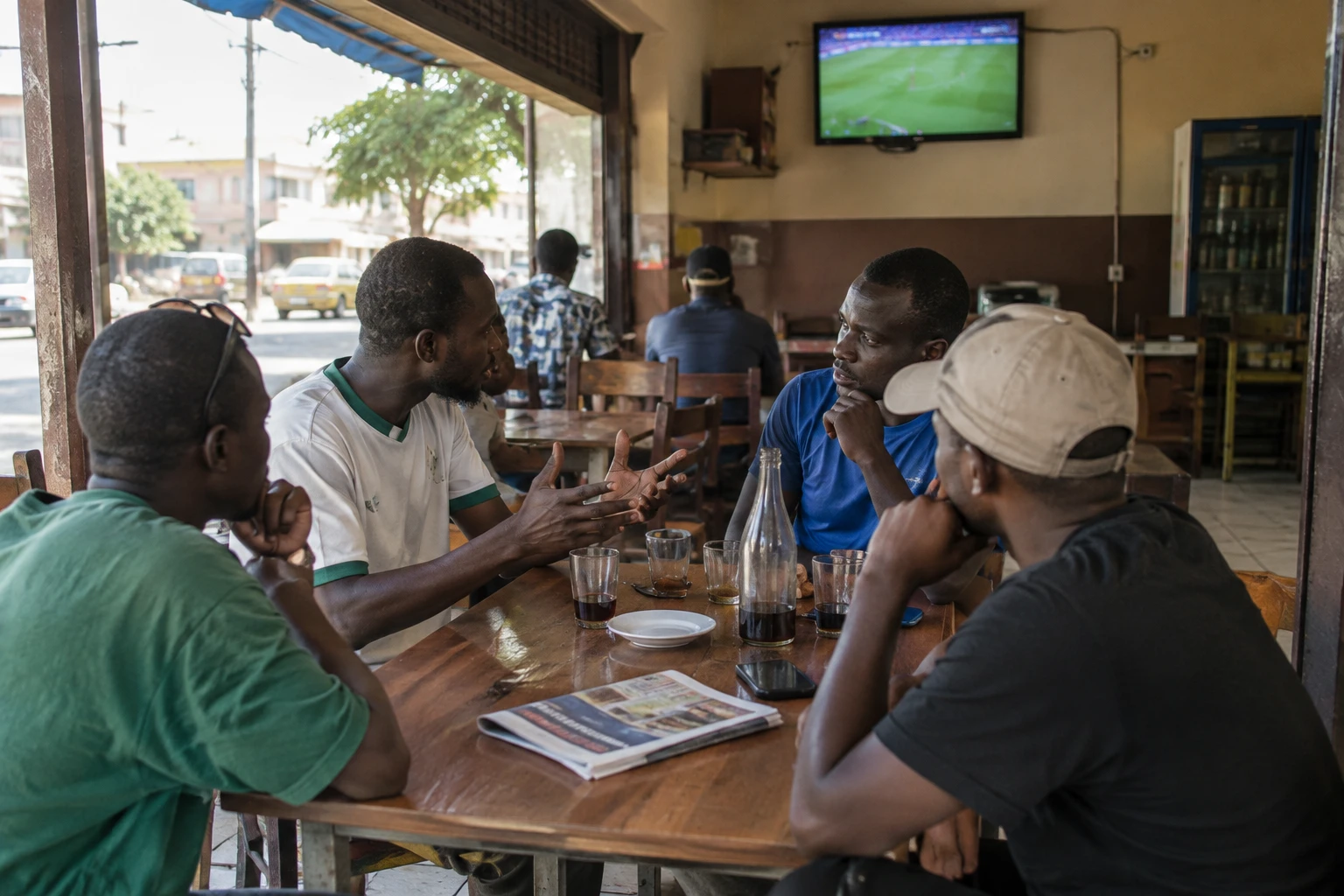
In Rabat, Senegal won the final on the pitch. Two months later, the Confederation of African Football (CAF) awarded the title to Morocco by forfeit. Since 8 October, that contradiction has been awaiting arbitration by the Court of Arbitration for Sport (CAS) in Lausanne. But a new final remains a distant possibility, not the announced outcome of the proceedings.
A dispute that goes beyond the scoreboard
The 2025 Africa Cup of Nations final was played on 18 January 2026 in Rabat, Morocco’s capital. Senegal won 1-0 after extra time. The match was interrupted after a penalty was awarded to Morocco in stoppage time, while Senegal was also contesting a goal disallowed shortly beforehand. The Senegalese players temporarily left the pitch, then returned to resume the match.
On 17 March, the CAF Appeal Board declared Senegal to have forfeited the match and confirmed a 3-0 victory for Morocco. It relied on the competition regulations, including Article 84. The decision overturned the sporting result without erasing the events of the final. It opened a dispute over the scope of the rules and the authority of the bodies responsible for applying them.
CAF’s official decision can be consulted in its statement on the forfeit imposed on Senegal. The Senegalese Football Federation (FSF) subsequently appealed to CAS, seeking to have the decision annulled and Senegal recognised as the winner. The court registered the appeal on 25 March. Morocco and CAF are the other parties to the proceedings, according to CAS’s statement on the appeal.
What CAS can decide
The hearing was held behind closed doors on Thursday 8 October at the court’s headquarters in Switzerland. At its conclusion, the case was taken under advisement. CAS’s director general said the decision would not be delivered that day or the following day, without announcing a precise date. The proceedings have therefore entered a new phase, but the verdict remains unknown.
CAS can examine the facts and the law, then uphold or amend the contested decision. It can also annul it and refer the case back to the competent body. The central question is whether Senegal’s temporary departure falls under the rules invoked by CAF, given that play resumed and the match was completed. Reports on the hearing published by RTS in Senegal and SNRT in Morocco confirm that the hearing has concluded and deliberations are under way.
The FSF is seeking to have the title awarded to Senegal. The Royal Moroccan Football Federation is defending CAF’s decision. Neither federation has publicly requested that the final be replayed. This limitation matters: an arbitration tribunal rules within the scope of the requests submitted to it. A replay would therefore not automatically follow from the annulment of the 17 March decision.
For a new match to take place, CAS would instead have to annul the decision without ruling on the merits itself, then refer the case back to CAF. The African body would then decide what happens next. This makes the scenario legally conceivable, but it depends on several successive decisions. At this stage, nothing indicates that it will be chosen.
An African precedent, but not an identical model
The precedent most often cited dates back to 2019. CAF then ordered a replay of the second leg of the Champions League final between Espérance Sportive de Tunis and Wydad Athletic Club of Casablanca, after the match was interrupted in Radès. CAS annulled that decision and referred the case back to CAF’s disciplinary bodies. The final was not replayed and Espérance was ultimately confirmed as the winner, as recounted in CAS’s statement on the dispute and SNRT’s report.
The comparison has its limits, however. In Radès, the second leg was not completed. In Rabat, the teams resumed play and contested extra time. The legal context is therefore different. Similarly, matches replayed in other competitions following a specific refereeing error do not establish a general rule: each decision depends on the applicable regulations and the circumstances established.
The debate is not only about the score. It concerns the boundary between a disciplinary sanction and the result achieved during play, as well as how CAF applies its regulations. A CAS decision could clarify how African football bodies should reconcile these two dimensions in incidents involving a match stoppage.
A sporting and institutional test for CAF
For Senegalese and Moroccan supporters, the uncertainty prolongs a final already experienced amid tension. For the federations, the stakes concern the title, but also the scope of the rules and the credibility of appeal procedures. CAF, which organises the continental competition, will have to implement CAS’s verdict within the prescribed legal framework.
The case also highlights that African football has its own disciplinary and appeals bodies, while CAS can be called upon to review their decisions. This appeal does not remove CAF’s role in competitions: it places its decision under the scrutiny of an international arbitration tribunal, approached here by an African federation.
At this stage, two outcomes are certain: the match on the pitch produced a Senegalese winner, then CAF’s Appeal Board awarded the match to Morocco by forfeit. CAS must now rule on the appeal. The title being restored, the 3-0 result being upheld, or the case being referred back to CAF remain distinct possibilities. A new match, meanwhile, remains an indirect possibility and is not a request officially made by either federation.



