
 Algeria
 Egypt
 Libya
 Morocco
 Sudan
 Tunisia
 Benin
 Burkina Faso
 Cabo Verde
 Côte d'Ivoire
 Ghana
 Guinea
 Guinea-Bissau
 Liberia
 Mali
 Mauritania
 Niger
 Nigeria
 Senegal
 Sierra Leone
 The Gambia
 Togo
 Cameroon
 Central African Republic
 Chad
 Equatorial Guinea
 Gabon
 Republic of the Congo
 São Tomé and Príncipe
 Burundi
 Comoros
 Djibouti
 Eritrea
 Ethiopia
 Kenya
 Madagascar
 Malawi
 Mauritius
 Mozambique
 Rwanda
 Seychelles
 Somalia
 South Sudan
 Tanzania
 Uganda
 Angola
 Botswana
 Eswatini
 Lesotho
 Namibia
 South Africa
 Zambia
 Zimbabwe
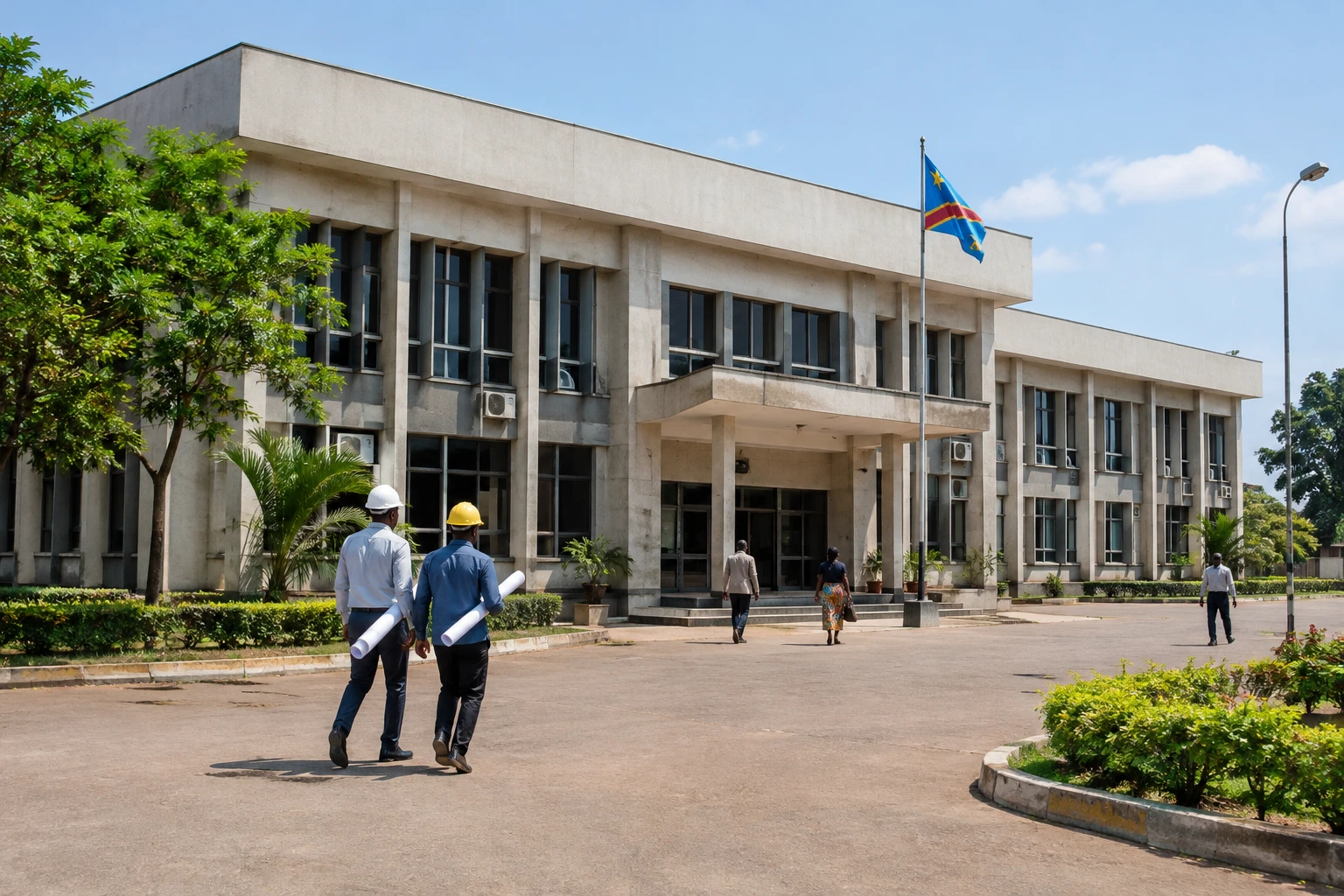
In Kolwezi, electricity is as vital to mining activity as it is to plans to process copper and cobalt. A new link with Zambia could increase available supply. But the announced agreement does not yet guarantee that the financing is in place or that construction will begin soon.
An electricity corridor between two mining basins
The Kalumbila-Kolwezi Interconnector (KKIP) project proposes a high-voltage line linking Kalumbila in Zambia to Kolwezi, in the Congolese province of Lualaba. It aims to strengthen exchanges between the two countries’ grids and improve access to regional electricity for the Congolese Copperbelt.
The Democratic Republic of Congo’s Strategic Investment Fund (FIS-RDC), EnPower, Trafigura and Gridworks Development Partners signed an investment memorandum in Kinshasa on 6 October 2026. The Congolese Press Agency and Congolese media outlet Actualité.cd also reported the signing and the main parameters announced.
The project’s promoters estimate its cost at about $300 million. The line, around 190 to 200 kilometres long according to published descriptions, would be designed to carry up to 700 megawatts of thermal capacity. The partners have discussed imports of up to 550 MW into the DRC. These are announced capacities, not volumes already delivered.
The design envisages a 330-kilovolt connection. The project could later be expanded, but its timetable and the conditions for such an expansion remain to be specified. The partners say the necessary permits have been obtained. However, financial close and the start of construction have not been confirmed in the information available.
Financing still to be assembled
The financing package is expected to combine equity contributions and debt. FIS-RDC, EnPower and Gridworks have expressed their intention to invest in the equity. The amounts committed by each have not been disclosed. Trafigura is expected to help arrange a significant portion of the debt, while discussions are under way about possible participation by Zambian stakeholders.
Gridworks, an electricity networks specialist and subsidiary of British development finance institution British International Investment, is described as the lead equity investor. EnPower is developing the project and takes part in regional electricity exchanges. Trafigura is involved here as a commodity trader and potential financing arranger, not as a local mining operator.
This distinction matters. A memorandum and investment intentions do not amount to financing that has been definitively mobilised. Before the project’s effects can be assessed, its financial structure, supply contracts, tariffs, operating responsibilities and construction deadlines will need to be known.
Established by decree on 2 October 2025, FIS-RDC is a state-owned public institution under the supervision of the Ministry of Finance. The fund describes this operation as its first transaction. Its participation could attract other capital, but it also raises a question of accountability: Congolese people must be able to monitor the risks borne by public money and the expected returns.
Security of supply, a regional concern
The DRC and Zambia are connected to the Southern African Power Pool (SAPP), the regional mechanism that facilitates electricity exchanges between countries in southern Africa. This integration creates options to buy and sell power across borders. However, it does not eliminate shortages when several countries simultaneously lack generation or transmission capacity.
The 2024 drought exposed this vulnerability. In its 2024 integrated report, Zambia’s state-owned utility ZESCO says that water shortages reduced hydropower generation and widened the country’s electricity deficit. For the Congolese mining region, greater reliance on imports could therefore diversify supply, but cannot in itself guarantee constant or affordable power.
The KKIP is a project that has been in preparation for several years. In 2025, EnPower said it had signed a 350 MW supply contract with ZESCO and obtained an import permit in the DRC. The financing structure and cost estimate have since changed. Recent announcements cite a budget of about $300 million, compared with the $250 million mentioned previously. Details that would allow the two stages to be compared precisely have not been made public.
Beyond mining, the question of who benefits
A more reliable electricity supply could ease constraints on mines in Lualaba and Haut-Katanga and facilitate more energy-intensive industrial activities, particularly refining. For businesses, reliability and the price of electricity will matter as much as the announced capacity. A transmission line does not generate power itself: volumes will depend on available power plants, contracts and the rules governing allocation among buyers.
Benefits for households are not automatic. The project is presented primarily as infrastructure for the Copperbelt and the mining and industrial sectors. For cities and local economic activity to benefit as well, distribution connections, transparent access rules and complementary investment will be needed. The effects may differ between large customers connected to the grid and residents who rely on less reliable electricity services.
At the regional level, this link tests cooperation between the DRC and Zambia as well as the SAPP’s ability to move electricity to where it is needed. The next concrete step will be financial close, alongside the publication of commitments, the timetable and supply arrangements. The project’s real significance will be measured by these details, rather than by the announced capacities.
Sources consulted: Congolese Press Agency report on the KKIP project, Actualité.cd on the memorandum signed in Kinshasa, official presentation of FIS-RDC, presentation of the Southern African Power Pool and ZESCO’s 2024 integrated report.



