Algeria
 Egypt
 Libya
 Morocco
 Sudan
 Benin
 Burkina Faso
 Cabo Verde
 Côte d'Ivoire
 Ghana
 Guinea
 Guinea-Bissau
 Liberia
 Mali
 Mauritania
 Niger
 Nigeria
 Senegal
 Sierra Leone
 The Gambia
 Togo
 Cameroon
 Central African Republic
 Chad
 DR Congo
 Equatorial Guinea
 Gabon
 Republic of the Congo
 São Tomé and Príncipe
 Burundi
 Comoros
 Djibouti
 Eritrea
 Ethiopia
 Kenya
 Madagascar
 Malawi
 Mauritius
 Mozambique
 Rwanda
 Seychelles
 Somalia
 South Sudan
 Tanzania
 Uganda
 Angola
 Botswana
 Eswatini
 Lesotho
 Namibia
 South Africa
 Zambia
 Zimbabwe
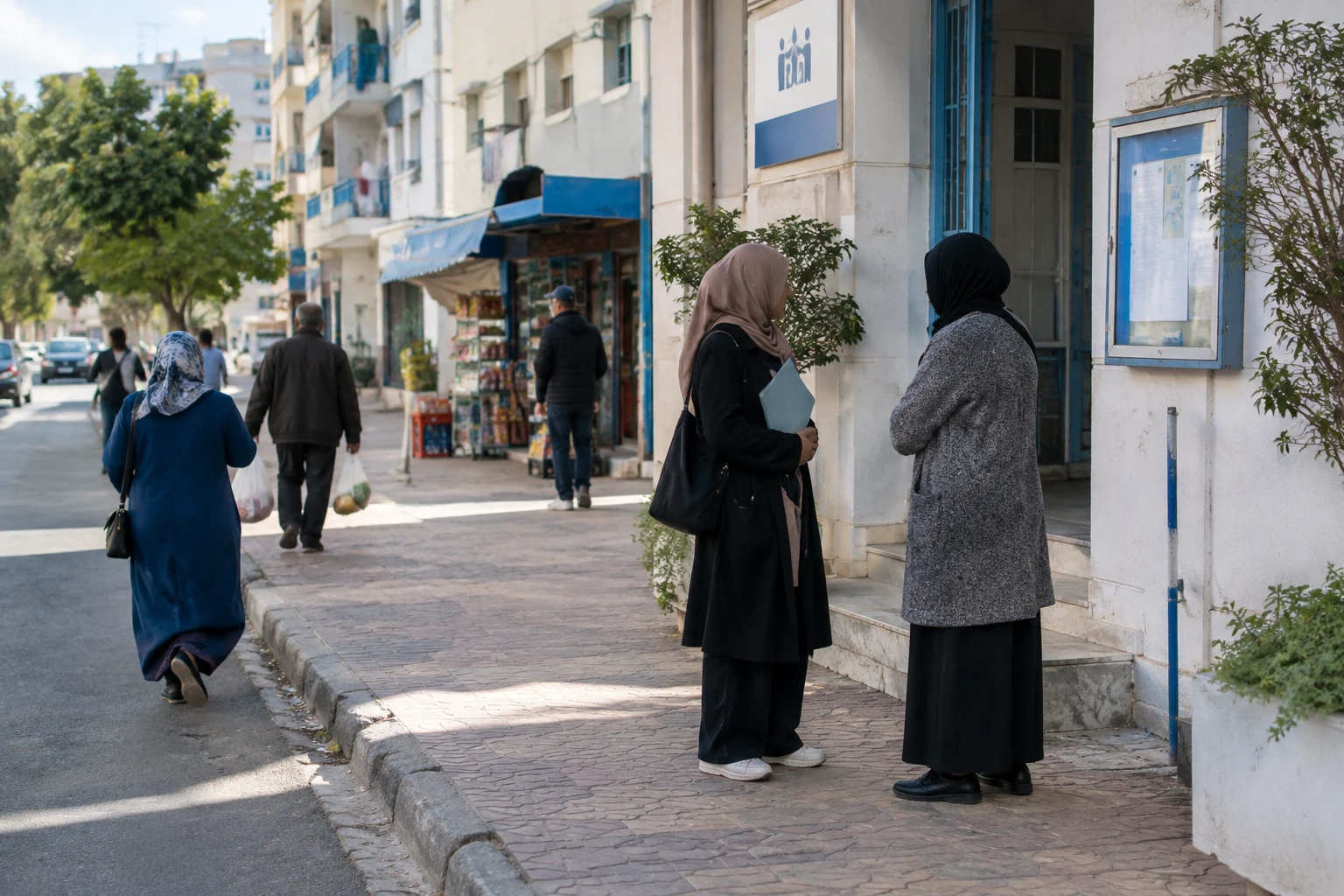
In Mellassine, a district of Tunis, a case involving alleged sexual violence against a teenage girl raises an immediate question: how can a minor be protected, her relatives supported and the investigation allowed to establish responsibility, without turning the victim into a public spectacle? The case has stirred strong emotions in Tunisia and prompted calls for severe penalties. But the facts must still be established by the courts.
A judicial investigation still under way
The alleged events are said to have taken place in Mellassine, in the Tunis metropolitan area. The teenager, identified in reports by the first name Yakine, was hospitalised after the alleged assault. Initial public reports said her condition was serious. The precise circumstances remain to be established during the investigation.
The girl’s age has not been reported consistently: several Tunisian media outlets say she is 15, while others say 16. This discrepancy calls for caution. In any case, she is a minor, whose identity and privacy must be protected.
On 7 October, Tunisian media reported that 14 people had been arrested in connection with the investigation. They reportedly include people suspected of having taken part in the events or of failing to report them. This figure is attributed to information provided by sources close to the case; it does not constitute a finding of guilt. On the same day, the investigating judge was due to question those involved. Mosaïque FM reported the number of arrests and the hearings. Tuniscope also reported the arrests and the judicial proceedings on 7 October.
An arrest or an appearance before a judge does not, in itself, prove involvement in a crime. The investigation must establish the possible role of each person, compare accounts and gather evidence. Until a court rules, those under investigation remain presumed innocent.
Protecting the victim without fuelling rumours
The rapid circulation of unverified accounts has already made the case harder to understand. False reports that the teenager had died circulated in particular, before being denied by a security source cited by Mosaïque FM. This is a reminder that a viral post is not confirmation.
In a case involving a minor, sharing her identity, images or intimate details can increase the exposure of both her and her family. Restraint is therefore not a way of downplaying the events. It makes it possible to report on the investigation without causing further harm to the person who has already suffered. Medical details and in-depth accounts are useful to the public only if they are verified, necessary to understanding the case and published with respect for the victim.
Immediate support is also a priority. A teenager who has allegedly suffered violence may need medical care, psychological support and a protective environment during the proceedings. Access to this assistance directly concerns the girl and her relatives. It also raises a wider question for public services: how can healthcare, child protection and the investigation be coordinated while avoiding a situation in which the victim has to recount her experience to multiple people?
Beyond the district, responsibility to be established
Initial reports place the alleged events in an area where authorities and residents have referred to problems with drug trafficking. This context may help explain the circumstances in which the assault is said to have taken place and the difficulties faced by services. It does not, however, explain the violence on its own or justify attributing it to a district or its residents.
Mellassine is part of Tunis, a capital where social conditions and access to services vary from one area to another. The response cannot therefore be reduced to a police operation or calls for harsher sentences. The investigation must establish the facts; protecting minors also requires accessible reporting channels, appropriate support and follow-up that does not end with hospitalisation.
The case also involves several possible forms of responsibility. Investigators must determine who may have committed the violence, who may have facilitated it and whether some people knew about the events without reporting them. These questions must be examined separately. Conflating them in public debate risks identifying culprits before the courts have reached their conclusions.
Regional resonance, but no one-size-fits-all response
In North Africa, Tunisia is a member of the Arab Maghreb Union (AMU), a regional organisation bringing together five Maghreb countries. This membership places the country within a framework for cooperation, but does not replace national responsibilities for justice and child protection. The case first calls for a response from Tunisia, close to the victim and the institutions concerned.
It nevertheless resonates in a wider debate: how societies protect minors, investigate sexual violence and prevent its exploitation on social media. Laws and systems vary from country to country. It would therefore be misleading to present Tunisia’s experience as representative of all North Africa, or the continent.
The next step is judicial. The announced questioning should help clarify the suspected responsibilities and the course of events. Until then, the most rigorous account is to distinguish what has been reported from what remains to be proven: a teenager was hospitalised after an alleged assault, several people were arrested and the investigation is continuing. What happens next will depend on the evidence added to the case file, with respect for the rights of both the victim and those under investigation.