Algeria
 Egypt
 Libya
 Morocco
 Sudan
 Tunisia
 Benin
 Burkina Faso
 Cabo Verde
 Côte d'Ivoire
 Ghana
 Guinea
 Liberia
 Mali
 Mauritania
 Niger
 Nigeria
 Senegal
 Sierra Leone
 The Gambia
 Togo
 Cameroon
 Central African Republic
 Chad
 DR Congo
 Equatorial Guinea
 Gabon
 Republic of the Congo
 São Tomé and Príncipe
 Burundi
 Comoros
 Djibouti
 Eritrea
 Ethiopia
 Kenya
 Madagascar
 Malawi
 Mauritius
 Mozambique
 Rwanda
 Seychelles
 Somalia
 South Sudan
 Tanzania
 Uganda
 Angola
 Botswana
 Eswatini
 Lesotho
 Namibia
 South Africa
 Zambia
 Zimbabwe
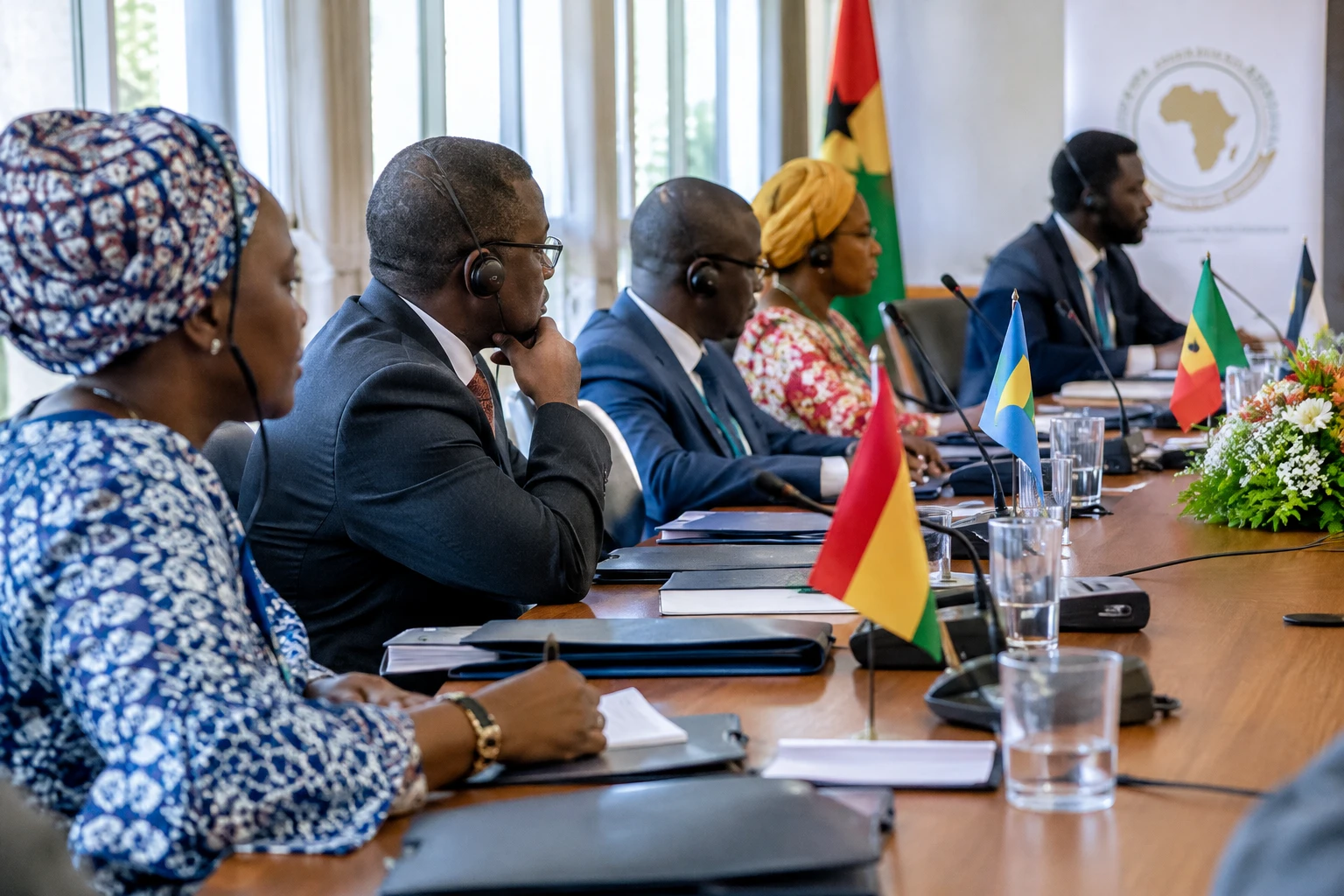
With less than two months to go before the announced vote, the obstacle is no longer only political: the body responsible for organising it says the timetable cannot be met. In Guinea-Bissau, this warning confronts the transitional authorities with a practical question: how can they set a new date without extending military rule indefinitely?
A timetable at odds with preparations
On 8 October 2026, Felisberta Moura Vaz, vice-president of the National Electoral Commission (CNE), said the technical conditions would not be in place to hold the presidential and legislative elections scheduled for 6 December. She was speaking after a meeting with the president of the transition, General Horta N’Tam. The official did not, however, announce a postponement: that decision rests with the transitional authorities.
Prime Minister Ilídio Vieira Té also said that no party was ready to contest the elections. He cited, in particular, party leaderships whose terms had expired and the need to renew their governing bodies. The government and the CNE therefore agree that the timetable is impracticable, although their statements do not, in themselves, amount to a formal decision to postpone the vote.
Another difficulty has been reported by the Bissau-Guinean press: candidacy papers are said not to have been submitted to the Supreme Court within the expected deadlines. Opposition leader Domingos Simões Pereira, head of the PAIGC, had already said the election was impracticable and denounced restrictions that, in his view, prevented parties from carrying out their activities normally. These political criticisms should be distinguished from the CNE’s technical assessment.
A transition born of an interrupted election
The current crisis extends the rupture of 26 November 2025. Military officers seized power the day before the provisional results of the presidential and legislative elections held on 23 November were expected to be announced. The electoral process was suspended. Outgoing president Umaro Sissoco Embaló left the country and is living in exile, while General Horta N’Tam leads the transition.
The elections had taken place amid an already tense political climate. In its preliminary report, the African Union observation mission noted disagreements over the date of the vote, restrictions on political space and a lack of consensus between the government and the opposition. It also reported that the term of office of the CNE’s executive secretariat members had expired in 2022. These points shed light on institutional weaknesses, but do not in themselves establish responsibility for the crisis.
In January 2026, the transitional authorities set 6 December as the date for the next double election. The timetable was intended to pave the way for a return to civilian rule. In March, the African Union Peace and Security Council backed the date, while calling for an inclusive transition, national dialogue and support to strengthen the CNE. October’s warning reveals the gap between this diplomatic objective and the state of preparations.
The debate is also about the rules of the game
The electoral question is not limited to the availability of equipment or the organisation of candidate nominations. It also concerns whether parties can meet, renew their leadership and campaign. If political activities remain restricted, an election may be technically organised without offering voters a genuinely competitive choice. Conversely, a postponement without a public, verifiable timetable risks prolonging the transition without sufficient guarantees.
The constitutional referendum on 30 August 2026 adds an institutional dimension. The Associated Press reports that the changes put to the vote would strengthen presidential powers and reduce the number of parliamentary seats from 102 to 65. The authorities defend the changes as a way to clarify relations between the president and prime minister; opponents see them as a concentration of power. These competing interpretations make transparency about the rules governing the next elections all the more important.
For citizens, the uncertainty primarily affects representation and the predictability of public life. Without a fully functioning National Assembly, political oversight and parliamentary debate are weakened. In the capital, Bissau, and across the regions, a postponed timetable may also complicate the organisation of parties and voter participation. The available sources do not, however, make it possible to measure precisely the economic or social effects of a possible postponement.
ECOWAS and the African Union await guarantees
Guinea-Bissau belongs to ECOWAS, the Economic Community of West African States, which is involved in regional mediation. The African Union, for its part, has called for the restoration of constitutional order, the inclusion of parties and civil society in dialogue, and the protection of fundamental freedoms. It has also called for the independence and capacity of the electoral commission to be strengthened.
For these organisations, the issue goes beyond the date of the vote: it is a matter of ensuring that the transition leads to a genuinely pluralist contest and a transfer of power to civilians. But external calls cannot replace either a national political agreement or the publication of a workable timetable. The Bissau-Guinean authorities will need to set out the outstanding steps, the conditions under which parties can operate and the role of independent institutions.
As of 8 October, no new election date had been announced. The CNE’s statement does not amount to an official decision to postpone the vote, but it makes keeping 6 December highly uncertain. The next decisive step will therefore be the formal position of the transitional authorities, accompanied by verifiable commitments on election preparations and political freedoms. Without them, the promise of a return to constitutional order risks remaining tied to a timetable that the institutions themselves now consider untenable.