
 Algeria
 Egypt
 Libya
 Morocco
 Sudan
 Tunisia
 Benin
 Burkina Faso
 Cabo Verde
 Côte d'Ivoire
 Ghana
 Guinea
 Guinea-Bissau
 Liberia
 Mali
 Mauritania
 Niger
 Nigeria
 Senegal
 Sierra Leone
 The Gambia
 Togo
 Cameroon
 Central African Republic
 Chad
 Equatorial Guinea
 Gabon
 Republic of the Congo
 São Tomé and Príncipe
 Burundi
 Comoros
 Djibouti
 Eritrea
 Ethiopia
 Kenya
 Madagascar
 Malawi
 Mauritius
 Mozambique
 Rwanda
 Seychelles
 Somalia
 South Sudan
 Tanzania
 Uganda
 Angola
 Botswana
 Eswatini
 Lesotho
 Namibia
 South Africa
 Zambia
 Zimbabwe
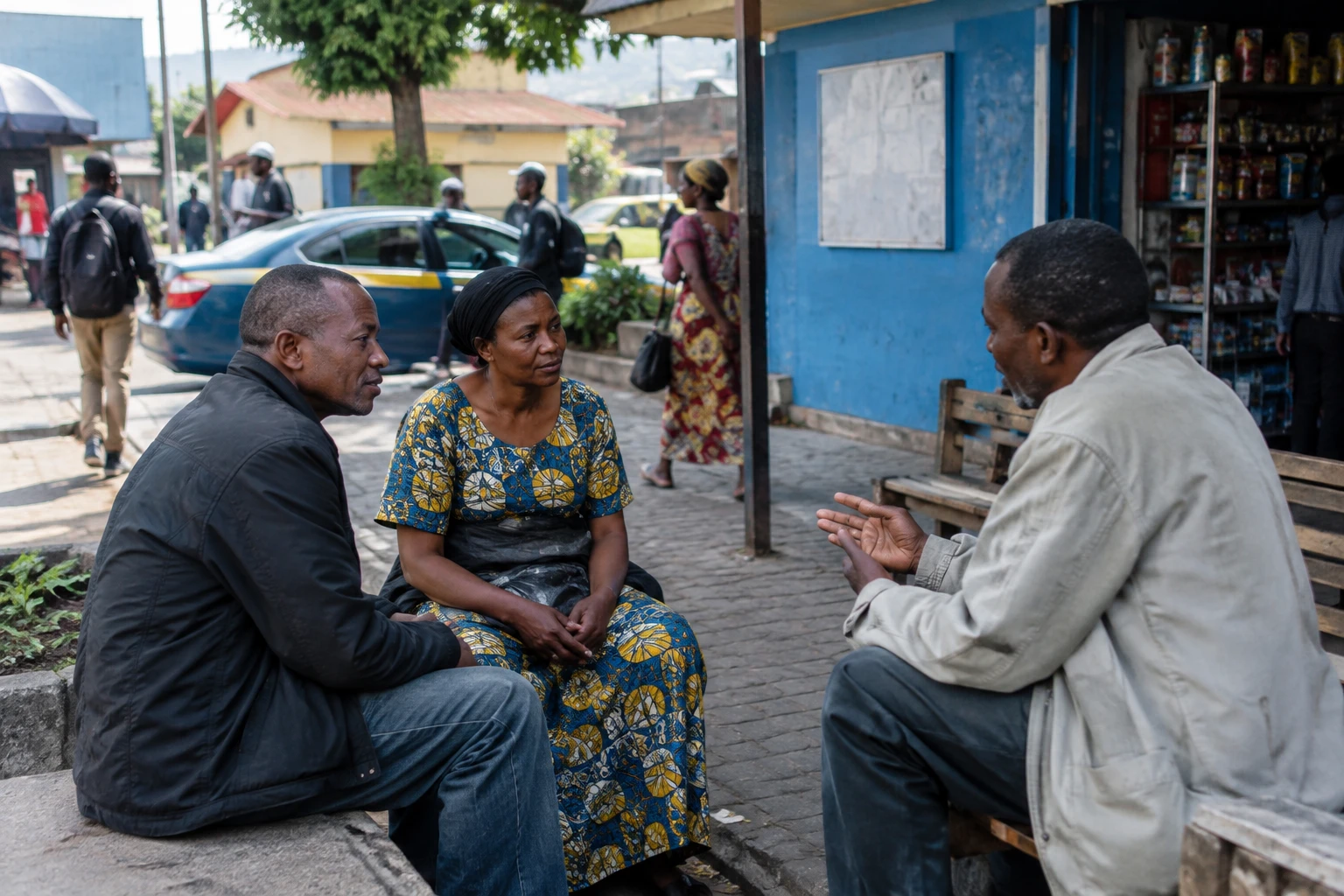
In Goma, speaking directly to the actors in the conflict is not enough to bring positions closer. A visit by African Union (AU) facilitators marks a diplomatic opening, but people in eastern Congo are above all waiting for political efforts to bring change on the ground.
Consultations at the heart of a regionalised conflict
Since 2025, the crisis in the east of the Democratic Republic of the Congo has played out in contested cities and territories, in relations between Kinshasa and Kigali, and around several negotiating tables. Goma, the capital of North Kivu, is controlled by the AFC/M23, a politico-military movement. This reality lends particular weight to any meeting held in the city.
Mediation efforts have multiplied. Qatar is facilitating talks between the Congolese government and the AFC/M23, while the United States is supporting the process between the DRC and Rwanda. The AU, with the support of regional organisations, is seeking to coordinate these efforts. The East African Community (EAC) and the Southern African Development Community (SADC) are among those involved: their member states are directly linked to the political and security balance in the Great Lakes region.
This overlap can help address distinct issues. It can also blur responsibility if timetables, commitments and monitoring mechanisms are not aligned. The AU has specifically included coordination with the Washington and Doha processes in its roadmap for July–December 2026.
In Goma, listening without announcing an agreement
On 5 October 2026, three former heads of state who are members of the AU panel of facilitators met representatives of the AFC/M23 in Goma. The delegation comprised Sahle-Work Zewde, former president of Ethiopia, Uhuru Kenyatta, former president of Kenya, and Mokgweetsi Masisi, former president of Botswana.
The panel also consulted representatives of the United Nations Organization Stabilization Mission in the DRC (MONUSCO), the UN Office for the Coordination of Humanitarian Affairs, the International Committee of the Red Cross and the regional security verification mechanism. According to the AU statement, the exchanges aimed to gather views on the peace process, the security and humanitarian situation, and measures that could build confidence.
No new agreement or specific commitment by the parties was announced in the statement. The established outcome, therefore, is that consultations took place, not that there was a diplomatic breakthrough. Direct contact with the AFC/M23 enables the panel to hear from the movement in a city it controls. It does not resolve the question of the Congolese state’s authority in the areas concerned, or the terms of a political settlement.
The following day, the panel travelled to Kigali to meet Rwandan President Paul Kagame, according to the Rwandan press. This step underscores that the conflict cannot be reduced to dialogue between Kinshasa and the AFC/M23: relations between the DRC and Rwanda remain central to any effort to de-escalate. The parties’ positions and their responsibilities in the conflict remain contested; they cannot be settled through a single round of consultations.
An ambitious roadmap, with resources still to be secured
The Goma mission is part of a timetable adopted at a high-level meeting in Gaborone, Botswana, on 25 and 26 July 2026. The roadmap covers six months, from July to December. It provides for work on political coordination, military and security issues, humanitarian access, dialogue with armed groups, natural resources, reconciliation, and the participation of civil society, women and young people.
This programme recognises that peace is not limited to an agreement between leaders. In rural areas, safe travel and access to healthcare or humanitarian aid have a direct bearing on residents. In Goma, the decisions of the authorities controlling the city affect daily life and economic activity. In Kinshasa, the government must address issues of sovereignty and the return of the administration. Economic actors, both formal and informal, also depend on the security of roads and trade.
The roadmap nevertheless identifies a very practical prerequisite: the facilitators are calling for sufficiently flexible funding, as well as logistical, analytical and security support. Without these resources, the planned consultations and the monitoring of commitments risk remaining dependent on ad hoc initiatives. The AU has also scheduled a new harmonisation session in Arusha, Tanzania, before the end of 2026.
Implementation will be the test
The visit to Goma gives the panel a presence in an area where diplomatic and humanitarian access is essential. But it cannot, on its own, guarantee a truce, protect civilians or restore services. These outcomes depend on verifiable commitments by the parties and credible monitoring, alongside the discussions in Doha and Washington.
For Central Africa and the Great Lakes region, the stakes extend beyond Congo’s borders. Tensions affect relations between neighbouring states and test the ability of African organisations to coordinate their work with international mediation efforts. The AU roadmap asserts an African role in coordination; its impact will be measured by its ability to align the processes and secure observable progress.
The next announced milestone is the harmonisation meeting scheduled in Arusha before the end of the year. Until then, the point to watch will be less the number of meetings than whether they translate into concrete measures: humanitarian access, security, trust between the parties and compliance with commitments already made.
The African Union statement on consultations in Goma | The AU roadmap for July–December 2026 | The report on the meeting in Goma | The panel’s consultations in Kigali | The UN report on regional peace processes



