Algeria
 Egypt
 Libya
 Morocco
 Sudan
 Tunisia
 Benin
 Burkina Faso
 Cabo Verde
 Côte d'Ivoire
 Ghana
 Guinea
 Guinea-Bissau
 Liberia
 Mali
 Mauritania
 Niger
 Nigeria
 Senegal
 Sierra Leone
 The Gambia
 Togo
 Cameroon
 Chad
 DR Congo
 Equatorial Guinea
 Gabon
 Republic of the Congo
 São Tomé and Príncipe
 Burundi
 Comoros
 Djibouti
 Eritrea
 Ethiopia
 Kenya
 Madagascar
 Malawi
 Mauritius
 Mozambique
 Rwanda
 Seychelles
 Somalia
 South Sudan
 Tanzania
 Uganda
 Angola
 Botswana
 Eswatini
 Lesotho
 Namibia
 South Africa
 Zambia
 Zimbabwe
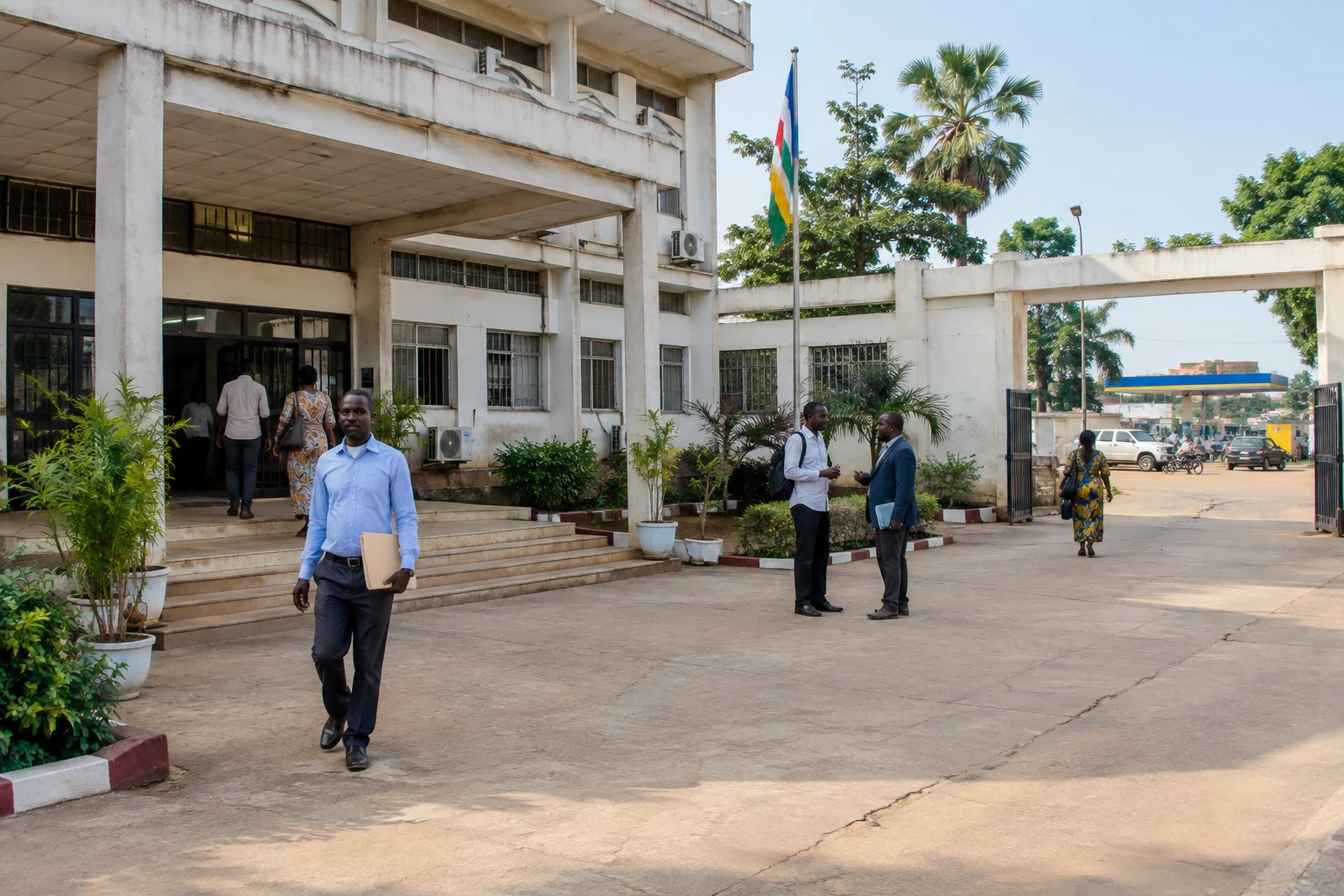
In Bangui, the price displayed at the pump tells only part of the story. When fuel prices rise, the effects spread to taxis, markets and goods transported by road. The increase announced on 1 October 2026 has reignited a central question in the Central African Republic: who absorbs the cost of supplies that depend on imports, and who can still protect purchasing power?
An importing country facing a bill that is hard to contain
The Central African Republic does not produce oil. Its supplies depend in particular on imports transported overland from Cameroon or along the Oubangui River. This arrangement makes the market sensitive to international costs, logistical constraints and supply disruptions. The country shares the CEMAC economic and monetary area of Central Africa with five neighbours, but each state sets its own pricing and support policies.
The previous crisis is a reminder that the issue goes beyond the figure displayed at the pump. The International Monetary Fund describes the shortages of 2022 and the reforms introduced in the sector, including the publication of the price structure. In a country where imports and the distribution of petroleum products also affect public revenue, subsidies ease the burden on consumers but carry a cost for the state.
This tension is unfolding amid tight budgetary constraints. The debate is therefore not simply a choice between low and high prices: it also concerns cost transparency, the regularity of deliveries and how the burden is shared between public finances, businesses and households.
New prices and the government’s response
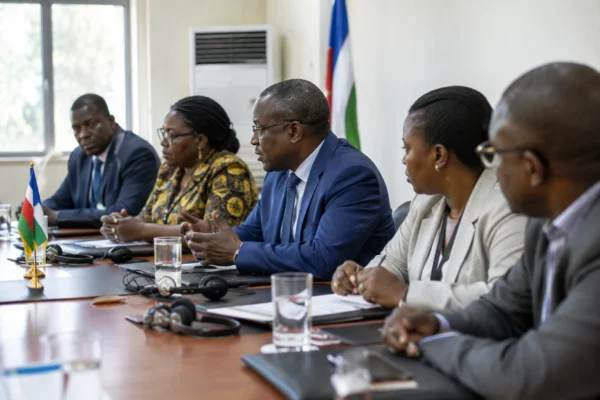
From 1 October, the price of a litre of petrol sold to individuals rose from 1,050 to 1,150 CFA francs. Diesel rose from 1,250 to 1,400 CFA francs. Prices announced for large consumers are higher: 1,500 francs for petrol and 1,650 francs for diesel. The Minister of Energy and Hydraulics, Edwige Opportune Pouninguinza, presented the new price schedule at a meeting with trade union organisations.
These figures were reported by two Central African media outlets, Radio Ndeke Luka and Journal de Bangui. President Faustin-Archange Touadéra justified the decision by citing higher international purchase costs and the difficulty of maintaining public compensation. He referred in particular to state support estimated at around 350 CFA francs per litre under certain conditions.
Caution is warranted over this last figure: it reflects the explanation attributed to the head of state and is not, on its own, an independent calculation of the actual subsidy cost for each fuel. The detailed pricing structure and its components remain crucial to assessing the argument put forward.
Transport operators, traders and workers exposed
Fuel is a direct expense for taxis, minibuses, motorbike taxis and vehicles carrying goods. Transport operators may pass some of the increase on through their fares. Traders, meanwhile, must choose whether to absorb the extra cost, reduce their margins or adjust their prices. In Bangui, these trade-offs affect daily travel and household purchases. In secondary cities and rural areas, long distances and poor road access can make deliveries even more expensive.
A rise in pump prices does not mean that all prices automatically increase at the same rate. But the effects can spread when several stages of transport and distribution are affected. A CEMAC note on inflation in 2023 had already observed that higher fuel prices and shortages had contributed to rising transport costs and, in turn, the cost of some goods and services.
The impact is not the same for everyone. Households reliant on public transport face fare changes without being able to choose their route. Small traders and informal workers often have little room to absorb extra costs. Large consumers, by contrast, are directly affected by a higher price schedule, although their volumes and activities vary widely.
Dispute also concerns the process
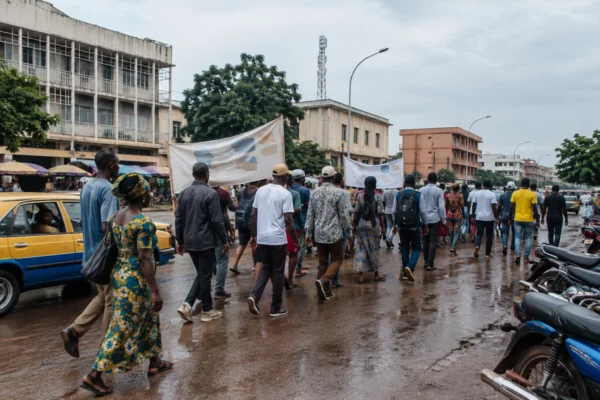
Discontent is not directed solely at the level of prices. The coalition of ten trade union confederations denounced the lack of consultation and called for dialogue. Radio Ndeke Luka reported this position, expressed in Bangui on 3 October. The Central African Republic Civil Society Platform, for its part, called for the measure to be reversed in a statement dated 4 October, according to the RJDH report published by Centra News.
The opposition, through Crépin Mboli-Goumba, coordinator of the Republican Bloc for the Defence of the Constitution, considers the increase socially dangerous. These statements express political criticism and should be distinguished from verifiable facts about the new prices. What union and civil society demands have in common is a call for explanations and dialogue before costs are passed on more widely.
The timing adds an institutional dimension. The new price schedule came into effect as the parliamentary session devoted to examining the 2027 budget opened, according to Radio Ndeke Luka. MPs will therefore have to debate expected revenue, public spending and the scope available to cushion shocks. Transparency over import costs, taxes, margins and any assistance will affect the credibility of these choices.
An energy policy test in Central Africa
For the Central African authorities, reducing public support may limit a budgetary burden but exposes households to an immediate shock. Keeping prices down without making the mechanism sustainable risks, conversely, weighing on public finances and fuel availability. The challenge is therefore to make the trade-offs clear while considering targeted measures for public transport or activities that ensure markets are supplied.
CEMAC provides a framework for economic and monetary cooperation, but does not eliminate differences in supply or national budgetary choices. For the landlocked Central African Republic, which depends on regional transport corridors, continuity of deliveries matters as much as the official price. What happens next will depend on discussions between the government, unions and civil society, as well as on the publication of data that make it possible to verify costs and compensation.