Algeria
 Egypt
 Morocco
 Sudan
 Tunisia
 Benin
 Burkina Faso
 Cabo Verde
 Côte d'Ivoire
 Ghana
 Guinea
 Guinea-Bissau
 Liberia
 Mali
 Mauritania
 Niger
 Nigeria
 Senegal
 Sierra Leone
 The Gambia
 Togo
 Cameroon
 Central African Republic
 Chad
 DR Congo
 Equatorial Guinea
 Gabon
 Republic of the Congo
 São Tomé and Príncipe
 Burundi
 Comoros
 Djibouti
 Eritrea
 Ethiopia
 Kenya
 Madagascar
 Malawi
 Mauritius
 Mozambique
 Rwanda
 Seychelles
 Somalia
 South Sudan
 Tanzania
 Uganda
 Angola
 Botswana
 Eswatini
 Lesotho
 Namibia
 South Africa
 Zambia
 Zimbabwe
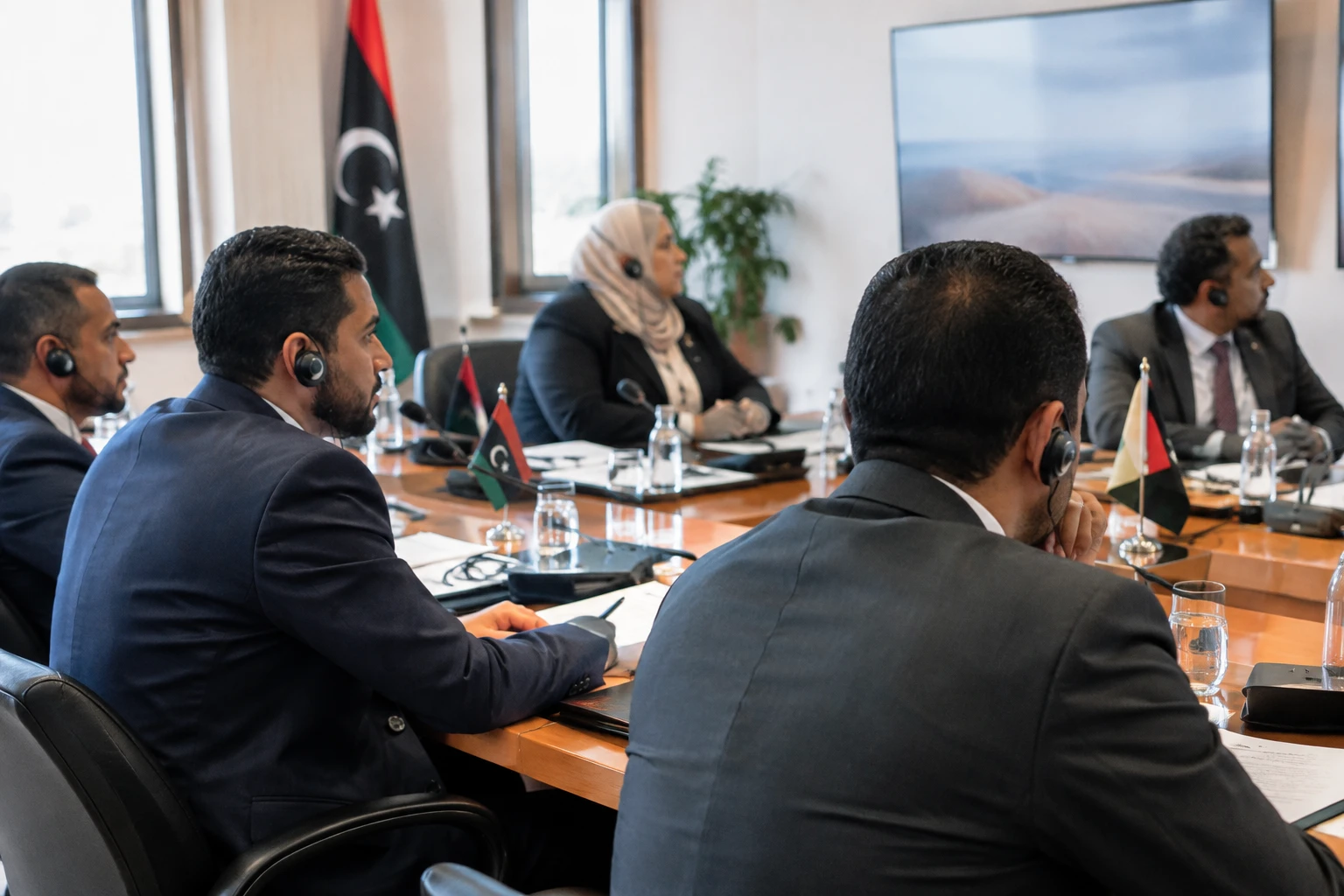
In Benghazi, the presidency of Libya’s House of Representatives has changed hands following a contested procedure. The stakes go beyond replacing a leader: they concern how institutions in a divided country make decisions and their ability to act together.
Contested change of leadership in the eastern parliament
On Tuesday 6 October 2026, MPs meeting in Benghazi chose Al-Salihin Abdelnabi al-Obeidi to lead the House of Representatives, replacing Aguila Saleh, who had held the post since 2014. The institution’s spokesman, Abdullah Blihaq, announced the result. The pan-African news agency PANA and Libyan outlet Libya Observer also reported the election. PANA reports the election in Benghazi and Libya Observer details the circumstances of the vote.
The process began the previous day. According to accounts from the spokesman and Libyan media, 98 MPs approved an amendment to the rules of procedure, establishing, among other things, a 12-month term for the presidency’s bureau. The session is reported to have been attended by 102 elected members. The following day, more than 100 MPs were present for the selection of the new speaker.
But Aguila Saleh challenged the validity of Monday’s session, declaring it to have no legal effect. He also cancelled the session he himself had called for Tuesday. The House’s first deputy speaker, Fawzi al-Nuwairi, said decisions must comply with the rules on convening meetings, quorum and majorities. The dispute is therefore about the procedure as much as the political outcome.
An institution at the heart of national division
Libya has had no unified government since the political rupture and fighting that followed the fall of Muammar Gaddafi in 2011. The House of Representatives, based in the east, is one of the pillars of this fragmented structure. In Tripoli, the western government and rival institutions assert their authority over the country. The balance of power is not, however, reducible to two homogeneous camps: political authorities, military officials and competing institutions vie over powers and legitimacy.
The Benghazi-based House is involved in debates on electoral rules and the composition of national authorities. Its functioning is therefore of direct relevance to any attempt to reunify institutions. The current controversy, however, exposes a fundamental difficulty: even a decision taken by a significant number of MPs can be rejected if participants do not agree on whether the session was legal.
The succession ends more than a decade of Aguila Saleh’s presidency. He is a major figure in the eastern political landscape. It does not, by itself, mean that the balance of power across the country has changed. The new speaker will have to serve in an institution marked by internal disagreements and located in a region where Khalifa Haftar’s military command weighs on the balance of power. Claims about the political support enjoyed by al-Obeidi remain attributed to the sources reporting them and do not, on their own, demonstrate a single chain of command.
What this change could alter — and what it does not resolve
In the short term, the decisive issue will be whether the House’s various factions recognise the new rules. If dissenting MPs reject the results, two competing claims to the speakership could coexist. This would complicate legislative work and negotiations with other Libyan institutions. It could also make it harder to establish an electoral framework accepted by the main actors.
For Libyans, the impact is not merely institutional. Uncertainty over the authorities and rules slows national decision-making, while local administrations and public services must meet everyday needs amid fragmented governance. The consequences are not uniform: Benghazi and the east are directly affected by the struggle over parliament, while Tripoli and western cities are following a process whose effects could bear on national agreements and the management of shared institutions.
The change of leadership does not end political divisions or disagreements between east and west. Nor does it resolve the issues blocking national elections, including electoral rules, the powers of the authorities and guarantees that the results will be recognised. The parliamentary presidency is a lever in these discussions, but it cannot, on its own, deliver a national agreement.
A test for Libyan and regional mediation
The international community, including the United Nations, is seeking to support a political process and the reunification of institutions. For mediation to advance, its interlocutors must be able to commit the bodies they represent. The controversy in Benghazi therefore raises a practical question: who can speak for the House and validate its decisions?
Across North Africa, stability in Libya’s institutions has repercussions for its neighbours, including through trade, population movements and regional security. The Arab Maghreb Union, a regional organisation bringing together several North African states, provides a framework for co-operation, but divisions in Libya complicate any joint initiative. For the African Union, the issue is also a Libyan-led political settlement and the ability of continental institutions to support a credible process.
What happens next will depend on Aguila Saleh’s response, the position of MPs challenging the session and the new bureau’s ability to enforce the amended rules. Until these questions are settled, al-Obeidi’s election marks a redistribution of posts within the eastern parliament, not the political reunification of Libya.