Algeria
 Egypt
 Libya
 Morocco
 Sudan
 Tunisia
 Benin
 Burkina Faso
 Cabo Verde
 Côte d'Ivoire
 Ghana
 Guinea
 Guinea-Bissau
 Liberia
 Mali
 Mauritania
 Niger
 Nigeria
 Sierra Leone
 The Gambia
 Togo
 Cameroon
 Central African Republic
 Chad
 DR Congo
 Equatorial Guinea
 Gabon
 Republic of the Congo
 São Tomé and Príncipe
 Burundi
 Comoros
 Djibouti
 Eritrea
 Ethiopia
 Kenya
 Madagascar
 Malawi
 Mauritius
 Mozambique
 Rwanda
 Seychelles
 Somalia
 South Sudan
 Tanzania
 Uganda
 Angola
 Botswana
 Eswatini
 Lesotho
 Namibia
 South Africa
 Zambia
 Zimbabwe
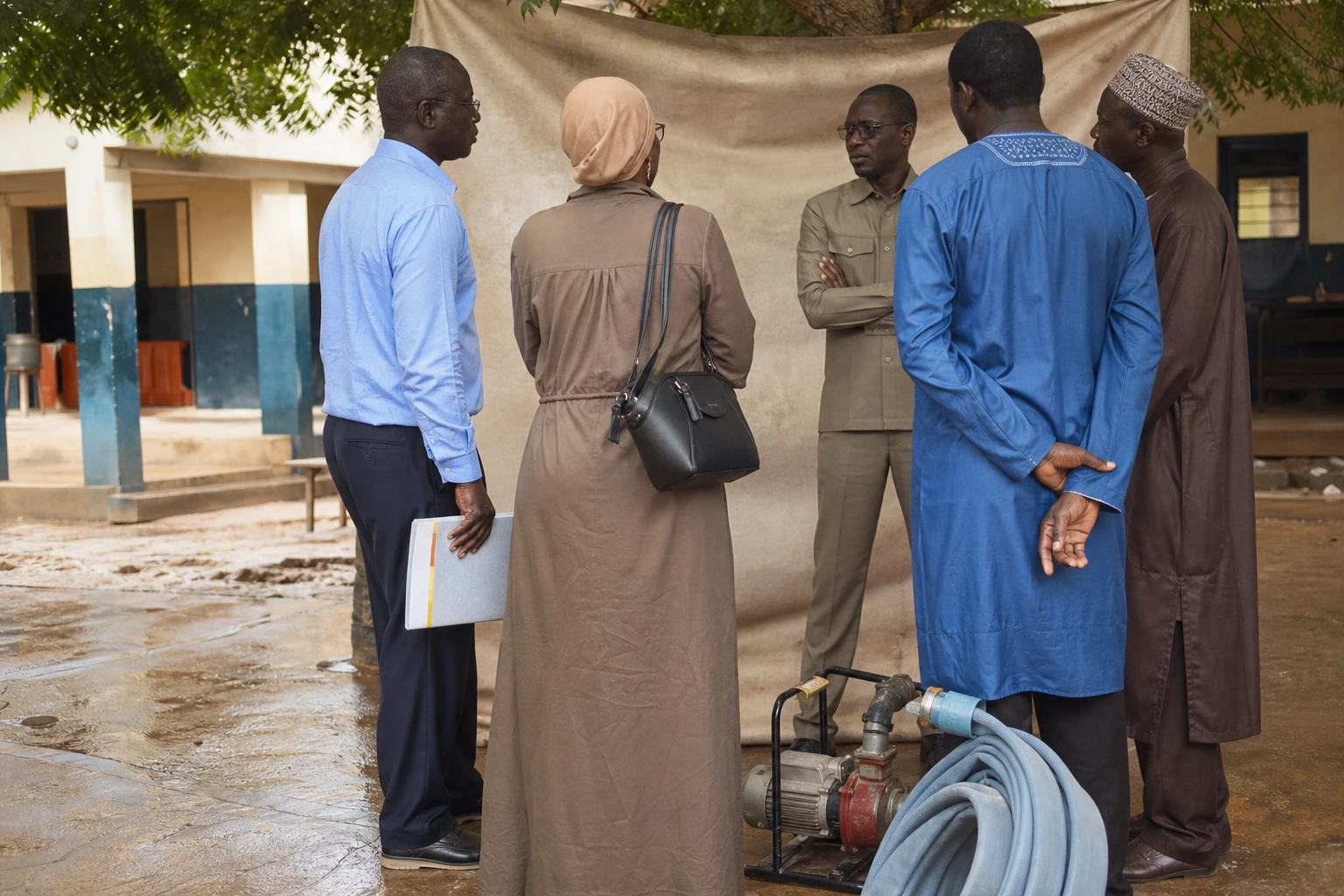
In Saint-Louis, the question is no longer simply when pupils will return to the classroom. First, it must be established that classrooms are dry, disinfected and accessible. In several neighbourhoods, the rains have once again put school infrastructure at the centre of a problem that extends beyond education: urban water management.
Nationwide reopening delayed by a few days
Senegal’s Ministry of National Education announced on Tuesday 6 October 2026 that pupils would return to school on Monday 12 October. The decision applies across the country. It comes as public services and local authorities continue cleaning, sanitation, disinfection and repair work at schools.
The announcement was confirmed by the Senegalese Press Agency. The ministry cites changing weather conditions and the need to ensure pupils’ safety. It has also called on local stakeholders to mobilise around schools.
However, public documents differ over the original date. The statement carried by the APS refers to a reopening scheduled for Wednesday 7 October. The ministry’s portal, meanwhile, lists Thursday 8 October in its 2026-2027 school calendar. The postponement to Monday 12 October is consistent across the communications reviewed.
The administration will need to clarify this discrepancy in the calendar. It does not alter the immediate concern: pupils must not return to buildings still exposed to standing water, damaged electrical installations or impassable access routes.
Water complicates preparations at schools in Saint-Louis
In the Saint-Louis region, Governor Al Hassan Sall had already said on 2 October that rainwater had been cleared from the schools identified as flooded. This does not mark the end of the work. Schools still need to be cleaned, sanitised and made safe before pupils can return.
At a Regional Development Committee meeting on preparations for the school year, the governor praised the work of firefighters and other stakeholders involved. He also highlighted the continued presence of temporary shelters in the region, a problem that undermines continuity in learning beyond periods of heavy rain.
The Sor, Diaminar, Cité Niakh, Darou and Pikine areas are among those regularly affected by runoff. In some neighbourhoods, water blocks secondary streets, slows travel and makes it harder for teams to carry out repairs at schools.
In Pikine Guinaw Rail, stagnant water in public spaces and around a primary school illustrates the limitations of the current system. Neighbourhood committees use motor pumps to remove the water. Their work nevertheless depends on the availability of hoses, drainage channels and high-capacity pumping equipment.
The situation reported by the APS in Saint-Louis confirms that water removal must be followed by a longer process. A classroom that appears dry may still pose health risks, retain unpleasant odours or have damaged floors and walls.
The school calendar faces climate realities
In Senegal, the school year begins at a time when the rainy season is not always over. This choice helps preserve a common national calendar. However, it becomes difficult to implement when rainfall simultaneously disrupts transport, buildings and sanitation networks.
The “Oubi tey, Jang tey” directive, meaning “open today, learn today”, aims to avoid weeks of disruption at the start of the school year. It assumes that classrooms, teachers and equipment will be ready from the first day. Flooding is a reminder that this requirement also depends on conditions beyond the education sector’s direct control.
The postponement affects pupils and their families first. In flood-prone neighbourhoods, parents must arrange childcare for a few extra days. Households whose income depends on daily activities may also face reduced earnings or unexpected costs related to travel and cleaning their homes.
The impact varies from place to place. In Dakar, disruption mainly affects traffic and some schools exposed to runoff. In Saint-Louis, it is compounded by the vulnerability of several neighbourhoods and the presence of temporary shelters. In rural areas, the condition of tracks may matter more than access to school buildings themselves.
For teachers, the postponement provides extra time. It does not, however, resolve difficulties with transport, housing conditions or access to schools in the worst-affected areas. For local authorities, it means coordinating hygiene services, technical teams, emergency responders and local communities within a limited time.
An issue that extends beyond Saint-Louis
Flooding at schools is not a problem confined to the Saint-Louis region. The ministry has reported mobilisation nationwide, while several parts of Senegal have experienced heavy rain and damage in recent days. The episode highlights the vulnerability of an essential public service to drainage infrastructure that remains unevenly adapted.
The response cannot therefore be limited to emergency pumping. It involves the location of schools, building design, maintenance of drainage channels, protection of electrical equipment and the availability of local plans to ensure continuity in education. It also requires precise data on schools at risk so that investment can be prioritised.
Debate over a more flexible calendar could also return. Different reopening dates based on regional climate conditions could prevent some postponements. But they would complicate national coordination, exams, teacher transfers and family arrangements. The challenge is therefore to strike a balance between a common calendar and local adaptation.
This issue matters across West Africa. ECOWAS countries — members of the Economic Community of West African States — also face rainy seasons that are harder to predict and cities experiencing rapid urban growth. For Senegal, the next test is immediate: before 12 October, it must verify that the schools reported as repaired can indeed safely receive pupils.