Algeria
 Libya
 Morocco
 Sudan
 Tunisia
 Benin
 Burkina Faso
 Cabo Verde
 Côte d'Ivoire
 Ghana
 Guinea
 Guinea-Bissau
 Liberia
 Mali
 Mauritania
 Niger
 Nigeria
 Senegal
 Sierra Leone
 The Gambia
 Togo
 Cameroon
 Central African Republic
 Chad
 DR Congo
 Equatorial Guinea
 Gabon
 Republic of the Congo
 São Tomé and Príncipe
 Burundi
 Comoros
 Djibouti
 Eritrea
 Ethiopia
 Kenya
 Madagascar
 Malawi
 Mauritius
 Mozambique
 Rwanda
 Seychelles
 Somalia
 South Sudan
 Tanzania
 Uganda
 Angola
 Botswana
 Eswatini
 Lesotho
 Namibia
 South Africa
 Zambia
 Zimbabwe
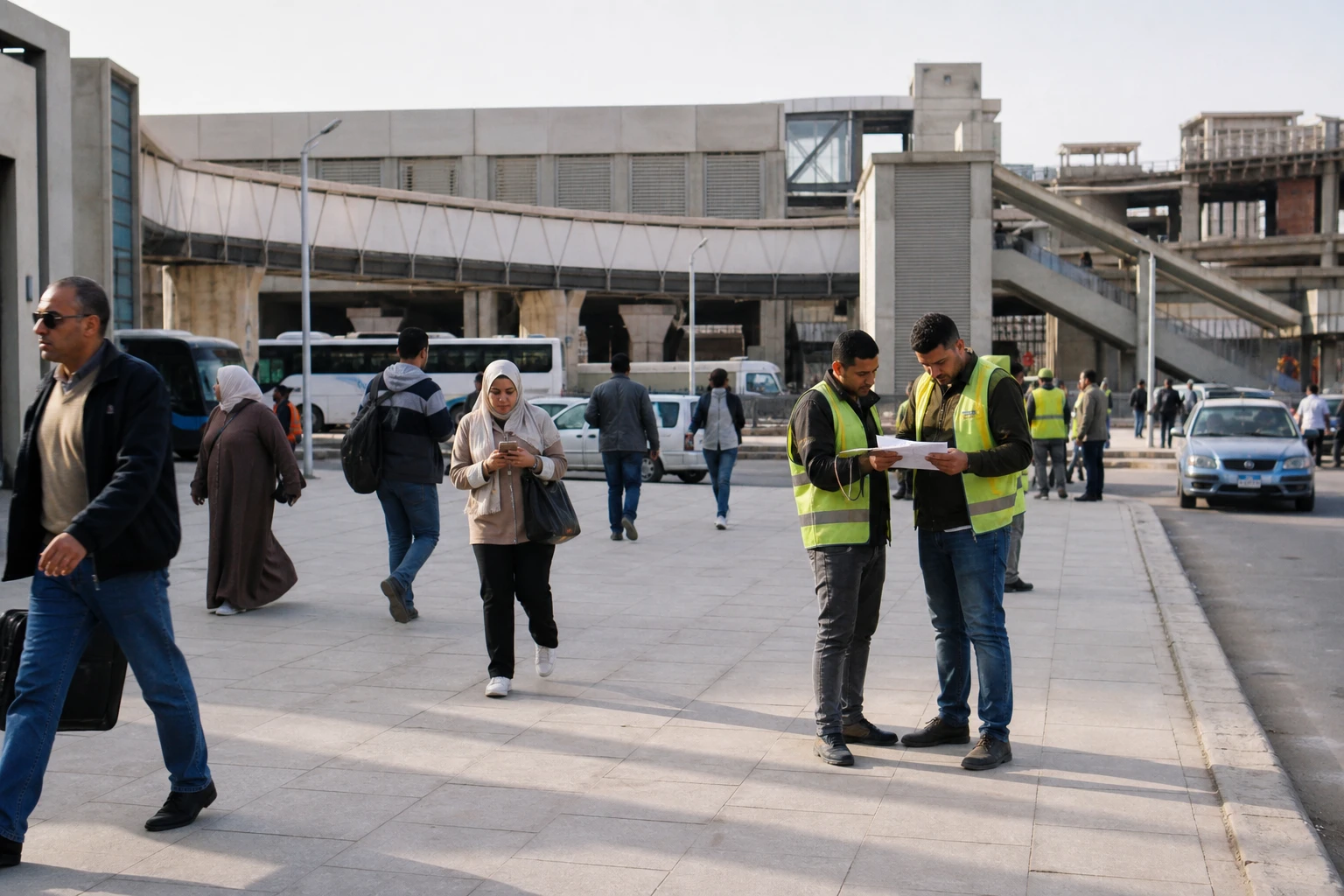
For Egypt, the high-speed electric train is about more than saving time between two cities. It is also intended to shift the country’s centre of gravity, long concentrated around the Nile Valley, towards ports, industrial zones and new cities in desert areas.
A rail corridor between two coastlines
The first line of the future network is due to begin carrying passengers in July 2027, according to an announcement made on 30 September 2026 by Egypt’s transport minister, Kamel Al-Wazir. Stretching 660 kilometres, it will link Ain Sokhna on the Red Sea with Marsa Matrouh on the Mediterranean, passing through the New Administrative Capital, Alexandria and El-Alamein, among other places.
The timetable remains provisional, however. Egypt’s transport ministry said tests on the line began in September 2026 and would last six months. The start of commercial services will therefore depend on the technical results, the safety of the equipment and the readiness of the stations.
The line will have 21 stations and a control centre. It is to accommodate 15 high-speed trains, 34 regional trains and 14 locomotives for freight. This combination matters: the project is not intended solely to speed up travel between major cities. It is also meant to organise everyday transport and carry goods.
The National Authority for Tunnels describes the link as a land corridor between the Red Sea and the Mediterranean. It forms part of the logistics corridor connecting the port of Ain Sokhna with industrial platforms, northern ports and new urban areas.
Breaking out of the Nile Valley’s congestion
Egypt’s historic railway network remains heavily concentrated in the Nile Valley and the delta. This layout reflects the geography of settlement, but it now limits scope for expansion. According to Kamel Al-Wazir, the main line linking the delta, Cairo and Upper Egypt is already operating at full capacity.
Under these conditions, adding trains or new tracks to the existing route is difficult. The government is therefore seeking to build a second railway system in the desert areas around the valley. The aim is to create new capacity without making the same corridor the backbone of all national mobility.
This strategy supports the development of new cities, industrial zones and tourism hubs. It is also intended to help redistribute the population, a recurring priority in Egyptian planning. However, a railway line alone is not enough to create a city. Its effectiveness will depend on jobs, housing, public services and links with local networks.
The future network is to comprise three main routes. The first will link Ain Sokhna to Marsa Matrouh. The second is intended to connect 6th of October City with Abu Simbel in the south of the country. The third will link Qena with Safaga and Hurghada on the Red Sea coast. According to the Egyptian authorities, the various sections are expected to bring the network to about 2,250 kilometres.
A mobility project, but also a logistics one
Freight is central to this transformation. The new network is intended to raise freight capacity to about 13 million tonnes a year. It is thus expected to connect ports, production zones, logistics platforms and consumption centres.
For Egypt, this issue extends beyond the railway sector. The country wants to improve its supply chains and strengthen its role as a trade hub between Africa, the Mediterranean, the Middle East and the Red Sea shipping routes. An electrified link between Ain Sokhna and the north of the country could reduce reliance on road transport for some journeys, provided terminals and ports are genuinely interconnected.
The project also includes modernising the conventional network. The authorities are targeting capacity of about two million passengers a day by 2030 on the existing, upgraded lines. The high-speed electric network is expected to add up to 2.5 million passenger places a day. These figures represent theoretical capacity. Achieving them will depend on demand, fares, punctuality and passengers’ access to stations.
Modernisation could have different effects across the country. Residents of new cities and coastal areas should benefit from faster connections to Cairo and Alexandria. Industrial companies could gain more direct access to ports. By contrast, regions far from the new lines will remain dependent on the conventional network and road transport.
Many conditions for success remain
Egypt’s historic railway network is among the oldest in the world. Some of its infrastructure dates back to the 19th century. Modernising it requires more than buying trains: it calls for the renewal of tracks, signalling, level crossings, workshops and safety systems.
The coexistence of high-speed trains, regional services and freight convoys will require careful planning. Timetables will have to prevent conflicts between different services. Stations will also need to provide straightforward connections with the metro, monorail, buses and other railway lines.
Financing will also weigh on the programme over time. Building several routes at once entails substantial spending on infrastructure, energy, rolling stock and maintenance. Operations will then need to generate sufficient revenue, or receive sustained public funding, to maintain service quality.
Connections to ports will be another test. In August 2026, the authorities inspected a link of about six kilometres between Ain Sokhna station and the port. This connection is intended to facilitate freight transport. It illustrates a key principle: a train’s performance depends as much on its connections as on its speed.
A signal for African corridors
In North Africa, Egypt’s project forms part of growing competition and cooperation over transport corridors. Morocco is already developing its high-speed lines. Algeria and Tunisia are investing in the modernisation of their networks, while several African countries are seeking better links between ports, capitals and industrial zones.
For the African Union, the issue goes beyond railway technology. More reliable networks can support the African Continental Free Trade Area, which aims to facilitate trade between the continent’s economies. Egypt could thereby strengthen its position as a gateway between African, Arab and Mediterranean markets.
The next milestone will be the end of testing and confirmation of the July 2027 timetable. After that, actual passenger numbers, fares, the reliability of connections and the share of freight genuinely transferred to rail will need to be assessed. Only under these conditions can the new network become a lasting tool for regional development, rather than simply a major construction project visible from Cairo.