Algeria
 Egypt
 Libya
 Morocco
 Sudan
 Tunisia
 Benin
 Burkina Faso
 Cabo Verde
 Côte d'Ivoire
 Ghana
 Guinea
 Guinea-Bissau
 Liberia
 Mali
 Mauritania
 Niger
 Nigeria
 Senegal
 Sierra Leone
 The Gambia
 Togo
 Cameroon
 Central African Republic
 Chad
 DR Congo
 Equatorial Guinea
 Gabon
 Republic of the Congo
 São Tomé and Príncipe
 Burundi
 Comoros
 Djibouti
 Eritrea
 Ethiopia
 Kenya
 Madagascar
 Malawi
 Mauritius
 Mozambique
 Rwanda
 Seychelles
 Somalia
 South Sudan
 Tanzania
 Angola
 Botswana
 Eswatini
 Lesotho
 Namibia
 South Africa
 Zambia
 Zimbabwe
In Kampala, the treason trial of Kizza Besigye now rests largely on the account of a man who says he infiltrated his circle. Andrew Wilson, alias “Orlando”, presents himself as a private security specialist. The prosecution describes him as an informant who collected covert recordings. The defence, meanwhile, questions his methods, his statements and the reliability of the evidence presented to the court.
A security consultant turned key witness
Andrew Wilson is a 55-year-old British-American national, according to evidence presented to the High Court in Kampala. He says he served in the British Army between 1988 and 1993. He later worked in private security and commercial intelligence.
In his professional profiles, he describes himself as a writer, private investigator and close-protection consultant. He claims to have undertaken assignments in the United States, Haiti, Mexico, Colombia, the Middle East and several African countries.
His company, Risks Incorporated, highlights work involving investigations into criminal networks and drug trafficking. In court, however, Wilson acknowledged that he had no university degree. He described himself as self-taught, having built up his experience in the field.
This background has already prompted questions from the defence. For Kizza Besigye’s lawyers, the witness’s operational profile is not enough to establish the legal value of his recordings. They are primarily seeking to determine the circumstances in which he met the defendants, who commissioned him and how the evidence was preserved.
A mission said to have begun in 2021
According to the prosecution, Wilson was approached in 2021 by Joel Wakayima, an associate of Kizza Besigye who is based in Switzerland. Wakayima allegedly asked him to facilitate the purchase of weapons and the organisation of military training for Ugandans living in the country or abroad.
The prosecution believes the request formed part of a plan to overthrow President Yoweri Museveni’s government by force. The three defendants, Kizza Besigye, Obeid Lutale and Captain Denis Oola, deny the charges.
Wilson says he alerted the Ugandan authorities. He allegedly obtained General Richard Otto’s contact details through a contact in Somalia. Their exchanges then continued on WhatsApp.
According to his testimony, officials asked him to continue communicating with Wakayima. His role then changed. He was no longer limited to consultancy work. He became an informant tasked with documenting the intentions of the alleged network.
The witness told the court on 17 September 2026 that he had worked for the Ugandan authorities. The terms of his remuneration remain unclear, however. Ugandan media reported his admission but did not publicly establish whether a contract existed or the amount of any payments.
Meetings filmed in Geneva, Athens and Nairobi
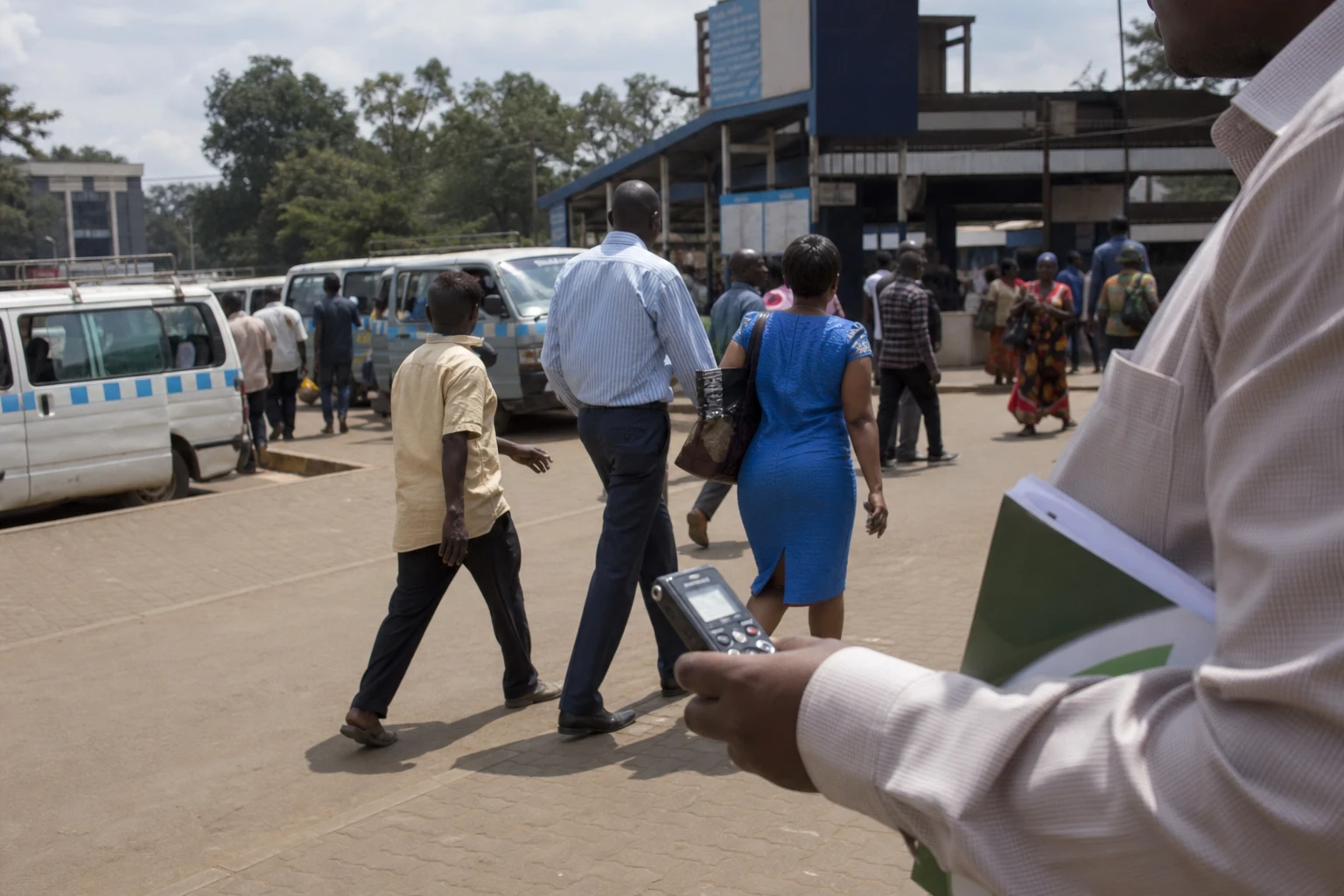
Wilson says he recorded several meetings between 2023 and 2024. They allegedly took place in Geneva, Athens and Nairobi, among other locations. He says he used cameras and microphones concealed in everyday objects, including a power bank.
The witness also said he had used at least 11 devices. He explained that some equipment was inexpensive and produced short videos or low-quality audio files. Some of the material was allegedly lost or damaged, including after an operation in Nairobi.
For the prosecution, the images and recordings show that Kizza Besigye and his associates discussed the purchase of weapons, paramilitary training and a possible overthrow of the government. Wilson also said some conversations concerned President Museveni’s movements and scenarios targeting the security forces.
The defence disputes this interpretation. The videos shown in court are said to be dark. The sound is sometimes weak. Identifying the people and establishing the precise meaning of some statements would require the witness’s own explanations.
Eron Kiiza, one of Besigye’s lawyers, argues that these problems diminish the evidential value of the material. He also points to contradictions between Wilson’s statement to the police and his testimony before the High Court.
The defence cites, in particular, disagreements over the locations and dates of some meetings. It also disputes whether the dates displayed on some videos correspond to the events they are supposed to show.
The battle over the transcripts
The transcripts of the recordings were admitted by the court after the defence lawyers withdrew a procedural objection. This decision does not mean that the defendants accept their contents.
The lawyers now want to question Wilson about how the conversations were transcribed. They challenge some of the interpretations attributed to the witness. In their view, serious terms Wilson used orally do not appear clearly in the transcripts presented to the judges.
Makerere University academic Medadi Ssentanda appeared as the prosecution’s second witness. He coordinates the centre responsible for producing or verifying the transcripts. His hearing is intended to allow the court to examine the method used, the people involved and the chain of custody of the documents.
A trial at the heart of Uganda’s political tensions
The case is part of a long-running confrontation between Yoweri Museveni, in power since 1986, and Kizza Besigye, a former military doctor who became one of Uganda’s leading opposition figures. Besigye has faced the president in several elections and has frequently been arrested or prosecuted.
His trial comes as the question of political succession remains sensitive in Uganda. The country is preparing for its next electoral period amid surveillance of opposition figures, restrictions on gatherings and debate over the independence of the judiciary.
The proceedings are also attracting attention within the East African Community, the EAC, which includes Uganda, Kenya, Tanzania, Rwanda, Burundi, the Democratic Republic of the Congo, South Sudan and Somalia, among others. Nairobi has a particular place in the case, as some of the alleged meetings and Besigye’s arrest in November 2024 took place in Kenya.
The conditions facing the defence are another point of tension. Erias Lukwago, Besigye’s lawyer, has been charged with failing to report treason. Martha Karua, a former Kenyan minister and member of the defence team, was prevented from entering Uganda. Besigye, for his part, rejected the lawyers offered by the state.
The next stages of the trial will therefore have to answer two separate questions. The first concerns whether the armed plot described by the prosecution existed. The second concerns the strength of the evidence: can a witness paid or commissioned by the authorities, acting alone, establish the defendants’ criminal intent?
The High Court in Kampala is due to continue examining the testimony and transcripts. The stakes extend beyond the fate of the three defendants. They also concern the ability of Uganda’s judiciary to handle a politically sensitive case involving disputed evidence, a weakened defence and intense regional scrutiny.
Andrew Wilson’s testimony on the recording devices
Disputed evidence collected in Nairobi