Algeria
 Egypt
 Libya
 Morocco
 Sudan
 Tunisia
 Benin
 Burkina Faso
 Cabo Verde
 Côte d'Ivoire
 Ghana
 Guinea
 Guinea-Bissau
 Liberia
 Mali
 Mauritania
 Niger
 Nigeria
 Senegal
 Sierra Leone
 The Gambia
 Togo
 Cameroon
 Central African Republic
 Chad
 Equatorial Guinea
 Gabon
 Republic of the Congo
 São Tomé and Príncipe
 Burundi
 Comoros
 Djibouti
 Eritrea
 Ethiopia
 Kenya
 Madagascar
 Malawi
 Mauritius
 Mozambique
 Rwanda
 Seychelles
 Somalia
 South Sudan
 Tanzania
 Uganda
 Angola
 Botswana
 Eswatini
 Lesotho
 Namibia
 South Africa
 Zambia
 Zimbabwe
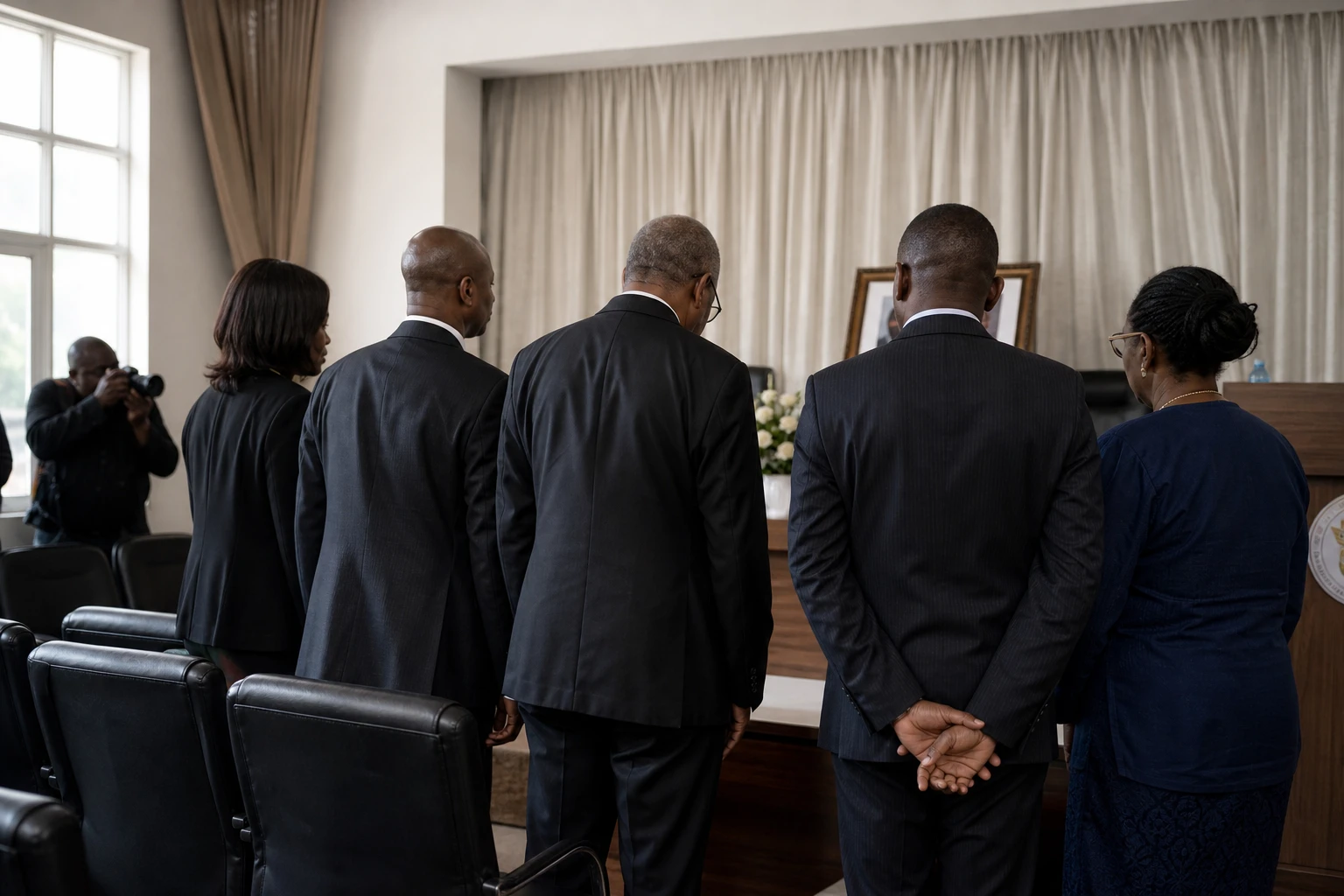
In Kinshasa, the death of Kalev Mutond has reignited debate about the years when Congolese intelligence played a central role in political life. The former director-general of the National Intelligence Agency (ANR) died in Paris on Monday 5 October 2026, aged 69, according to family members quoted by several Congolese media outlets.
A key figure in power under Joseph Kabila
Several corroborating sources in the Democratic Republic of the Congo confirmed news of his death. Kalev Mutond had been staying in the French capital for several months for medical reasons. The precise circumstances of his death have not been made public.
Born on 3 March 1957, he led the ANR from 2011 to 2019. This period spanned the final years of Joseph Kabila’s presidency and the first weeks of the political transition that brought Félix Tshisekedi to power.
Originally from Katanga, in the south-east of the DRC, Kalev Mutond spent most of his career in the intelligence services. He rose through the security apparatus before taking its helm. His career began in ranks linked to the Alliance of Democratic Forces for the Liberation of Congo, the rebellion led by Laurent-Désiré Kabila in the late 1990s.
His closeness to Joseph Kabila strengthened his influence. For nearly eight years, he oversaw one of the Congolese state’s most sensitive agencies. The ANR is responsible for domestic and foreign intelligence, as well as national security. In practice, its work was often at the heart of political power struggles in Kinshasa.
In political circles, Kalev Mutond was sometimes nicknamed the “ Super cop ”, a reference to his intense activity and authority over the services under his control. To his critics, the nickname also evoked the power amassed by the intelligence apparatus during that period.
Accusations of human rights violations
His record at the helm of the ANR remains highly contested. Human rights organisations, opposition figures and civil society actors accused him of arbitrary arrests, illegal detention, torture and threats against voices critical of the government.
The accusations took on an international dimension in 2016. The United States then placed Kalev Mutond under sanctions. That same year, the European Union added him to its list of people subject to restrictive measures linked to political repression in the DRC. These measures included a travel ban in the European area and an asset freeze, according to EU decisions and court documents consulted.
The General Court of the European Union later examined his appeal against the sanctions. In its decisions, the court recalled accusations involving arbitrary arrests, ill-treatment and violations of the rights of opposition and civil society members. These matters form part of a complex political and legal case, distinct from a final criminal conviction in the DRC.
This distinction remains important. Accusations against a former intelligence official do not, in themselves, amount to a final judgment. They nevertheless explain why his death has prompted mixed reactions. For some Congolese, it marks the end of a career at the top of the state. For others, it recalls years of fear, surveillance and political repression.
An end to his career marked by exile and legal proceedings
After the presidential transition in January 2019, Kalev Mutond left the helm of the ANR. His deputy, Justin Inzun Kakiak, succeeded him in March that year, following a presidential order announcing his appointment.
A few months later, the former official became the subject of a judicial investigation in Kinshasa. Complaints alleged torture, death threats, arbitrary arrests and attempted assassinations said to have been committed during his time at the ANR. He left the country and lived abroad for several years.
His return to the Democratic Republic of the Congo subsequently changed the course of the case. Kalev Mutond apologised to some people who identified themselves as his victims. In 2023, the public prosecutor’s office attached to the Kinshasa-Gombe Court of Appeal announced that the wanted notice concerning him had been withdrawn. The proceedings against him were dropped, according to documents cited by Congolese authorities and the national press.
This development did not, however, put an end to the controversy. Instead, it shifted the debate towards the question of accountability for former security officials after a political transition. In the DRC, as in several Central African countries, political transitions do not always bring a full reckoning with the practices of the security services.
Congolese intelligence amid a new regional balance
Kalev Mutond’s death comes as the DRC faces several security challenges. The east of the country remains marked by the presence of armed groups, tensions with Rwanda and mediation efforts conducted under the auspices of the Southern African Development Community, SADC.
The DRC also belongs to the East African Community, which has taken part in diplomatic and security initiatives concerning the crisis in the east of the country. These regional frameworks have heightened the need for effective intelligence that is also governed by law and subject to accountability mechanisms.
For the authorities in Kinshasa, the challenge now is to preserve the state’s ability to prevent threats without returning to practices that have fuelled mistrust among part of the population. This is particularly important for activists, journalists, political leaders and residents of conflict-affected areas.
Across the continent, Kalev Mutond’s career recalls a recurring question in Africa : how can intelligence services be reformed after a period of intense politicisation ? The answer depends on more than changes in leadership. It also requires parliamentary oversight, judicial independence and effective protection of civil liberties.
The death of the former ANR chief therefore closes a personal chapter, but not the debate over the security legacy of the Kabila years. In the DRC, that legacy remains associated both with the fight against armed threats and with the wounds left by political repression.