Algeria
 Egypt
 Libya
 Morocco
 Sudan
 Benin
 Burkina Faso
 Cabo Verde
 Côte d'Ivoire
 Ghana
 Guinea
 Guinea-Bissau
 Liberia
 Mali
 Mauritania
 Niger
 Nigeria
 Senegal
 Sierra Leone
 The Gambia
 Togo
 Cameroon
 Central African Republic
 Chad
 DR Congo
 Equatorial Guinea
 Gabon
 Republic of the Congo
 São Tomé and Príncipe
 Burundi
 Comoros
 Djibouti
 Eritrea
 Ethiopia
 Kenya
 Madagascar
 Malawi
 Mauritius
 Mozambique
 Rwanda
 Seychelles
 Somalia
 South Sudan
 Tanzania
 Uganda
 Angola
 Botswana
 Eswatini
 Lesotho
 Namibia
 South Africa
 Zambia
 Zimbabwe
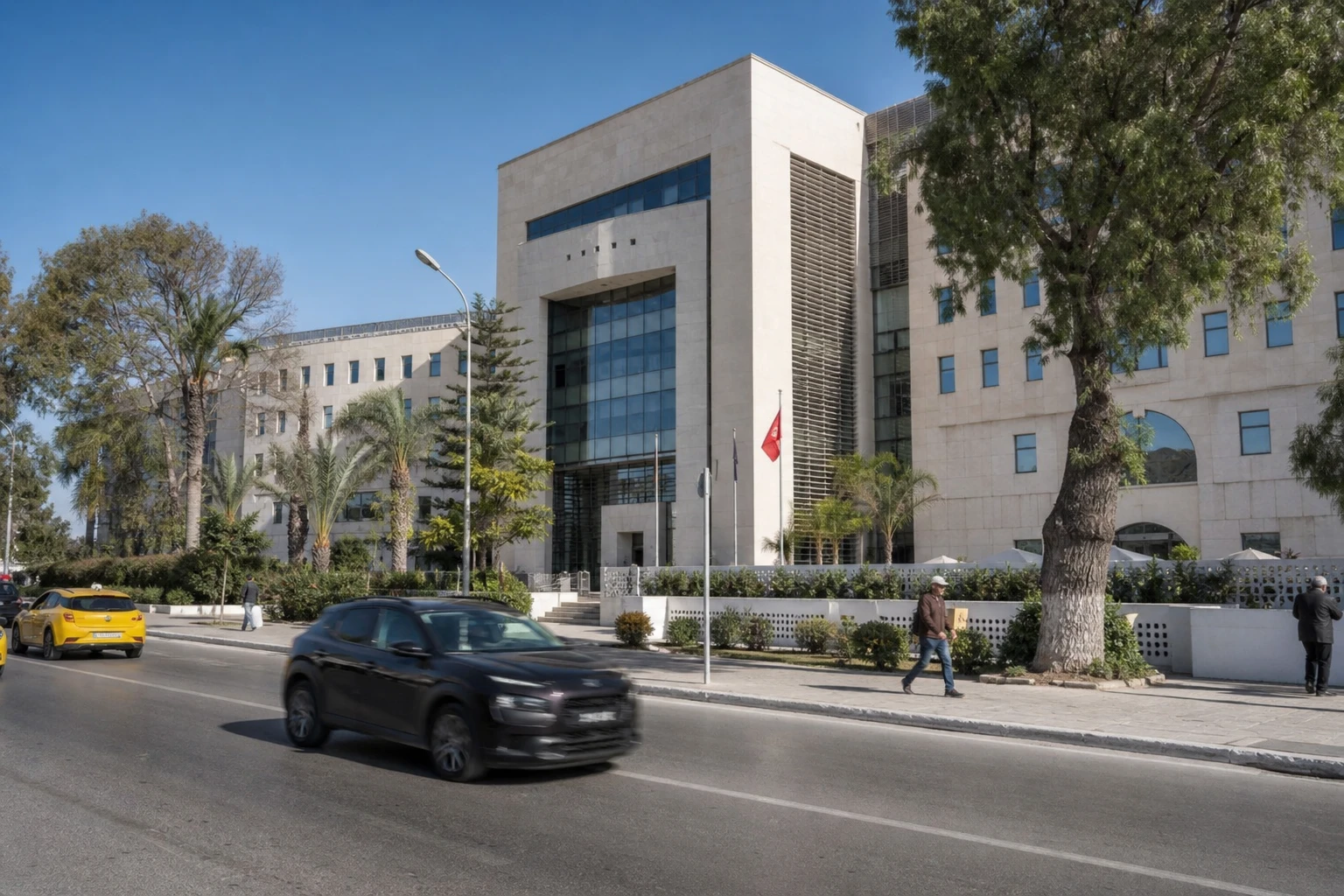
For Le Kef and Jendouba, the challenge is not limited to building a motorway. It is about bringing two governorates in north-western Tunisia closer to Tunis, national markets and services that remain concentrated along the coast.
Funding for north-western Tunisia
The Islamic Development Bank (IsDB) has approved €335.49 million in financing for Tunisia. The amount is equivalent to about 1.1 billion Tunisian dinars. The decision was taken at the 368th meeting of its Board of Executive Directors, held on 29 and 30 September 2026 in Jeddah, Saudi Arabia.
The financing is for a project to extend the motorway network towards the governorates of Le Kef and Jendouba. The IsDB presents the project as a way to improve mobility, road safety and the quality of transport infrastructure. It also aims to strengthen the economic integration of north-western Tunisia.
The decision was reported by the pan-African news agency Panafrican News Agency and confirmed by several Tunisian media outlets. The precise terms of the financing, including its duration, financial cost and detailed timetable for the works, have not yet been made public.
Panafrican News Agency’s announcement on the IsDB financing says the project is intended to serve Le Kef and Jendouba. This distinction is important: the announced package should not be confused with the financing for the Tunis–Jelma motorway.
Two projects to distinguish
Tunisia is pursuing several projects in parallel to improve links between Tunis and the inland regions. The corridor connecting the capital to the north-west is one of them. Technical and feasibility studies for the motorway project towards Le Kef were completed in the first half of 2026, according to information reported by the Tunisian press.
Another project is the A2 Tunis–Jelma motorway. Stretching 186 kilometres, it is intended to link Ben Arous governorate with Jelma, in Sidi Bouzid governorate. Its route also passes through Zaghouan and Kairouan. The project is divided into eight lots.
Work on the A2 is already under way. Tunisia’s Ministry of Equipment and Housing continued to monitor progress on the project in 2026, particularly on the first sections between Tunis and Zaghouan. The Tunisian government also confirmed on 12 August 2026 that the project would continue, with completion targeted for 2027.
Information from Tunisia’s Ministry of Equipment on the Tunis–Jelma motorway confirms its 186-kilometre length and the governorates it will serve. The Tunisian prime minister’s office website, for its part, says the A2 represents a total investment of close to 1.7 billion dinars.
The two projects address the same national priority, but they are not one and the same. The €335.49 million in IsDB financing announced is for extending the network towards Le Kef and Jendouba. The Tunis–Jelma motorway has its own financing arrangements and timetable.
A large network, but still uneven
Tunisia already has a substantial road network. According to the Ministry of Equipment and Housing, the classified road network totals about 19,750 kilometres. Nearly 12,750 kilometres are paved. The country also has about 360 kilometres of motorways and nearly 2,100 engineering structures and drainage facilities.
These figures do not reflect the same reality everywhere. The main routes linking Tunis to the major coastal cities are generally better integrated into economic flows. In several inland areas, distances, the condition of some roads and limited connections to motorways can still increase the cost of transporting goods and make daily travel more difficult.
The Tunisian ministry itself stresses the importance of maintenance and network continuity. A motorway will not have the same impact if the regional roads connecting to it remain in poor condition or if interchanges are far from production areas, urban centres and rural communities.
Official data on Tunisia’s road infrastructure therefore point to a twofold challenge: extending major routes while preserving existing roads.
What impact for the regions concerned?
For Le Kef and Jendouba, better links with Tunis could reduce journey times and improve access to markets. They could also support agricultural trade, small businesses and the movement of workers, students and patients.
The impact, however, will not be automatic. The benefits will depend on the route chosen, the interchanges, the quality of secondary roads and the reliability of public transport. Formal businesses could benefit from more predictable logistics. Those active in the informal economy, which plays a major role in local trade, will above all need affordable access to the new corridors.
Rural areas will also need to be included in the plan. Without well-maintained connecting roads, a motorway can improve travel between two cities while leaving villages and farms away from the main network cut off.
A national choice with implications beyond Tunisia’s borders
Tunisia has for several years sought to address the imbalance between the coast and the inland governorates. Road projects form part of this effort. They concern regional planning, economic competitiveness and access to public services.
At Maghreb level, better links to Le Kef and Jendouba could also strengthen trade with western Tunisia and areas close to the Algerian border. Their regional reach will, however, depend on connections to border posts, Algerian transport networks and logistics platforms.
The next steps will be practical: publish the timetable for the IsDB-funded project, specify its route and begin implementation procedures. For the Tunis–Jelma motorway, attention will focus on meeting the announced 2027 deadline. In both cases, success will be measured less by the amount of funding secured than by the network’s ability to connect Tunis, inland cities and their rural areas over the long term.