
 Algeria
 Egypt
 Libya
 Morocco
 Sudan
 Tunisia
 Benin
 Burkina Faso
 Cabo Verde
 Ghana
 Guinea
 Guinea-Bissau
 Liberia
 Mali
 Mauritania
 Niger
 Nigeria
 Senegal
 Sierra Leone
 The Gambia
 Togo
 Cameroon
 Central African Republic
 Chad
 DR Congo
 Equatorial Guinea
 Gabon
 Republic of the Congo
 São Tomé and Príncipe
 Burundi
 Comoros
 Djibouti
 Eritrea
 Ethiopia
 Kenya
 Madagascar
 Malawi
 Mauritius
 Mozambique
 Rwanda
 Seychelles
 Somalia
 South Sudan
 Tanzania
 Uganda
 Angola
 Botswana
 Eswatini
 Lesotho
 Namibia
 South Africa
 Zambia
 Zimbabwe
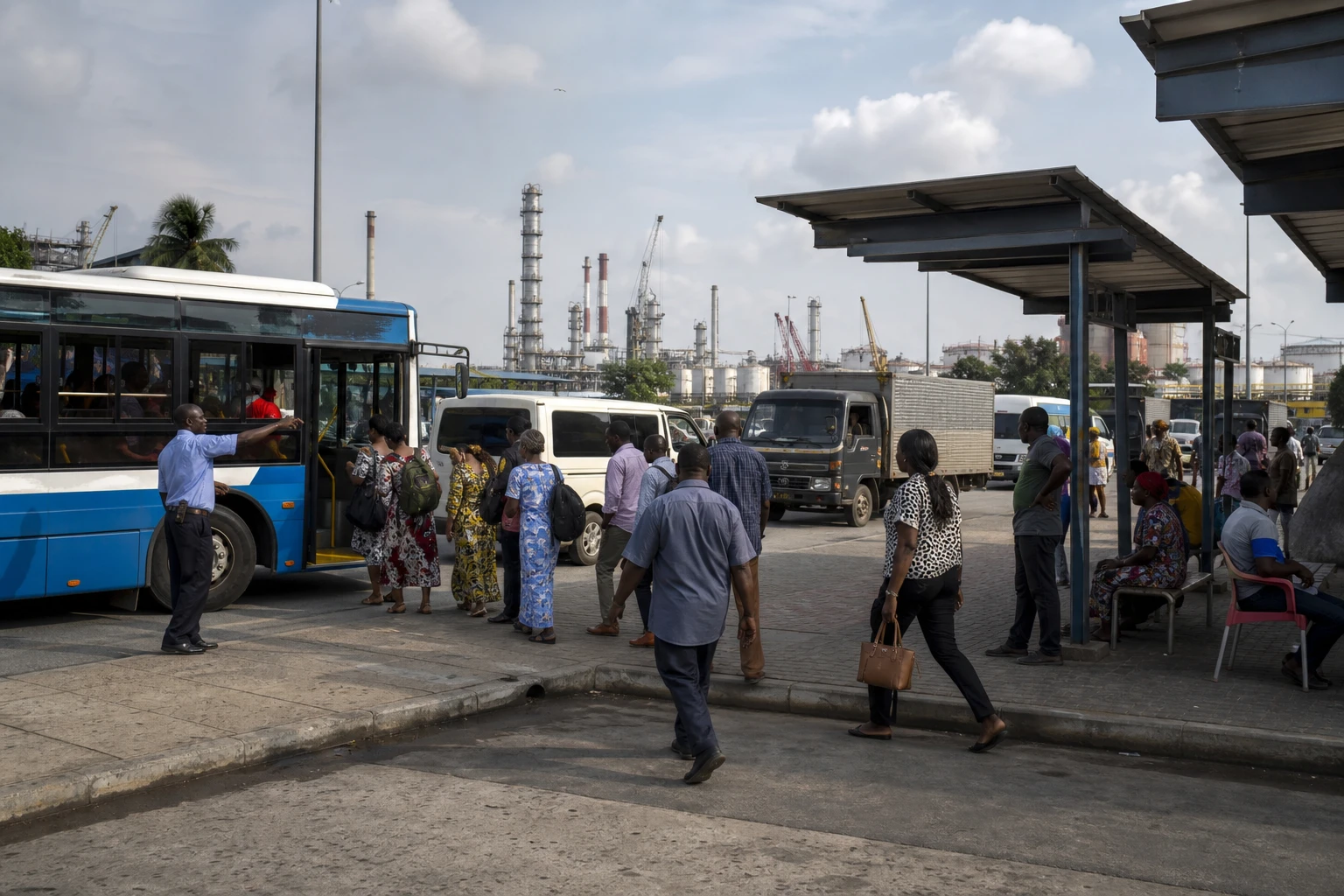
In Abidjan and the country’s coastal industrial zones, the question is no longer simply how to produce oil and gas. It is now about who operates the fields, who processes the resources and what share of the value remains in the Ivorian economy.
The creation of PETROCI CI-26 is part of this equation. It gives the Ivorian state a dedicated vehicle to operate block CI-26, also known as the Espoir field, while extending a policy pursued for more than a decade.
A legal change after operational takeover
The Council of Ministers, which met in Abidjan on 9 September 2026, authorised the creation of PETROCI CI-26. The public limited company will be wholly owned by PETROCI Holding, Côte d’Ivoire’s state-owned oil company.
The new subsidiary is to operate block CI-26, located offshore from Jacqueville. Its main asset is the Espoir field, discovered in 1980 and brought back into production in 2002. For several years, the Canadian operator Canadian Natural Resources, or CNR, operated it.
The timeline requires some clarification, however. The creation of the subsidiary, decided in September, did not mark the start of the takeover on the ground. The official transfer of the assets to PETROCI Holding was formalised on 24 July 2026, with operations taken over from midnight that same day. The Council of Ministers’ decision therefore gave legal force to this new arrangement.
This distinction matters. It shows that the state is no longer content simply to collect revenues or hold a contractual stake. It also wants a structure capable of directly managing an oil asset, with all the technical, financial and human requirements that entails.
From attracting investment to controlling assets
Since 2011, Côte d’Ivoire has sought to develop its offshore sedimentary basin. The 2012 reform of the Petroleum Code aimed to make contracts clearer and attract the investment needed for exploration. This opening helped accelerate drilling campaigns and renew the sector’s prospects.
Côte d’Ivoire’s approach therefore rests on a balance. International groups provide capital, technology and operational experience. At the same time, PETROCI retains a place in production-sharing contracts. In several recent projects, its initial stake is set at 10 %, while the private operator bears the financial risk of exploration.
The trajectory of Baleine illustrates this formula. Discovered in 2021 and brought into production in 2023, the field is operated by Eni. After several divestment transactions, the ownership split announced in September 2026 stands at 37.25 % for Eni, 30 % for Vitol, 22.75 % for PETROCI and 10 % for Azerbaijan’s state-owned oil company SOCAR.
This presence does not make PETROCI the sole operator of every project. It does, however, increase its influence over decisions and allow it to build industrial experience. In time, the challenge will be to turn this equity stake into lasting national expertise.
Rising production, but a balance to maintain
Baleine’s results have changed the scale of the sector. According to figures released by the Ivorian government, phases 1 and 2 are expected to raise production to about 75,000 to 85,000 barrels of crude oil a day, with gas production of between 80 and 85 million cubic feet a day.
In January 2025, the government said the second phase would reach between 50,000 and 60,000 barrels a day. Eni, for its part, estimates that the third phase could raise Baleine’s output to 150,000 barrels a day, as well as 200 million cubic feet of gas a day.
These figures remain development targets, not an automatic guarantee. They will depend on the investment schedule, the performance of facilities and developments in the global market. Côte d’Ivoire will also need to avoid allowing higher production to create excessive dependence on oil revenues.
Gas is an immediate priority. It supplies much of the fuel for thermal power stations that provide the country’s electricity. Higher domestic production could therefore ease pressure on imports and strengthen the stability of the power system. For households and businesses, the expected benefit is measured less in barrels than in reliable supply and cost control.
In 2024, Ivorian production amounted to about 16.1 million barrels of crude oil and 2.4 billion cubic metres of natural gas. Levies on petroleum products reached 627.7 billion CFA francs, according to government figures. These receipts must, however, be distinguished from revenues directly linked to field production.
Processing more to capture value
Energy sovereignty is not built solely offshore. It is also forged in refineries, terminals, distribution networks and service companies.
In Abidjan, the Ivorian Refining Company (SIR) began work on a gasoil hydrodesulphurisation complex on 2 October 2025. The announced investment amounts to 545 billion CFA francs. From 2030, the facility is due to produce gasoil with lower sulphur content and in line with international standards.
Hydrodesulphurisation is a process that removes some of the sulphur present in fuels. It has industrial benefits, as well as health and environmental ones. SIR expects it to reduce sulphur dioxide emissions associated with the treated product by 75 %.
The country is also working on a second refinery. An agreement announced with Yaatra involves an investment of several billion dollars, although published figures vary according to the sources and stages of the project. Caution is warranted while the financing structure, schedule and final capacity remain incompletely documented.
Côte d’Ivoire thus aims to become a processing and distribution hub for West Africa. This ambition directly concerns the Economic Community of West African States (ECOWAS), which is seeking to harmonise regional standards and trade. A more modern refinery could strengthen supplies to Côte d’Ivoire, as well as to neighbouring markets.
The challenge of local content and governance
PETROCI’s growing role raises a central question: which Ivorian companies will genuinely take part in this new phase? Direct jobs in extraction remain limited. The broadest benefits lie in maintenance, maritime logistics, engineering, training, industrial safety and digital services.
Local content must therefore go beyond one-off subcontracting contracts. It requires skills transfers, qualification standards and genuine access for small and medium-sized enterprises to sector markets. Without this, increased production could boost public revenues without creating a sufficiently strong industrial supply chain.
Transparency will be just as important. Public stakes, revenues from contracts and production costs must remain clear. This requirement protects public finances and reduces the risk of disputes over the management of natural resources.
An Ivorian ambition that extends beyond the coast
In 2026, Côte d’Ivoire holds the presidency of the African Petroleum Producers’ Organization (APPO). The organisation brings together 18 producer countries and advocates African cooperation in exploration, processing and the financing of energy projects.
Abidjan has placed local content at the heart of its presidency. The issue extends beyond Côte d’Ivoire’s borders. Several African countries still export crude oil or gas while importing some of their fuels and equipment. Creating more operational national companies can help correct this imbalance, provided they have access to capital, expertise and regional markets.
The next test will be twofold. Côte d’Ivoire will have to confirm Baleine’s performance and secure its new projects. It will also have to show that increased hydrocarbon production is funding lasting capabilities without undermining the transition to other energy sources.
With PETROCI CI-26, the country is not breaking with international partnerships. It is trying to shift the balance of power within them. The goal is now to move from extraction towards a more closely controlled energy chain, from the seabed to industrial processing.



