
 Algeria
 Egypt
 Libya
 Morocco
 Sudan
 Tunisia
 Benin
 Burkina Faso
 Cabo Verde
 Côte d'Ivoire
 Ghana
 Guinea
 Guinea-Bissau
 Liberia
 Mali
 Mauritania
 Niger
 Nigeria
 Senegal
 Sierra Leone
 The Gambia
 Togo
 Cameroon
 Central African Republic
 Chad
 Equatorial Guinea
 Gabon
 Republic of the Congo
 São Tomé and Príncipe
 Burundi
 Comoros
 Djibouti
 Eritrea
 Ethiopia
 Kenya
 Madagascar
 Malawi
 Mauritius
 Mozambique
 Rwanda
 Seychelles
 Somalia
 South Sudan
 Tanzania
 Uganda
 Angola
 Botswana
 Eswatini
 Lesotho
 Namibia
 South Africa
 Zambia
 Zimbabwe
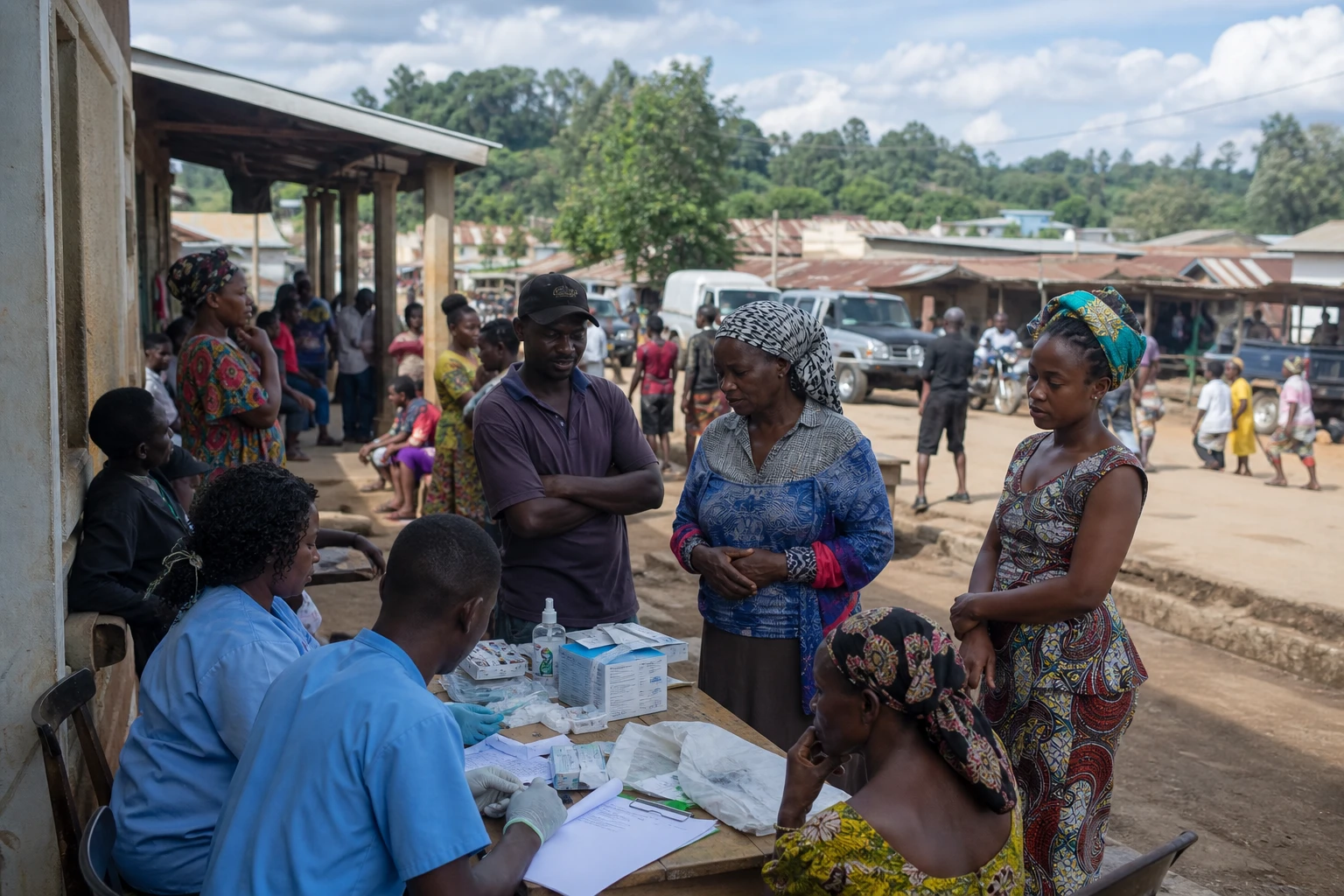
In eastern Democratic Republic of the Congo, treating Ebola patients also required securing roads, health centres and cemeteries. In 2019, the outbreak was spreading in areas where medical teams travelled under threat from armed groups and violence against aid workers.
In Mambasa, the health response also depends on security
Mambasa territory, in Ituri province, lies at the junction of several sensitive areas. Population movements, mining activities and the presence of armed groups complicate health surveillance. The area is also far from Bunia, the provincial capital, lengthening response times.
In mid-September 2019, the World Health Organization recorded 29 confirmed cases in the Mambasa health zone. The same tally reported 293 confirmed cases in Nia-Nia, an area within Mambasa territory. These figures reflected the epidemiological situation available at that date, not a permanent situation.
In this part of Ituri, the Allied Democratic Forces, often referred to by the acronym ADF, were then concentrating some of their attacks to the south and near the border with North Kivu. Mining sites and transport routes were among the areas at risk.
This insecurity had a direct impact on the fight against Ebola. Teams tasked with tracing contacts, transporting patients or organising safe burials could not always reach the villages concerned. Every delay increased the risk of undetected transmission.
MONUSCO and the FARDC open corridors for response teams
To ease these blockages, the United Nations Organization Stabilization Mission in the Democratic Republic of the Congo, or MONUSCO, increased its presence in Mambasa. It also set up a mobile operating base in Nia-Nia to support patrols in the hardest-to-reach areas.
United Nations peacekeepers and Congolese soldiers from the Armed Forces of the Democratic Republic of the Congo, the FARDC, conducted joint patrols. Their role was not to lead the medical response. It was to create minimum security conditions that would allow health workers and humanitarian organisations to operate.
MONUSCO said it had established a temporary military base in Mambasa on 13 September 2019. The aim was, in particular, to increase the number of patrols and reassure both residents and aid workers. The UN mission also stressed the need to maintain dialogue with communities, since armed protection could not replace trust.
The operations were conducted in coordination with the Congolese authorities and the World Health Organization. They were intended to facilitate access to treatment centres, monitoring points and burial sites. In a rapidly spreading epidemic, securing a route for a few hours can make it possible to carry out several essential interventions.
In Mamove and Sayo, in North Kivu, combat units also helped extend the range of joint patrols. These areas lay along routes where attacks and ambushes regularly disrupted the movement of teams.
Safe burials, a particularly vulnerable moment
Burial teams were among the most vulnerable. They often intervened after someone had died, in communities already gripped by fear and mistrust. Young people in some neighbourhoods or villages could oppose their arrival, sometimes amid tensions fuelled by rumours.
Yet safe burials are a central part of the response. They aim to limit contact with the bodily fluids of a deceased person, while respecting families and local customs as far as possible. An intervention perceived as brutal or imposed can prompt community resistance and complicate subsequent operations.
A week before the publication of the tally cited above, seven burials of people whose infection had been confirmed had received security support at the cemeteries of Bundji, Vulindi and Kitovo, in North Kivu. This figure, reported as part of the response, illustrates the cooperation between health teams and the forces tasked with protecting them.
Security did not, however, remove all obstacles. The United Nations reported ambushes, vehicle thefts and other criminal acts that could slow the movement of teams. These incidents affected health operations first, but their impact was felt in villages: delayed consultations, contacts not traced and patients sometimes far from treatment centres.
A response that cannot rely on force alone
Patrols addressed an immediate need, but they also had limitations. In several areas of eastern DR Congo, people had already experienced military operations, forced displacement and repeated violence. The presence of soldiers around a health centre could therefore reassure some residents while worrying others.
The success of the response thus depended on several conditions at once: protecting teams, explaining their methods, involving local authorities and taking families’ concerns into account. Traditional leaders, religious figures, women’s organisations and youth representatives could play an important role in reducing resistance and rumours.
WHO data on the 2018-2020 epidemic already show that insecurity disrupted contact tracing and safe burials. In areas where teams could not move freely, knowledge of the chains of transmission became incomplete. This in turn made it harder to target vaccination and care.
The situation also highlighted the particular role of Ituri and North Kivu in regional dynamics. These provinces are near Uganda and lie along busy trade routes. Mining activities, the movement of workers and cross-border trade could accelerate the movement of people, making coordination between Kinshasa, provincial authorities and neighbouring countries essential.
A national and regional challenge for DR Congo
In 2019, the Democratic Republic of the Congo already had considerable experience managing Ebola outbreaks. But this medical expertise was not enough in territories where roads were controlled by armed groups or exposed to attacks.
MONUSCO’s deployment alongside the FARDC therefore addressed a specific need: enabling health teams to reach communities. It did not resolve either the root causes of insecurity or the mistrust that had built up over the years. The response had to combine protection, care, information and local participation.
For Kinshasa, the stakes went beyond the outbreak figures. They also included maintaining public services in remote areas, protecting Congolese personnel and preserving trade with neighbouring countries. For residents of Mambasa, Nia-Nia and neighbouring territories, the question was more immediate: being able to access care without having to choose between health risks and security risks.



