Algeria
 Egypt
 Libya
 Morocco
 Sudan
 Tunisia
 Benin
 Burkina Faso
 Cabo Verde
 Côte d'Ivoire
 Ghana
 Guinea
 Guinea-Bissau
 Liberia
 Mali
 Mauritania
 Niger
 Nigeria
 Senegal
 Sierra Leone
 The Gambia
 Togo
 Cameroon
 Central African Republic
 Chad
 Equatorial Guinea
 Gabon
 Republic of the Congo
 São Tomé and Príncipe
 Burundi
 Comoros
 Djibouti
 Eritrea
 Ethiopia
 Kenya
 Madagascar
 Malawi
 Mauritius
 Mozambique
 Rwanda
 Seychelles
 Somalia
 South Sudan
 Tanzania
 Uganda
 Angola
 Botswana
 Eswatini
 Lesotho
 Namibia
 South Africa
 Zambia
 Zimbabwe
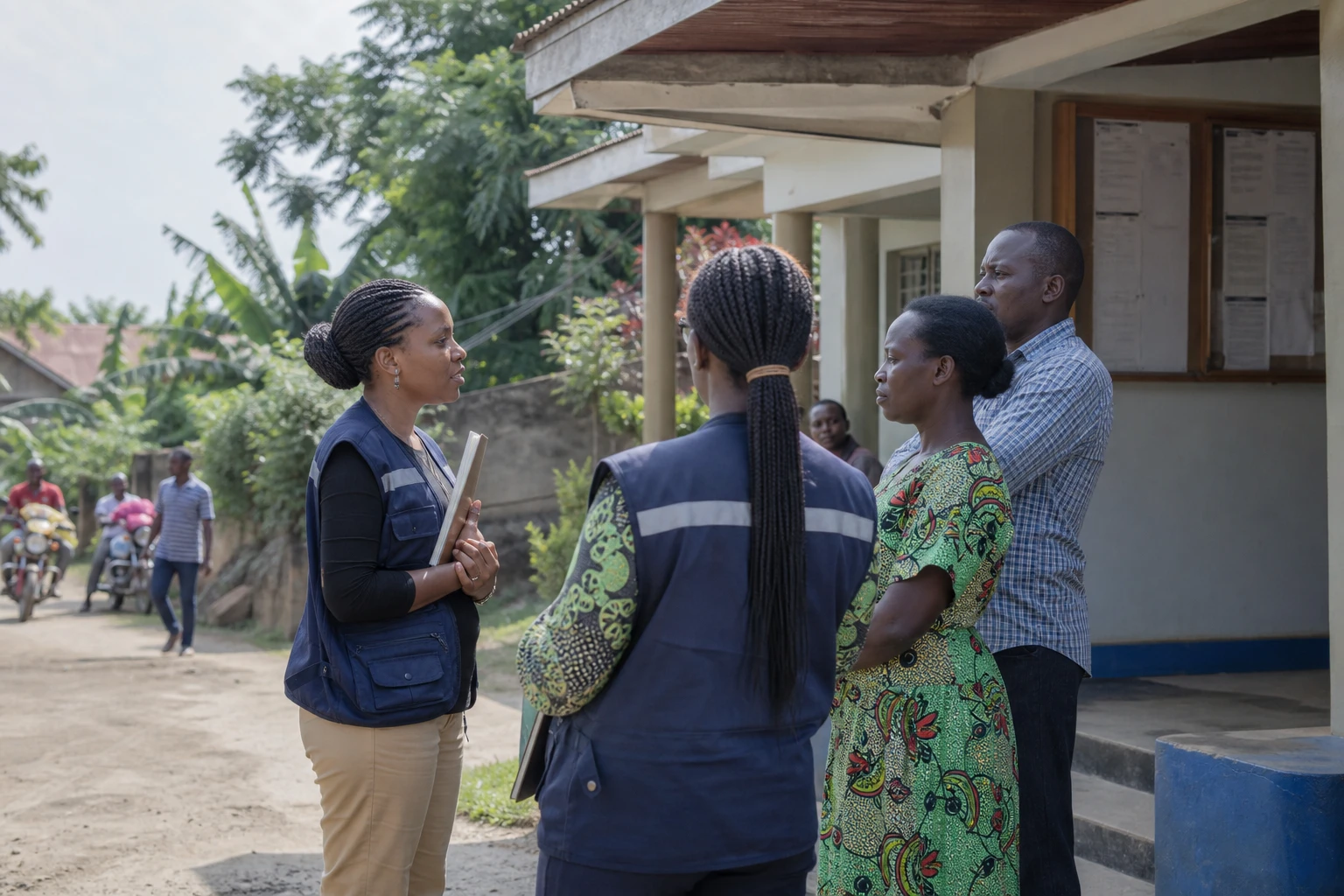
In Bunia, the response to Ebola depends as much on treatment centres as on building trust with communities. It was in this city in Ituri, in the north-east of the Democratic Republic of the Congo, that Jean-Noël Barrot chose to focus part of his official visit on 2 and 3 October 2026.
The French Minister for Europe and Foreign Affairs’ visit comes as the outbreak has passed the threshold of 4,000 deaths. It also gives a diplomatic dimension to a health emergency that now extends beyond the Congolese health services alone.
Bunia, the focal point of a national health crisis
The Democratic Republic of the Congo’s 17th Ebola outbreak was declared on 15 May 2026. The first identified outbreaks were in the health zones of Mongbwalu, Rwampara and Bunia, in Ituri. Tests by the National Institute of Biomedical Research, based in Kinshasa, confirmed the presence of the Bundibugyo virus.
This strain sets the current outbreak apart from the country’s previous major outbreaks. The response must therefore combine rapid diagnosis, contact tracing, medical care and measures to prevent infections in healthcare facilities. The World Health Organization and the Africa Centres for Disease Control and Prevention have also stressed the role of communities in this strategy.
The figures illustrate how quickly the outbreak has spread. As of 30 September, the WHO had recorded 7,773 cases and 3,759 deaths across seven provinces and 63 health zones. Two days later, authorities cited by the Associated Press reported 4,018 deaths among about 8,300 cases. This difference is due in part to the gap between the dates on which data were collected and published, as well as the harmonisation of epidemiological figures.
A visit to medical teams on the front line
Jean-Noël Barrot made a return trip to Bunia from Kinshasa. While there, his programme was due to take him to meet teams involved in the response, including at the Rwampara treatment centre, about 10 kilometres from Ituri’s provincial capital.
Rwampara is among the worst-affected areas. The WHO has reported several transmission chains there and identified it as an important epidemiological surveillance point. Teams are tracing people who have been in contact with patients, referring suspected cases and working to limit infections in families and healthcare facilities.
The visit also gives the French minister an opportunity to see the practical conditions in which patients are treated. Centres must isolate patients, protect healthcare workers, provide essential care and maintain regular communication with relatives. The pressure is intense, as the outbreak is affecting areas that already faced health needs before the virus emerged.
As of 1 September, Ituri had 25 care facilities, including 15 Ebola treatment centres and 10 transit centres. Their combined capacity was 974 beds. More than 4,000 additional health professionals had been deployed in the affected provinces, according to WHO Africa.
Public health contends with mistrust and insecurity
Ebola’s spread does not depend solely on the number of available beds. It also hinges on teams’ ability to gain residents’ acceptance. In several areas, families are still reluctant to report someone who is ill or allow surveillance workers into their homes. This reluctance can delay isolation and lead to further transmission.
Community engagement is therefore central. In Bunia, surveillance teams must explain symptoms, organise contact tracing and address concerns about treatment and safe burials. On 30 September, the WHO said 680 community volunteers had been deployed across 17 health zones, with a target of mobilising 1,603 people by the end of October.
The health crisis is unfolding against a backdrop of armed violence and population displacement. In Ituri, insecurity can disrupt access to remote communities. Not all patients are near Bunia. For people in rural areas, reaching a treatment centre can mean a long journey, significant expense and additional risk.
The consequences extend beyond Ebola. Between April and June 2026, use of essential health services fell by 42% in the main outbreak areas of Bunia, Mongbwalu, Nizi and Rwampara. Consultations, childhood vaccinations and births in healthcare facilities were affected by fear of infection and disruptions to the provision of care, according to UNICEF.
A diplomatic message in a tense region
Jean-Noël Barrot’s presence in Bunia is therefore about more than health solidarity. It comes at a time when Paris is also seeking to maintain close dialogue with Kinshasa on security, humanitarian aid and justice in the east of the Democratic Republic of the Congo.
In Kinshasa, the French minister discussed bilateral cooperation, the security situation and the response to the outbreak with Congolese authorities. In Bunia, the message becomes more operational: support the teams on the ground, assess needs and stress that the response must remain under the leadership of Congolese institutions and local actors.
This approach is important to prevent a response designed solely in foreign capitals. The National Institute of Biomedical Research plays a central role in diagnosis and scientific monitoring. Congolese health workers carry out much of the day-to-day work. Community volunteers, meanwhile, provide a direct link with families.
The regional dimension also remains significant. Ituri borders several areas where people frequently cross from one place to another. Uganda was affected by imported cases at the start of the outbreak. The WHO then classified the outbreak as a public health emergency of international concern. Border surveillance and information-sharing are essential to prevent transmission chains from moving faster than health teams.
For Kinshasa, the immediate challenge is to reduce mortality and halt transmission in the areas where the outbreak remains active. For foreign partners, it is to support the response without taking the place of national authorities. What happens next will depend on the quality of contact tracing, access to care in rural areas and the trust built with residents.
Jean-Noël Barrot’s visit thus places Bunia at the heart of a dual agenda: the immediate Ebola emergency, and a political partnership that will now be judged on its tangible results on the ground.