Algeria
 Egypt
 Libya
 Morocco
 Sudan
 Tunisia
 Benin
 Burkina Faso
 Cabo Verde
 Côte d'Ivoire
 Ghana
 Guinea
 Guinea-Bissau
 Liberia
 Mali
 Mauritania
 Nigeria
 Senegal
 Sierra Leone
 The Gambia
 Togo
 Cameroon
 Central African Republic
 Chad
 DR Congo
 Equatorial Guinea
 Gabon
 Republic of the Congo
 São Tomé and Príncipe
 Burundi
 Comoros
 Djibouti
 Eritrea
 Ethiopia
 Kenya
 Madagascar
 Malawi
 Mauritius
 Mozambique
 Rwanda
 Seychelles
 Somalia
 South Sudan
 Tanzania
 Uganda
 Angola
 Botswana
 Eswatini
 Lesotho
 Namibia
 South Africa
 Zambia
 Zimbabwe
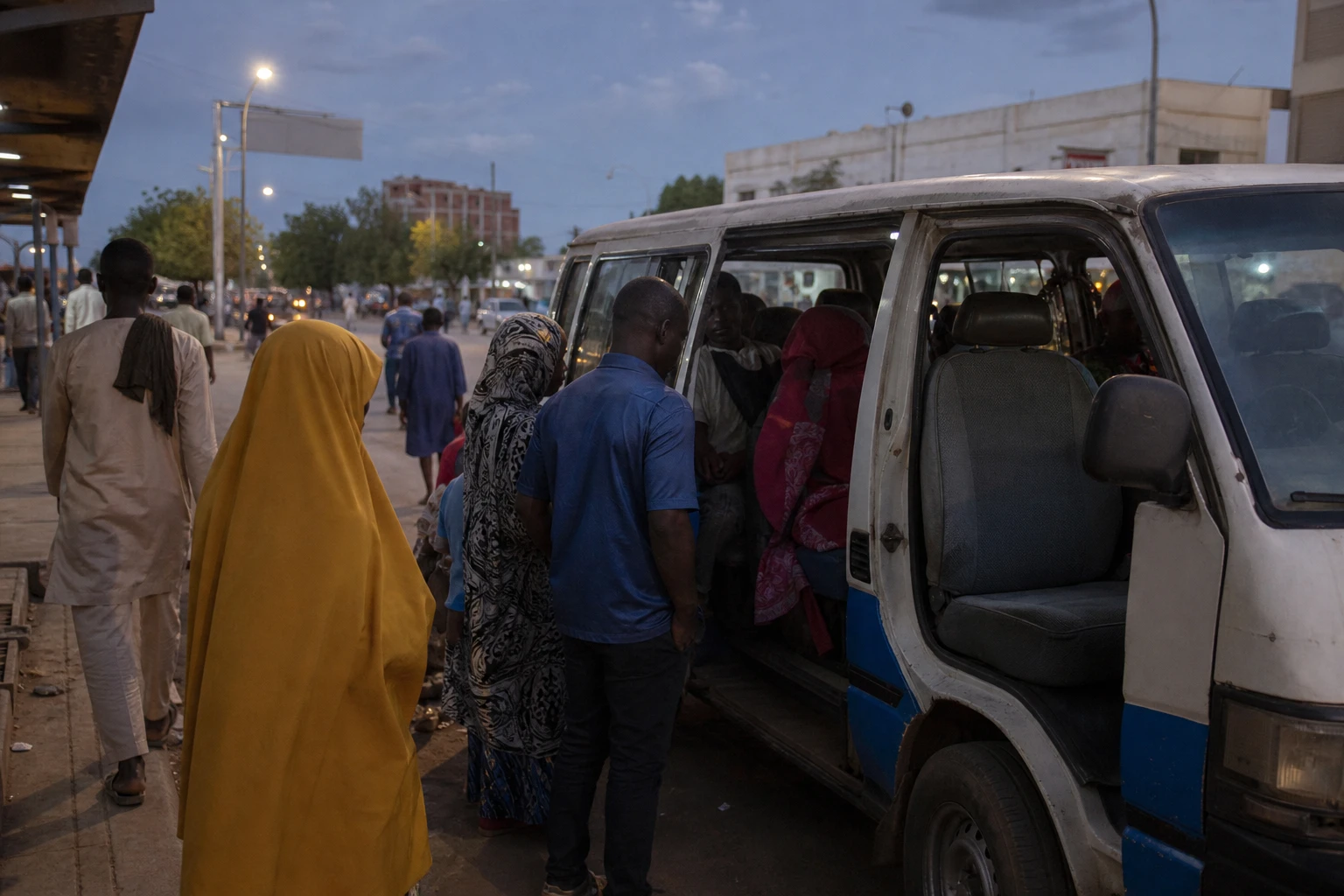
In Niamey, concern is growing over a disappearance that affects far more than Moussa Kaka’s family. Since Monday 31 August 2026, the experienced Nigerien journalist has been missing after leaving his media organisation’s offices. His vehicle has also not been found.
Disappearance reported after he left his office
Moussa Kaka left the offices of Radio-Télévision Saraounia, in Niamey’s Kalley-Est district, at around 7pm. He was expected to return home. Since then, his relatives and colleagues say they have had no contact with him.
These details were reported by his family, professional organisations and human rights groups. The Observatory for the Protection of Human Rights Defenders, a partnership between the International Federation for Human Rights and the World Organisation Against Torture, has called for urgent information about his situation.
So far, no Nigerien authority has publicly explained where the journalist is or announced that an investigation has been opened. This lack of communication is fuelling questions, but does not make it possible to officially establish the circumstances of his disappearance.
The G25-Niger collective, for its part, says Moussa Kaka may have been followed after leaving the office and then intercepted on his way. The group suggests intelligence services may have been involved. These allegations have not been confirmed by an independent official source and should therefore be treated with caution.
A journalist known for covering Niger’s crises
Moussa Kaka heads the Saraounia media group, which includes a radio station and a private television channel. According to Reporters Without Borders, the group employs several dozen people and has a presence in Niamey as well as in various localities, including Tahoua, Maradi and Madaoua.
The journalist began his career at Niger’s national radio station before founding Radio Saraounia in 1999. The group’s television channel was launched in 2011. For several decades, he has covered political life, security issues, armed conflicts and debates on governance in his country.
He was also a correspondent for Radio France Internationale in Niger until 2023, when the military authorities suspended the radio station’s broadcasts in the country. He has also worked with Reporters Without Borders on issues related to press freedom and the protection of journalists.
His career explains why his disappearance has particular significance. Moussa Kaka is not just a media executive. He is also a well-known figure in the profession, in contact with journalists, political figures, civil society organisations and security actors.
A more tense political and media environment
The disappearance comes at a time of heightened tension in Niger. The country has been led by General Abdourahamane Tiani since the coup d’état of 26 July 2023. This political rupture led to a prolonged confrontation with the Economic Community of West African States, ECOWAS, a regional organisation whose remit includes defending cooperation and stability in West Africa.
Since then, the authorities have tightened their control over public space. Civil society organisations have been dissolved or suspended. Opposition figures and critics have been arrested. Several media outlets have also reported pressure, administrative restrictions or difficulties in carrying out their work.
Human Rights Watch recalled that Moussa Kaka had already been arrested in October 2025 along with five other journalists. They were detained after announcing a press briefing about a solidarity fund intended to support security forces’ operations. The circumstances and legal aftermath of the case raised concerns among press freedom organisations at the time.
The current disappearance comes a few days after an attempted mutiny was reported in Niamey on 28 and 29 August 2026. Military personnel are said to have taken control of strategic sites before the situation was brought under control. Niger’s authorities have since made changes to the military hierarchy. No link between this episode and Moussa Kaka’s disappearance has been established.
Calls from press and human rights organisations
The Committee to Protect Journalists, Reporters Without Borders, Human Rights Watch, the Union of African Free Press Journalists and the FIDH-OMCT Observatory are calling on the authorities to locate Moussa Kaka and guarantee his safety.
Their request centres first on a simple fact: to establish whether the journalist is free, detained or a victim of enforced disappearance. An unacknowledged detention would deprive his family of essential information and restrict his access to a lawyer. An independent investigation would therefore be needed to verify accounts, examine surveillance footage and trace the route taken by his vehicle.
For media professionals, the case is also creating an atmosphere of uncertainty. In the capital and in the regions, journalists already have to contend with security-related restrictions, the risk of prosecution and the difficulty of obtaining official information. The disappearance of a recognised media group head could intensify self-censorship, particularly on military and political issues.
A case being followed beyond Niger’s borders
Moussa Kaka’s case has now gone beyond the national sphere. It concerns press freedom in Niger, but also the ability of regional and continental institutions to respond when a journalist disappears during a military transition.
ECOWAS remains an important regional actor despite the political rupture between several coup-led governments and the West African organisation. The African Union, for its part, has long monitored the consequences of unconstitutional changes of government and restrictions on civil liberties.
The immediate priority remains locating Moussa Kaka and confirming his state of health. Until verifiable official information is released, theories about his abductors or possible detention must remain attributed. For his family, colleagues and the profession, each day without an answer makes the need for a public clarification more urgent.