
 Algeria
 Egypt
 Libya
 Morocco
 Sudan
 Tunisia
 Benin
 Burkina Faso
 Cabo Verde
 Côte d'Ivoire
 Ghana
 Guinea
 Guinea-Bissau
 Liberia
 Mali
 Mauritania
 Niger
 Nigeria
 Senegal
 Sierra Leone
 The Gambia
 Togo
 Cameroon
 Central African Republic
 Chad
 Equatorial Guinea
 Gabon
 Republic of the Congo
 São Tomé and Príncipe
 Burundi
 Comoros
 Djibouti
 Eritrea
 Ethiopia
 Kenya
 Madagascar
 Malawi
 Mauritius
 Mozambique
 Rwanda
 Seychelles
 Somalia
 South Sudan
 Tanzania
 Uganda
 Angola
 Botswana
 Eswatini
 Lesotho
 Namibia
 South Africa
 Zambia
 Zimbabwe
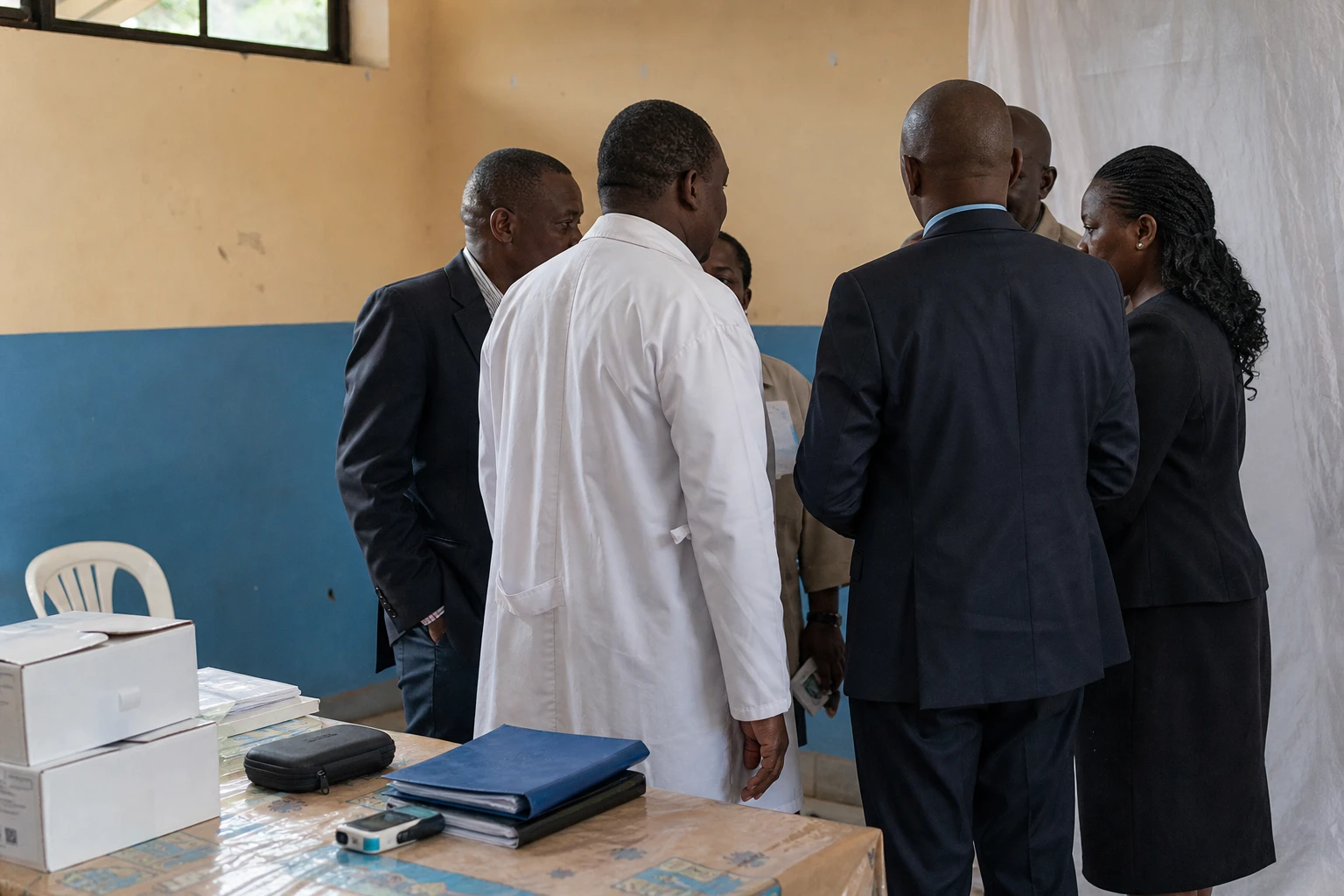
In Bunia, Jean-Noël Barrot’s visit comes as the Democratic Republic of the Congo faces an Ebola outbreak that is placing severe strain on health services, displaced communities and response teams. The French minister’s trip is therefore more than a diplomatic gesture: it is taking place at the heart of a crisis in which the health response also depends on security, trust and access to territory.
An outbreak emerging in an already fragile context
The Congolese government declared this 17th Ebola outbreak on 15 May 2026, following the appearance of the first outbreaks in Ituri. This province in eastern DR Congo has experienced armed violence, population displacement and serious difficulties accessing healthcare for several years.
Ituri is not, however, isolated from the rest of the country. Health authorities have reported the virus circulating in several provinces, including North Kivu, South Kivu, Haut-Uele, Bas-Uele, Tshopo and South Ubangi. This spread complicates contact tracing and increases the risk of transmission along trade routes and migration corridors.
The available figures do not fully align. The International Committee of the Red Cross reported 7,404 confirmed cases, 3,577 deaths and 1,776 recoveries as of 15 September 2026. Other figures provided more recently by the Congolese authorities show 8,300 cases, 4,018 deaths and 2,162 recoveries. These differences may be explained by the date of the update, the inclusion of new laboratory results and the late reporting of data from hard-to-reach areas.
The figure of 8,300 cases should therefore be attributed to the Congolese authorities and placed in the context of these changing statistics. It nevertheless confirms a clear trend: the current outbreak has surpassed the toll of the major 2018-2020 Ebola outbreak in eastern DR Congo, which caused more than 3,400 cases and more than 2,200 deaths.
Jean-Noël Barrot’s visit to Bunia
France’s Minister for Europe and Foreign Affairs arrived in Ituri on Saturday 3 October 2026. According to the French diplomatic service, Jean-Noël Barrot was due to visit Bunia, the provincial capital, to observe the response to Ebola and meet those involved on the ground.
The visit is part of a two-day trip to the Democratic Republic of the Congo. It follows several discussions on cooperation, the security situation in the east of the country and diplomatic efforts in the Great Lakes region.
France has presented the trip as support for the Congolese health response. For local authorities and organisations, however, the stakes are broader. Civil society groups in Ituri are also looking for commitments on the security of medical teams, the protection of civilians and justice in a province marked by persistent violence.
The presence of a senior foreign official can help mobilise funding and logistical resources. It cannot, however, replace the work of Congolese health workers, community mobilisers and local organisations. These teams carry out screening, refer patients, vaccinate when vaccines are available, monitor contacts and conduct safe burials.
Three obstacles facing the health response
The first obstacle is geographical. Some health zones are far from Bunia and remain difficult to reach. Poor roads slow the transport of samples, medicines and protective equipment. They also make it harder to evacuate patients quickly to treatment centres.
The second obstacle is security. In Ituri, armed violence restricts the movement of medical teams and disrupts the continuity of operations. In some areas, residents have also been cut off from health services by fighting or the temporary closure of facilities.
The third obstacle is trust. A health intervention perceived as external or imposed can provoke resistance. Safe burials, the isolation of patients and the disinfection of homes affect essential family and religious practices. Without dialogue with community leaders, local associations and families, the response risks losing time.
The virus responsible for this outbreak is the Bundibugyo virus, for which the available medical tools are not the same as those used in previous outbreaks of the Zaire strain. This makes rapid diagnosis, appropriate isolation and early treatment all the more important.
The strain is not limited to specialised centres. Ordinary health facilities must continue treating malaria, respiratory infections, pregnancy complications and injuries. In affected areas, fear of Ebola can delay consultations. Conversely, overstretched teams may reduce the availability of routine care.
A health crisis tied to regional dynamics
The crisis extends beyond Ituri’s administrative borders. The Democratic Republic of the Congo shares this alert zone with Uganda, while North Kivu and South Kivu remain connected to the security dynamics of the Great Lakes region. The movement of traders, families and displaced people makes cross-border coordination essential.
This coordination involves health authorities as well as regional surveillance mechanisms and partners in the East African Community, of which the DR Congo is a member. It should enable alerts to be shared, health checks to be strengthened without blocking trade, and suspected cases to be treated on both sides of the borders.
For Bunia’s residents, the priorities remain practical: access to a health centre, reliable information and the ability to travel without exposing their families to the virus. For the Congolese authorities, the challenge is to sustain a national response in a vast country, while several provinces are already facing humanitarian crises.
Jean-Noël Barrot’s visit will therefore be judged less by what is said than by what follows. The coming weeks will show how infections develop, whether isolated areas can be reached and whether response funding remains consistent. In Ituri, the fight against Ebola is being waged in laboratories, treatment centres, villages and diplomatic negotiations alike.
The French diplomatic service confirms the visit to Ituri. Epidemiological data published by the International Committee of the Red Cross and by the DR Congo’s National Institute of Public Health remain essential for tracking the situation.



