
 Algeria
 Egypt
 Libya
 Morocco
 Sudan
 Tunisia
 Benin
 Burkina Faso
 Cabo Verde
 Côte d'Ivoire
 Ghana
 Guinea
 Guinea-Bissau
 Liberia
 Mali
 Mauritania
 Niger
 Nigeria
 Senegal
 Sierra Leone
 The Gambia
 Togo
 Cameroon
 Central African Republic
 Chad
 Equatorial Guinea
 Gabon
 Republic of the Congo
 São Tomé and Príncipe
 Burundi
 Comoros
 Djibouti
 Eritrea
 Ethiopia
 Kenya
 Madagascar
 Malawi
 Mauritius
 Mozambique
 Rwanda
 Seychelles
 Somalia
 South Sudan
 Tanzania
 Uganda
 Angola
 Botswana
 Eswatini
 Lesotho
 Namibia
 South Africa
 Zambia
 Zimbabwe
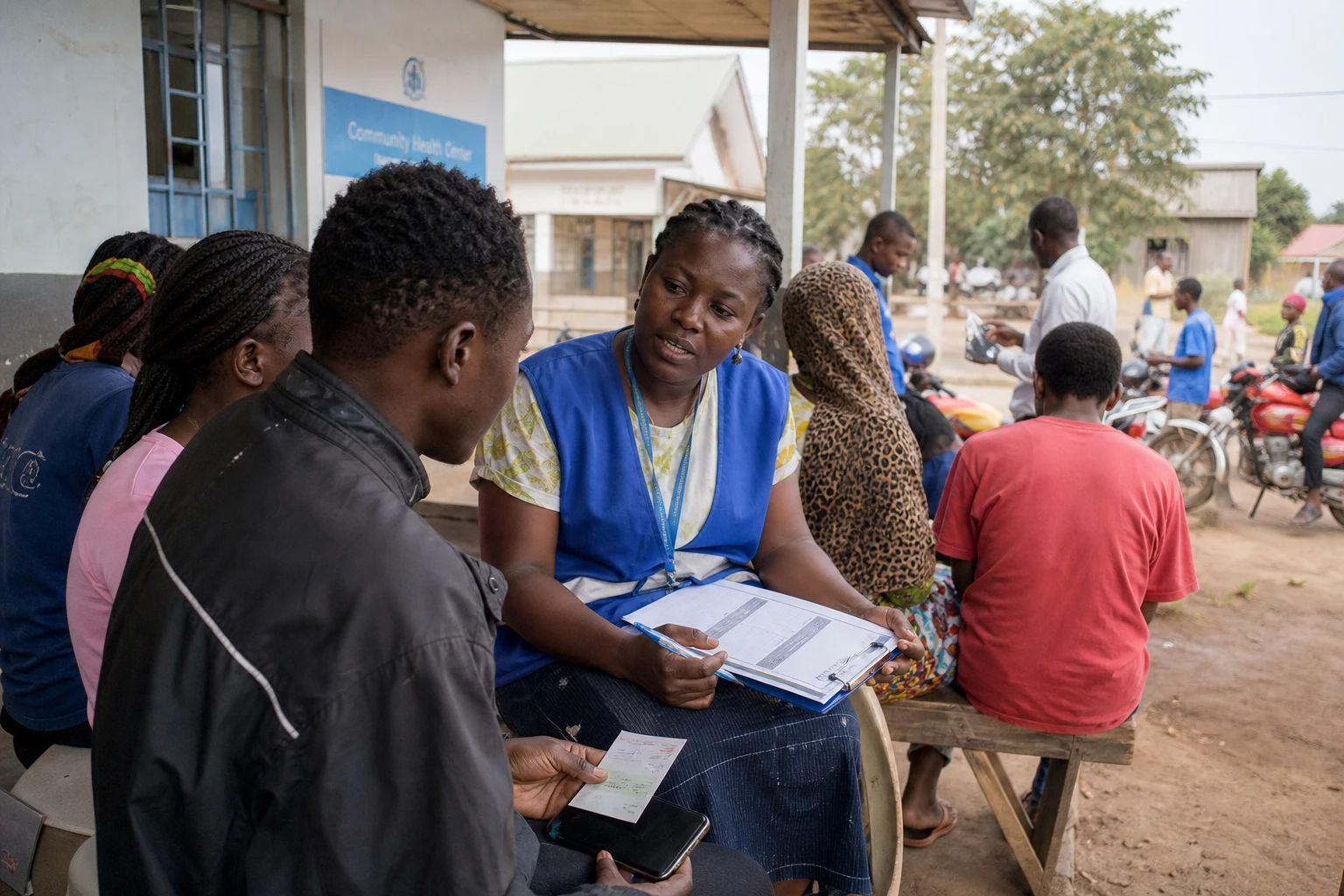
In Rwampara, in Ituri province, the question is not only how to treat patients. Teams are also seeking to stop the Ebola virus from progressing to disease in people who have been exposed. The strategy could change the public health response in the Democratic Republic of the Congo, where the Bundibugyo virus still has neither a vaccine nor a specifically approved treatment.
A trial launched at the heart of the outbreak
More than 250 adults and adolescents aged over 12 have already joined the EBO-PEP clinical trial in the Democratic Republic of the Congo. Participants are people considered to be at high risk after exposure to a confirmed Ebola case.
The study is assessing post-exposure prophylaxis. In practice, an antiviral is given after contact with the virus, but before any symptoms may appear. The aim is to determine whether the treatment can prevent the infection from progressing to clinical disease.
The protocol plans to recruit about 1,000 adults and adolescents. Volunteers are monitored daily for 21 days, the usual maximum incubation period. Their health is then checked until day 42.
The first participants were enrolled in July 2026. According to information published by the research programme, 204 participants had joined the study by mid-July, including 93 at Rwampara Hospital and 111 at the Evangelical Medical Centre in Bunia. The number reported since then has exceeded 250.
The data currently available are not yet sufficient to establish whether the treatment is effective. Taking part in the trial therefore does not mean that a person is protected. It allows the safety and potential value of this approach to be measured in a controlled medical setting.
The weight of loss in families’ decisions
In Ituri, joining the trial is often shaped by direct family experience. Some participants joined the protocol after a relative was infected or died. For them, the research offers a chance to reduce the risk, as well as a way not to be left without options in the face of a feared disease.
This matters in a region where trust is essential to the success of the response. A contact must agree to come to the centre, provide their information and comply with daily monitoring. For their part, teams must explain clearly what is known, what remains experimental and any associated risks.
Informed consent is therefore central. A treatment under study must not be presented as an established cure. This distinction protects participants and helps prevent rumours that have already complicated several vaccination and screening campaigns in the Democratic Republic of the Congo.
A virus different from those behind previous major outbreaks
The current outbreak is linked to the Bundibugyo virus. It is a distinct species from the Zaire ebolavirus, which has caused most of the recent major outbreaks in Central Africa and the West African epidemic of 2014 to 2016.
This difference has practical consequences. The Ervebo vaccine, used against the Zaire ebolavirus, is not an approved vaccine against Bundibugyo. Its potential to protect against this species is still being assessed. Similarly, treatments validated for Zaire ebolavirus cannot automatically be considered effective against the virus currently observed in Ituri.
The EBO-PEP trial is therefore addressing a specific therapeutic gap. It is not intended to replace supportive care, medical isolation, contact monitoring or infection prevention and control measures. It is testing an additional tool for the particularly sensitive period after exposure.
A response facing realities on the ground
Ituri province faces several operational challenges. Population movements complicate contact monitoring. Violence in some areas can interrupt surveillance activities. Distance and road conditions slow access to health facilities.
These constraints affect residents in different ways. In urban centres such as Bunia, teams have more accessible medical facilities. In rural areas, someone exposed may have to travel a long distance to receive a dose, take a test or report the onset of symptoms.
The economic consequences are also uneven. Informal-sector workers can struggle to take several days off without losing income. Displaced families sometimes have fewer resources to reach a centre or maintain regular communication with medical teams.
The response therefore depends on more than the availability of an antiviral. It also relies on the ability to identify contacts quickly, arrange their transport, provide food and maintain dialogue with communities. Without this chain, even a promising treatment will be difficult to deploy.
An outbreak that crosses provincial borders
The spread of the Bundibugyo virus also affects neighbouring countries. The Democratic Republic of the Congo and Uganda have activated their national coordination mechanisms and strengthened surveillance, laboratory testing, contact tracing and case management. This cooperation is essential in a region where family, commercial and professional ties cross borders.
The regional dimension does not mean that border communities should be treated as a threat. Rather, it is a reminder that prevention must follow actual patterns of movement. Checks must be accompanied by clear information, access to healthcare and respect for the rights of travellers and communities living near the border.
For the African Union and the Africa Centres for Disease Control and Prevention, the issue is also a scientific one. The trial’s results could help shape a response suited to less studied ebolavirus species. They could also strengthen clinical research capacity conducted close to outbreak areas.
The next step will be to analyse the data collected from participants. Researchers will need to measure, in particular, how many people develop the disease, the treatment’s side effects and the feasibility of large-scale monitoring. Until those results are available, the Rwampara trial offers a possible approach, not yet a definitive answer, to an outbreak testing health systems in eastern Democratic Republic of the Congo.



