Algeria
 Egypt
 Libya
 Morocco
 Sudan
 Tunisia
 Benin
 Burkina Faso
 Cabo Verde
 Côte d'Ivoire
 Ghana
 Guinea
 Guinea-Bissau
 Liberia
 Mali
 Mauritania
 Niger
 Nigeria
 Senegal
 Sierra Leone
 The Gambia
 Togo
 Cameroon
 Central African Republic
 Chad
 Equatorial Guinea
 Gabon
 Republic of the Congo
 São Tomé and Príncipe
 Burundi
 Comoros
 Djibouti
 Eritrea
 Ethiopia
 Kenya
 Madagascar
 Malawi
 Mauritius
 Mozambique
 Rwanda
 Seychelles
 Somalia
 South Sudan
 Tanzania
 Uganda
 Angola
 Botswana
 Eswatini
 Lesotho
 Namibia
 South Africa
 Zambia
 Zimbabwe
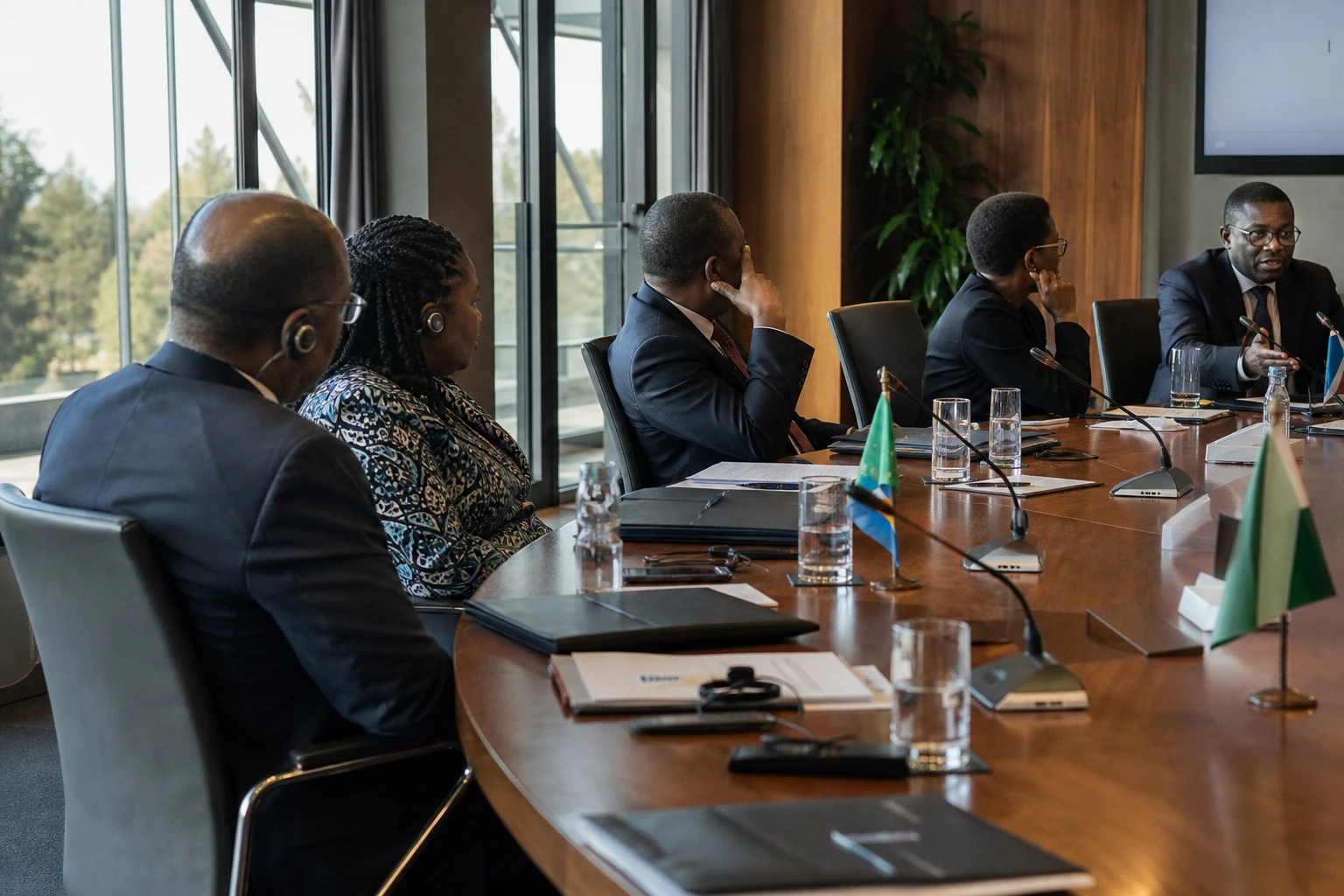
In eastern Democratic Republic of the Congo, diplomacy is advancing on several fronts, but weapons continue to shape daily life. For residents of North Kivu and South Kivu, the question is no longer simply which agreement will be signed. Above all, they need to see whether commitments made in Washington, Doha and African forums are finally having an impact on the ground.
Peace negotiated on several fronts
The conflict is primarily between Congolese government forces and the AFC/M23, a political-military coalition that still controls large areas in the east. The United Nations also says other armed groups continue to target civilians, amid a situation in which local rivalries are intertwined with tensions between Kinshasa and Kigali.
The crisis is part of the wider regional dynamics of the Great Lakes. The Democratic Republic of the Congo is a member of the Southern African Development Community, SADC, and the East African Community, EAC. The two organisations backed separate initiatives before diplomatic efforts were reorganised around new mechanisms.
The Washington process concerns relations between Kinshasa and Kigali. The Doha process brings together the Congolese government and the AFC/M23. The African Union is involved in facilitation, while Qatar plays a role in direct discussions with the armed group. MONUSCO, the United Nations peacekeeping mission in the DRC, supports some arrangements related to civilian protection and compliance with ceasefires.
This framework remains difficult for local people to make sense of. Yet it reflects a central reality: the conflict is not just an internal insurgency. It also involves cross-border security, territorial control, the movement of armed groups and access to resources.
Commitments struggle to shift the balance of power
On 29 September 2026, addressing the United Nations Security Council, MONUSCO chief James Swan urged the parties to turn their diplomatic commitments into concrete progress. His remarks highlight the persistent gap between negotiated texts and conditions in the eastern provinces.
The following day, the DRC and Rwanda again accused each other of failing to meet their obligations. Kinshasa is calling in particular for the verified withdrawal of Rwandan forces from its territory. Kigali, for its part, says the threat posed by the Democratic Forces for the Liberation of Rwanda, the FDLR, has not been resolved.
This armed group, made up in part of former officials and fighters linked to the 1994 genocide against the Tutsi, has long been a source of tension between the two capitals. The Congolese government says it is working towards the voluntary surrender of the FDLR. Diplomatic efforts have also been made with Angola, Togo and the Republic of the Congo to secure regional support for the operation.
The issue remains sensitive. Kinshasa presents the disarmament of the FDLR as a response to Rwanda’s security concerns. Kigali considers disarmament a precondition for the withdrawal of its forces. At the same time, the Congolese authorities and several international reports accuse Rwanda of supporting the AFC/M23. Kigali rejects these accusations or frames its actions as defence against hostile groups present in the DRC.
These conflicting positions are blocking the implementation of the agreements. Each side is asking the other to make the first move. Meanwhile, the AFC/M23 retains significant military capacity and control over territory in parts of North Kivu and South Kivu.
The local cost of a protracted conflict
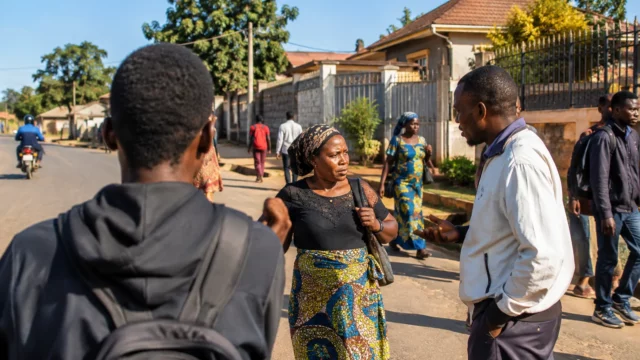
For residents, the stakes go beyond statements from the capitals. Where fighting continues, displacement disrupts farming, trade and schooling. Families settling in urban centres face pressure on housing, prices and essential services. In rural areas, access to fields and markets is becoming less certain.
Economic actors are also experiencing the crisis differently. Large companies can sometimes relocate their operations or strengthen their security. Small traders, farmers and transport operators have far less room to manoeuvre. Disruptions to roads and markets directly affect the informal economy, which supports a large share of households.
Civil society organisations are therefore calling for a greater role in the negotiations. The Service Civil pour la Paix network in the DRC says women and young people should be more closely involved in the processes under way. This echoes a weakness often seen in peace agreements: discussions focus on leaders, armed groups and mediators, while affected communities have little room to define the guarantees they expect.
Protection of civilians is another test. Ceasefires cannot be assessed solely on the basis of official statements. Population movements, humanitarian access, the reopening of schools, the resumption of markets and whether families can return to their villages without facing new threats must all be monitored.
A test for African diplomacy
The crisis in eastern Congo is testing several African mechanisms. The African Union is seeking to maintain a mediating role. SADC remains involved in regional security. The EAC is seeking to preserve its channels for dialogue. The International Conference on the Great Lakes Region, which brings together states concerned with security and co-operation, also remains a useful forum.
This plurality can encourage complementarity. It can also lead to a diffusion of responsibility. If each process has its own timetable, mediators and priorities, the parties can choose the forum most favourable to them. Tighter co-ordination is therefore needed to prevent commitments from contradicting one another.
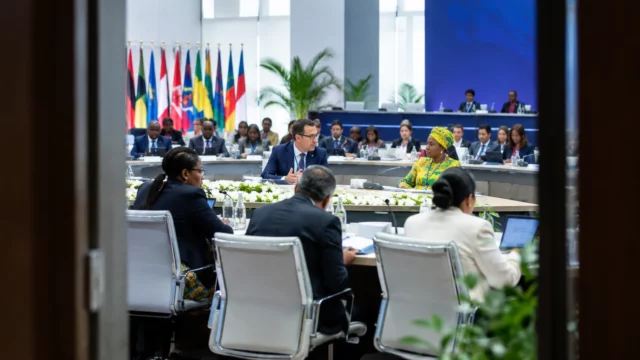
The next announced step is a planning conference between the DRC, Rwanda and the United States in October 2026. It is intended to help revise the operational framework set out in the Washington agreement. Its significance, however, will depend on independent verification of the measures adopted and their implementation in areas controlled by armed groups.
Peace will not be measured by the number of meetings held. It will be judged in the territories concerned, by a decline in violence, an end to forced displacement, the effective disarmament of armed groups and the gradual restoration of public authority. For Kinshasa, Kigali and African mediators, the challenge now is to narrow the gap between diplomatic words and the reality experienced by Congolese people.