
 Algeria
 Egypt
 Libya
 Morocco
 Sudan
 Tunisia
 Benin
 Burkina Faso
 Cabo Verde
 Côte d'Ivoire
 Ghana
 Guinea
 Guinea-Bissau
 Liberia
 Mali
 Mauritania
 Niger
 Nigeria
 Senegal
 Sierra Leone
 The Gambia
 Togo
 Cameroon
 Central African Republic
 Chad
 Equatorial Guinea
 Gabon
 Republic of the Congo
 São Tomé and Príncipe
 Burundi
 Comoros
 Djibouti
 Eritrea
 Ethiopia
 Kenya
 Madagascar
 Malawi
 Mauritius
 Mozambique
 Rwanda
 Seychelles
 Somalia
 South Sudan
 Tanzania
 Uganda
 Angola
 Botswana
 Eswatini
 Lesotho
 Namibia
 South Africa
 Zambia
 Zimbabwe
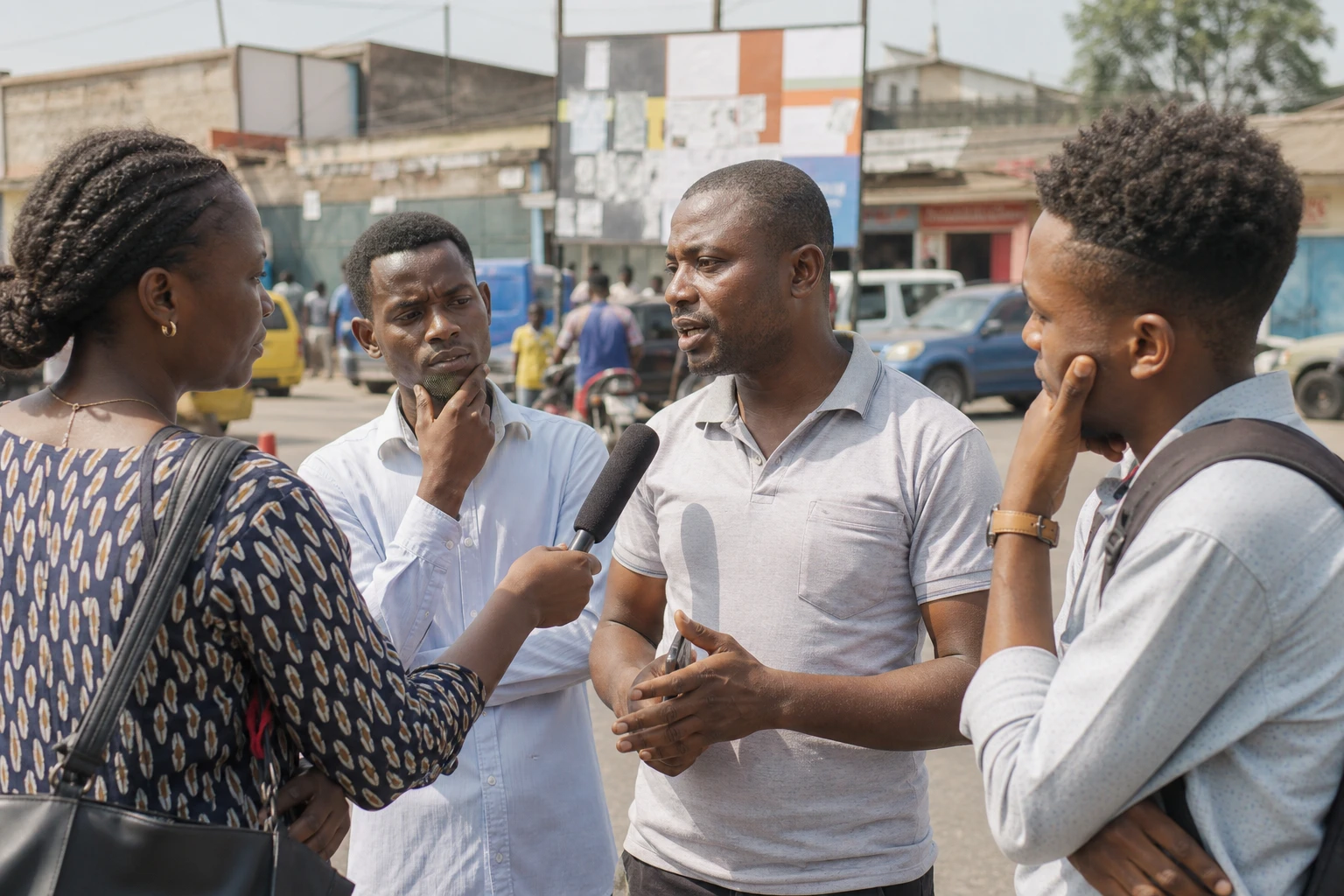
In the Democratic Republic of the Congo, the Ebola outbreak is no longer measured only by the number of people infected. It is testing the health system’s ability to protect communities, health workers and transport routes between the country’s eastern and northern provinces.
As of 26 September 2026, Congolese authorities reported 8,067 confirmed cases and 3,901 deaths. The case fatality rate stood at about 48.4%. These figures, published by Congolese health services and cited by several independent organisations, make this the deadliest outbreak ever recorded in the DRC.
A national emergency becomes regional
The outbreak was declared on 15 May 2026 in Ituri province. It is caused by the Bundibugyo virus, a strain distinct from the Zaire virus, for which the available prevention and treatment tools are more limited.
The World Health Organization has classified the situation as a public health emergency of international concern. This decision means that the risk extends beyond the DRC’s borders and requires stronger coordination between the countries concerned.
People’s movements complicate this surveillance. Ituri is linked to Uganda and South Sudan by trade routes and regular cross-border movements. Cases have also been reported in new health zones, notably Bulu, in South Ubangi, and Dungu, in Haut-Uele.
In May, the DRC, Uganda and South Sudan had already brought their health ministers together in Kampala. The meeting, supported by the WHO and the Africa Centres for Disease Control and Prevention, aimed to align surveillance and care at the borders.
The response therefore extends across a wider regional area than the affected provinces alone. It also concerns trade corridors, transport networks and health services in neighbouring countries.
More than $2bn pledged
In the face of the scale of the crisis, international financial commitments have now exceeded $2bn since the outbreak began. This figure represents pledges and funding announcements. It does not mean that all the money has already been disbursed or spent.
More than $470m in new commitments were announced on 30 September 2026 at a G20 ministerial meeting on the response. The US G20 presidency presented the meeting as an effort to accelerate funding for health and humanitarian operations.
The United States announced an additional $267m. According to the G20 presidency’s statement, this brings direct US aid for the Ebola response to $887m.
The funds are intended to support treatment centres, essential health services, epidemiological surveillance, contact tracing and teams responsible for safe and dignified burials. They are also intended to fund protective equipment for exposed staff.
The World Bank plans to provide $90m. The United Kingdom has announced $67.5m, Germany $24.8m and South Korea $18m. France is to contribute $16m, Italy $11.3m and the United Arab Emirates $10m.
Japan has announced $5m. Australia plans to provide $3.5m. A detailed breakdown of the funding will nevertheless need to be tracked over time to distinguish between sums pledged, legally committed and actually available on the ground.
Immediate needs put at $1.3bn
The Congolese government has estimated the immediate needs of its 180-day contingency plan at $1.3bn. The revised plan was launched in Kinshasa on 4 September with support from the WHO, the United Nations system, Africa CDC and other partners.
It has two aims: to slow transmission in areas already affected and strengthen preparedness in exposed provinces. The strategy includes stepping up contact tracing, expanding treatment capacity and deploying new diagnostic tools.
Vaccine research is also a major focus. No vaccine or specific treatment for the Bundibugyo virus is currently licensed. Candidates are nevertheless being assessed in clinical trials, requiring rigorous scientific and regulatory oversight.
This situation sets the current crisis apart from previous outbreaks linked to the Zaire virus. The vaccines used during the major 2018–2020 outbreak in eastern DRC cannot be considered established protection against the Bundibugyo strain.
Funding is not enough without local capacity
The money must now be turned into operational capacity. In several areas, teams are short-staffed, travel is difficult and supply chains remain fragile.
The security situation weighs heavily on the response. Some health zones are cut off by conflict or can be reached only after long journeys. This constraint slows case identification, sample collection and the monitoring of exposed people.
The effects are not the same for all residents. In urban centres such as Bunia, healthcare facilities can concentrate teams and equipment. In rural areas, families depend more heavily on community workers, local health centres and the transport available.
Health workers are also under particular pressure. They must care for patients while protecting themselves from a highly contagious infection. Payment delays, fatigue and insecurity can reduce staffing just as needs are increasing.
For the population, the response is not limited to Ebola centres. It must maintain routine care, particularly for pregnant women, children and people living with chronic illnesses. A prolonged crisis can divert resources from essential services.
A test for African cooperation
The outbreak in the DRC is a reminder that health security in Central Africa depends as much on national systems as on cooperation between neighbours. Administrative borders do not follow trade routes or family ties.
The next step will be to check how quickly funds are disbursed and how they are distributed among the provinces. The effectiveness of surveillance in Bulu, Dungu and other recently exposed areas will also need to be assessed.
In Kinshasa and neighbouring capitals alike, the challenge goes beyond securing financial pledges. It is about giving Congolese teams the means to act quickly, while maintaining health services and the trust of communities.
The G20 presidency’s statement on new financial commitments details the announcements made on 30 September 2026. The Congolese 180-day response plan, meanwhile, sets out the health priorities established by the DRC and its partners.



