
 Algeria
 Egypt
 Libya
 Sudan
 Tunisia
 Benin
 Burkina Faso
 Cabo Verde
 Côte d'Ivoire
 Ghana
 Guinea
 Guinea-Bissau
 Liberia
 Mali
 Mauritania
 Niger
 Nigeria
 Senegal
 Sierra Leone
 The Gambia
 Togo
 Cameroon
 Central African Republic
 Chad
 DR Congo
 Equatorial Guinea
 Gabon
 Republic of the Congo
 São Tomé and Príncipe
 Burundi
 Comoros
 Djibouti
 Eritrea
 Ethiopia
 Kenya
 Madagascar
 Malawi
 Mauritius
 Mozambique
 Rwanda
 Seychelles
 Somalia
 South Sudan
 Tanzania
 Uganda
 Angola
 Botswana
 Eswatini
 Lesotho
 Namibia
 South Africa
 Zambia
 Zimbabwe
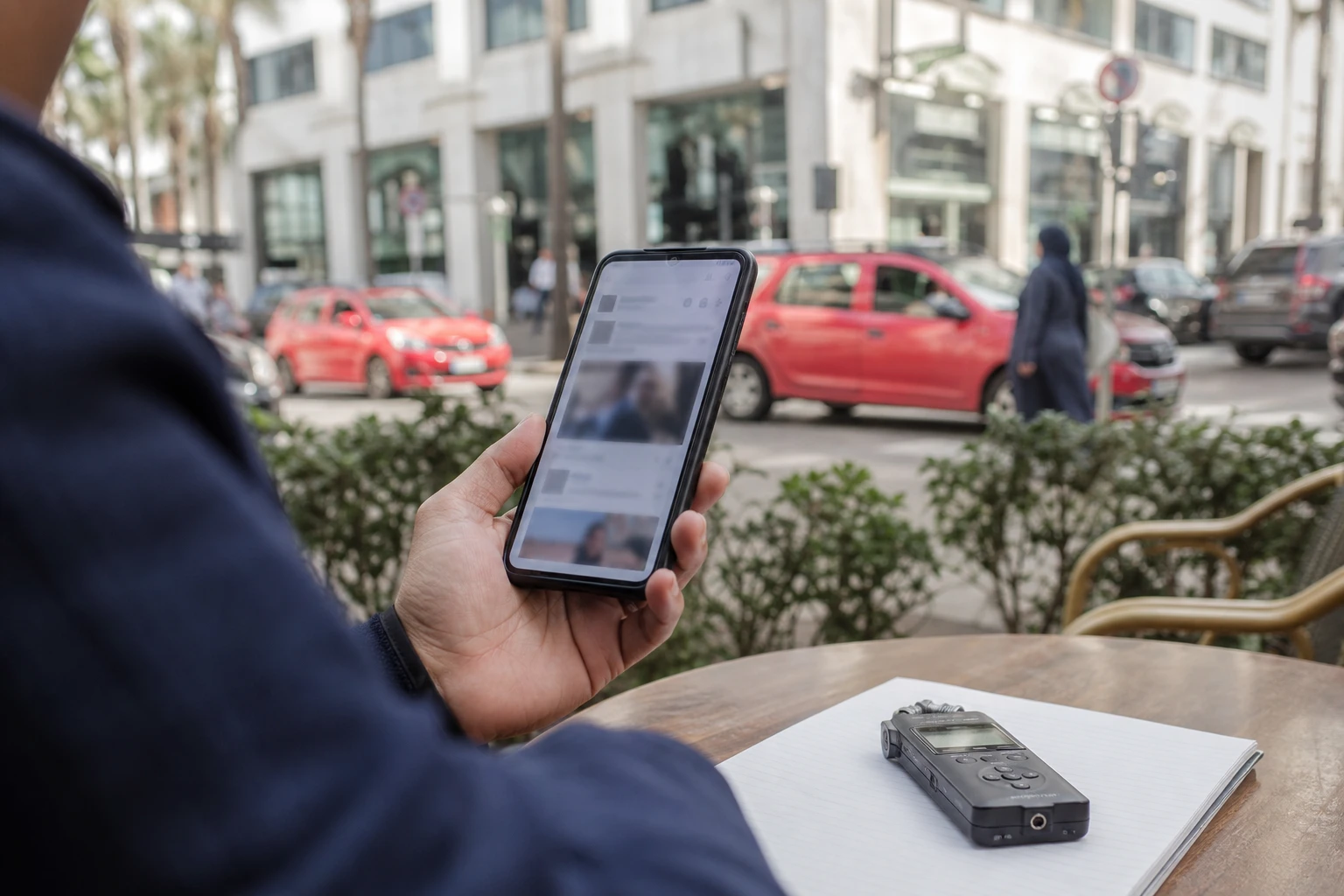
In Morocco, the question is no longer simply whether phones were targeted. It now concerns the existence of a broader system combining spyware, telecoms interception and physical surveillance, with a direct impact on the work of journalists and human rights defenders.
A surveillance apparatus described over several years
In a report published on 1 October 2026, Amnesty International implicates an apparatus attributed to the General Directorate for Territorial Surveillance (DGST), Morocco’s domestic intelligence service. The organisation says the system may have been used to monitor critical voices in Morocco and abroad.
The investigation draws in particular on the testimony of a former DGST member, identified by the pseudonym “Safir”. It also combines digital forensics analyses, internal documents and interviews with people who may have been targeted.
According to Amnesty, the DGST began deploying Pegasus software in September 2017. Developed by Israeli company NSO Group, the programme can provide access to a phone without its owner’s knowledge. The organisation documents abusive use against journalists and activists at least until 2021.
The report describes several methods. Some require a click on a malicious link. Others, known as “zero-click” attacks, can infect a device without any action by the victim. Amnesty also refers to injection techniques through telecommunications networks, as well as the use of tools supplied by Israeli, European and US companies.
This digital surveillance is said to have been supplemented by more conventional practices: tailing, phone tapping, the installation of microphones and tracking people’s movements. Computers in internet cafés frequented by activists were also allegedly compromised using Remote Control System software, according to testimony gathered by the NGO.
Journalists, lawyers and political figures among the targets
Amnesty says it linked 103 Moroccan phone numbers, identified between September and December 2017 in data indicating potential Pegasus targets, to identifiable people. The distinction is important: the presence of a number on a target list does not in itself prove that the phone was infected.
Of these 103 people, 65 are said to belong to civil society. The organisation identifies 34 human rights defenders, 22 journalists or media professionals, five lawyers and four academics. Another 25 numbers are said to correspond to political figures or members of the authorities. Five were linked to diplomats or representatives of international organisations.
Moroccan journalist Omar Radi is among those named in earlier investigations into the use of Pegasus in Morocco. Amnesty also mentions activist Fouad Abdelmoumni. The organisation says he was allegedly filmed at home in 2021 and that private images were subsequently circulated on WhatsApp.
These practices do not create only an individual risk. They can also alter the behaviour of an entire profession. When a journalist does not know whether their conversations, sources or movements are being monitored, the pressure extends beyond those directly targeted. It can encourage self-censorship and weaken independent information networks.
Amnesty further says the information gathered may have fuelled smear campaigns in media considered close to the authorities. This allegation is disputed by the Moroccan authorities. It nevertheless points to a central issue: surveillance is not limited to collecting data if that information is then used to discredit opponents or journalists.
Rabat rejects the allegations, in a long-running dispute
Moroccan authorities have repeatedly denied using spyware against their citizens. They have also challenged the findings of investigations linked to the Pegasus Project, which revealed in 2021 that thousands of phone numbers had been selected as potential targets in several countries.
In the new report, Amnesty says it contacted the Moroccan authorities four weeks before publication. The organisation says it received no response. This lack of reaction does not, on its own, confirm the allegations. It does, however, leave several questions about purchases, authorisations and oversight of surveillance technologies unanswered in public.
The case is part of a national trajectory marked by persistent tensions over press freedom, privacy and the judicial treatment of certain activists. These issues took on an international dimension when Moroccan journalists based abroad or working on sensitive subjects were also named in digital security investigations.
Regionally, Morocco does not have a fully operational Maghreb mechanism comparable to ECOWAS in West Africa or SADC in southern Africa. The Arab Maghreb Union remains institutionally limited. Regulation of these practices therefore depends mainly on national law, international courts and commitments made by exporting companies.
A global market still largely beyond public oversight
The Moroccan case illustrates a problem that extends beyond the kingdom’s borders. Spyware is sold to states in the name of combating terrorism and organised crime. Yet its highly intrusive capabilities can affect journalists, lawyers, researchers or activists without any court ruling being made public.
The chain of accountability is also part of the problem. A government can deny using a tool. A company can invoke the terms of its contract. The victim, meanwhile, often has to fund a complex technical assessment to prove an intrusion. The imbalance between surveillance capabilities and the means of defence available to citizens is therefore considerable.
Amnesty is calling on Morocco to open an independent investigation into the DGST’s activities and to end all illegal surveillance targeting journalists or human rights defenders. The organisation is also urging exporting countries to strengthen safeguards around the sale of these technologies.
For Rabat, the challenge is now twofold. It must respond to the specific allegations made in the report, but also clarify the oversight mechanisms governing intelligence services. For Moroccan civil society, the question is more tangible: whether private communications can be protected and whether journalism can be practised without clandestine surveillance.
Across Africa, the case is a reminder that digital sovereignty is not simply about developing infrastructure or buying cybersecurity tools. It also requires judicial safeguards, independent authorities and effective protection of civil liberties. The Moroccan government’s response, along with the strength of the technical verification, will be crucial in establishing the precise scale of the system described.



