
 Algeria
 Egypt
 Libya
 Morocco
 Sudan
 Tunisia
 Benin
 Burkina Faso
 Cabo Verde
 Côte d'Ivoire
 Ghana
 Guinea
 Guinea-Bissau
 Liberia
 Mali
 Mauritania
 Niger
 Nigeria
 Senegal
 Sierra Leone
 The Gambia
 Togo
 Cameroon
 Central African Republic
 Chad
 Equatorial Guinea
 Gabon
 Republic of the Congo
 São Tomé and Príncipe
 Burundi
 Comoros
 Djibouti
 Eritrea
 Ethiopia
 Kenya
 Madagascar
 Malawi
 Mauritius
 Mozambique
 Rwanda
 Seychelles
 Somalia
 South Sudan
 Tanzania
 Uganda
 Angola
 Botswana
 Eswatini
 Lesotho
 Namibia
 South Africa
 Zambia
 Zimbabwe
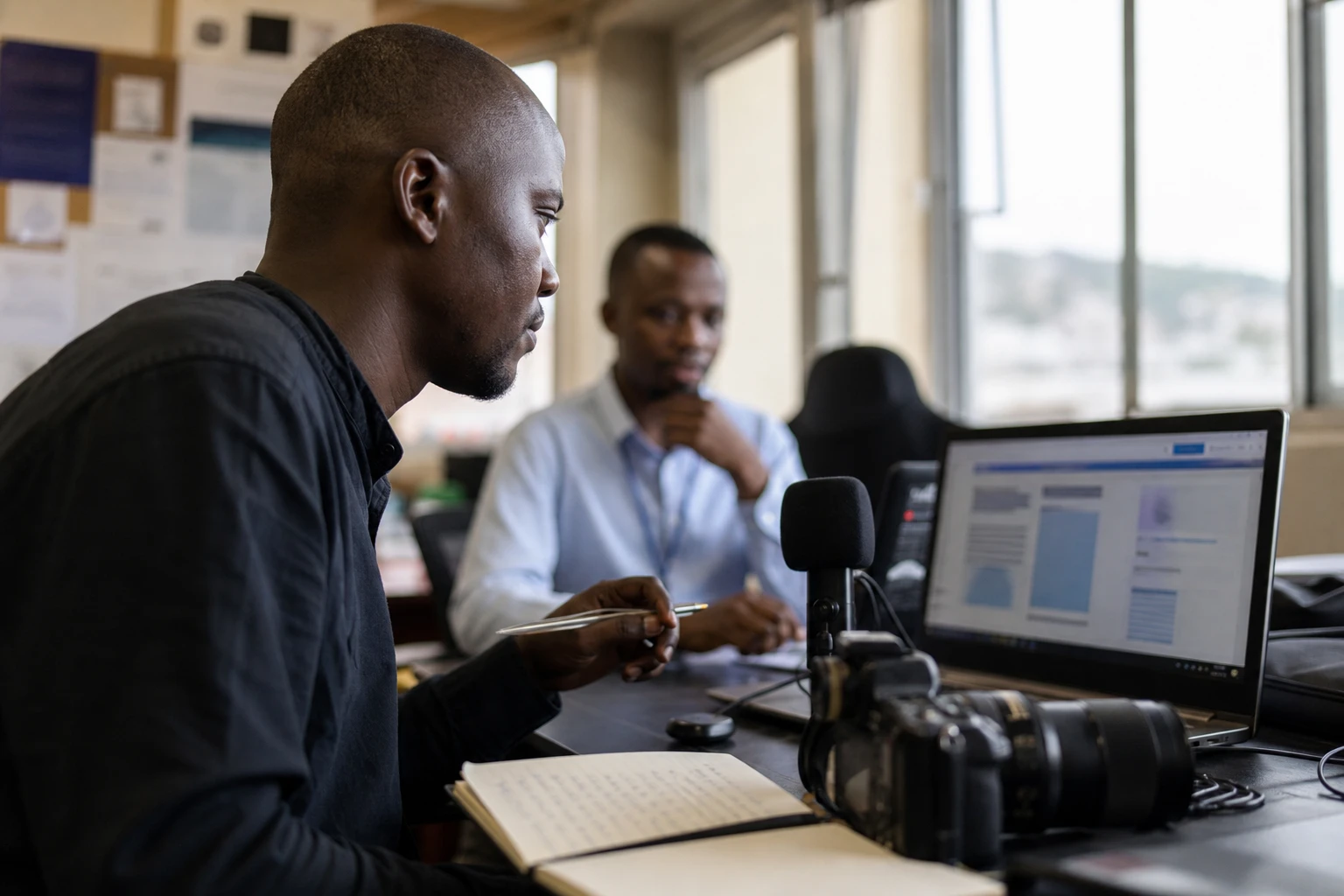
In Butembo, the death of Marie-Célestin Karondwa lies at the intersection of two sources of tension: violence destabilising North Kivu and persistent mistrust of the Ebola response. For his relatives, there are now two urgent priorities: securing justice and preventing the case from further deepening the city’s crisis of confidence.
Fatal attack after a radio programme in Butembo
Marie-Célestin Karondwa Mwanaweka Bytaty died on 27 September 2026 after being violently attacked on his way back from a programme broadcast by Radio Mwangaza in Butembo. The death was announced by the local federation of the Union for Democracy and Social Progress, the UDPS, the ruling party in the Democratic Republic of the Congo.
In a statement reported by the Congolese Press Agency, the Butembo federation said the political official had taken part in a programme devoted in particular to raising awareness about Ebola. He was then reportedly attacked by people whose identities and motives have yet to be established.
According to several local media outlets, the attackers also set fire to his home. His family was away at the time, according to the initial information available. These details still need to be confirmed by an official investigation.
The UDPS federation is calling on the Congolese authorities to identify those responsible. It describes Karondwa as acting president of the Federal Permanent Electoral Commission and a party spokesperson in Butembo. Another local source, Reporter.cd, also reports that he succumbed to his injuries after the 27 September attack.
Karondwa’s death prompted tributes in Butembo before he was buried in his home village of Lubero, in North Kivu province. Residents expressed their sorrow beyond the UDPS. The death of a well-known figure in local life has affected a city where political, security and health tensions have overlapped for several years.
Investigation awaited as motive remains unclear
At this stage, no publicly available evidence supports the claim that the attack was directly prompted by Karondwa’s views on Ebola. His family and party officials have suggested a link because of the subject of the programme before the violence. Investigators have yet to establish this, however.
This caution is essential. In North Kivu, an attack may stem from a political dispute, a neighbourhood conflict, criminal activity or the exploitation of the health situation. The authorities will therefore need to establish the precise sequence of events, gather available testimony and determine whether the arson at the home was part of the same operation.
For the victim’s relatives, the priority is not so much a political explanation as establishing responsibility. They are calling for those responsible to be identified and brought to justice. Their appeal comes in a region where victims’ families regularly complain about slow investigations and the difficulty of getting answers after acts of violence.
The case also highlights the particular role of local radio stations. In Butembo, they serve as forums for information, debate and mediation. They enable political figures, health professionals and residents to discuss sensitive issues. But they can also expose contributors to pressure, especially when public debate takes place in an atmosphere marked by fear and misinformation.
Trust remains the decisive front in the Ebola response
Karondwa’s death comes as health teams try to contain a new Ebola outbreak in the Democratic Republic of the Congo. The authorities have launched a response in several areas of North Kivu and Ituri. This health operation is taking place against a backdrop of difficult information flows and mistrust of public institutions, which complicates access to care.
The World Health Organization had already documented the role of insecurity and community mistrust in the difficulties faced in Butembo, Beni and neighbouring areas during previous outbreaks. In a bulletin on the 2019 situation, the WHO noted that attacks on medical teams fuelled fear and hampered field operations.
The problem is not simply one of opposition between the population and health workers. In several neighbourhoods, residents are seeking explanations about health measures, response funding and the conditions under which patients are treated. Some also fear treatment centres, which they see as places of isolation. Others challenge official messages because of a long history of unfulfilled promises and the state’s intermittent presence.
Health professionals must therefore do social as well as medical work. Prevention involves handwashing, contact monitoring and seeking care promptly if symptoms appear. It also depends on credible community networks, able to speak local languages and address concerns without blaming families.
Previous outbreaks have shown the tangible cost of a breakdown in trust. In 2019, treatment centres in Butembo and Katwa were attacked. Health workers and members of response teams were also targeted. Congolese media, including Actualite.cd, documented efforts at the time to reduce local resistance through dialogue and community involvement.
An issue extending beyond Butembo
Butembo lies in a region with significant population movements between North Kivu, Ituri, Uganda and other parts of eastern Congo. A weakened response in this area could therefore complicate health surveillance beyond the city itself. Border checks and early warning are useful, but they cannot replace the trust of residents.
Security remains just as central. In areas affected by armed groups and crime, medical teams cannot work sustainably without security guarantees. Conversely, an excessively militarised response risks driving communities further away. The balance depends on coordination between civil authorities, health services, local leaders, radio stations and community organisations.
For Marie-Célestin Karondwa’s family, the next step is legal. For the health authorities, it is also political in the institutional sense: restoring local dialogue strong enough for prevention messages to be heard. In Butembo, the handling of this case will send a signal about the institutions’ ability to protect people active in public life and respond to violence without fuelling suspicion.
The coming days will therefore be watched on two fronts: progress in the investigation into the 27 September 2026 attack and developments in the Ebola response in North Kivu. In both cases, transparency, witness protection and community involvement will directly shape how the crisis unfolds.



