Algeria
 Egypt
 Libya
 Morocco
 Sudan
 Tunisia
 Benin
 Burkina Faso
 Cabo Verde
 Côte d'Ivoire
 Ghana
 Guinea
 Guinea-Bissau
 Liberia
 Mali
 Mauritania
 Niger
 Nigeria
 Sierra Leone
 The Gambia
 Togo
 Cameroon
 Central African Republic
 Chad
 DR Congo
 Equatorial Guinea
 Gabon
 Republic of the Congo
 São Tomé and Príncipe
 Burundi
 Comoros
 Djibouti
 Eritrea
 Ethiopia
 Kenya
 Madagascar
 Malawi
 Mauritius
 Mozambique
 Rwanda
 Seychelles
 Somalia
 South Sudan
 Tanzania
 Uganda
 Angola
 Botswana
 Eswatini
 Lesotho
 Namibia
 South Africa
 Zambia
 Zimbabwe
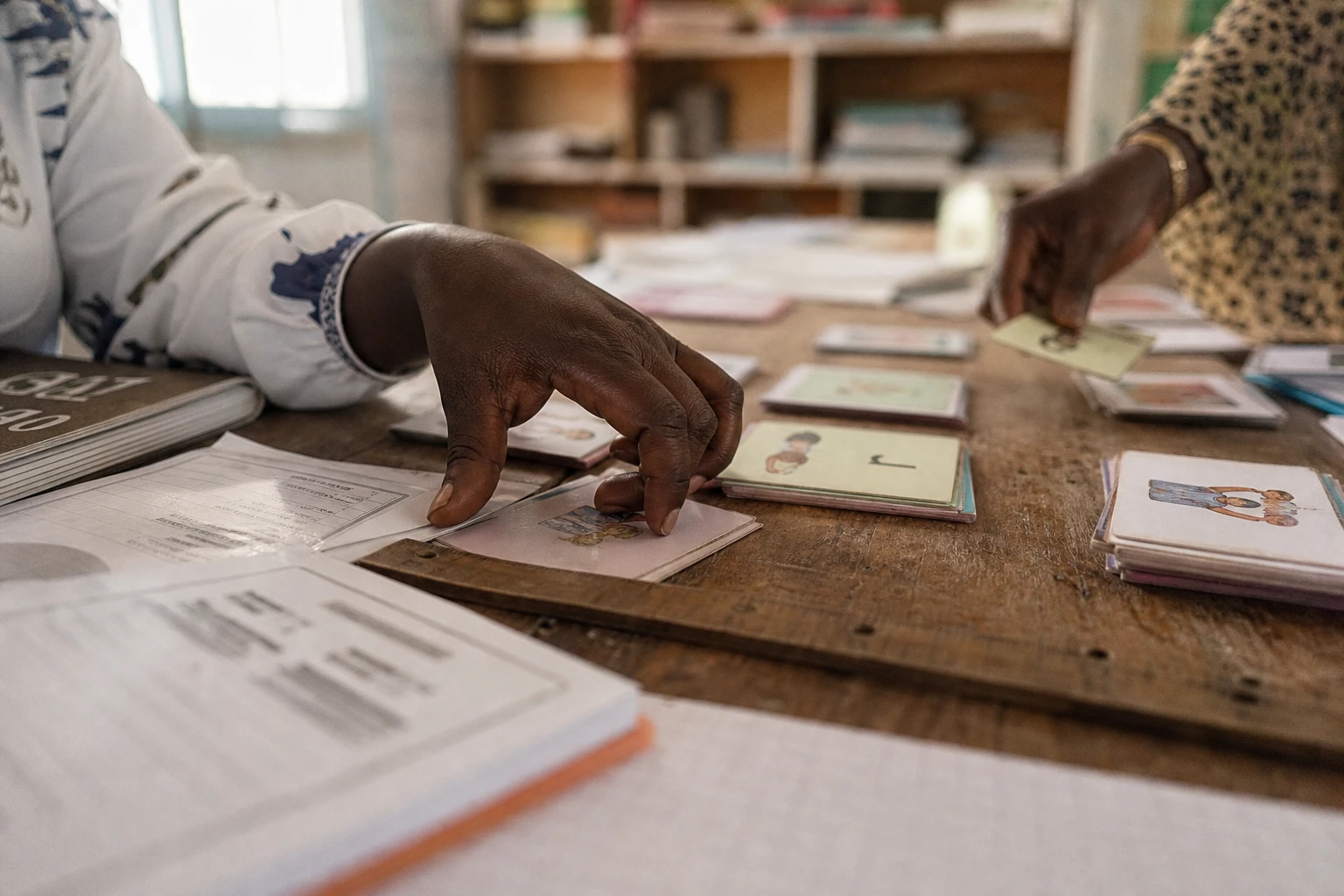
At school, understanding the language of instruction can determine a child’s success. In Senegal, this reality is prompting the authorities to speed up a bilingual model that combines national languages with French from the earliest years of learning.
A teaching choice at the heart of the next school year
The Senegalese government wants to expand the Harmonised Model for Bilingual Education in Senegal, known by the acronym MOHEBS. The measure was among the decisions taken at the Interministerial Council devoted to preparations for the 2026-2027 school year.
The meeting was held on 25 September 2025 in Dakar, chaired by Prime Minister Ahmadou Al Aminou Mohamed Lo. On that occasion, the head of government asked the Ministry of National Education to continue and expand the rollout of MOHEBS.
This direction was maintained in preparations for the 2026-2027 school year. The government also plans to finalise the National Language Policy Document during this school year. The official decisions on school language policy thus place the question of languages on the same footing as teacher availability, infrastructure and teaching materials.
MOHEBS does not aim to eliminate French. Instead, it establishes a bilingual progression in which a national language accompanies French to facilitate access to basic concepts. Reading and mathematics are the main areas concerned at the start of the school journey.
Schools already targeted in three regions
The programme is being piloted with support from the Education System Performance Improvement Project, PAPSE. The project supports schools in the Thiès, Sédhiou and Ziguinchor education districts.
The programme covers 1,951 schools and around 129,000 pupils targeted for learning to read and do mathematics in national languages. These figures provide an initial measure of the project’s ambition, but they do not yet constitute a national assessment of its effectiveness.
In Thiès, the rollout has been based on a linguistic mapping of the academy’s 1,013 public primary schools. The aim is to identify, for each school, the national language best suited to the reality of its pupils and surrounding communities.
This approach avoids applying the same solution to every school. A class in a predominantly Wolof-speaking area does not necessarily have the same needs as a school located in an area where Serer, Pulaar, Jola, Mandinka or Soninke is widely spoken.
In April 2025, members of Thiès’s education community reviewed a preliminary report on this mapping. Data had been collected from schools and communities to determine the most widely spoken language in each school environment. The linguistic mapping work carried out in Thiès highlights the importance of local preparation before any wider rollout.
Language alone is not enough without teachers or materials
Introducing national languages is not simply a matter of translating textbooks. It requires training teachers in new ways of presenting concepts, harmonising materials and regularly monitoring pupils’ progress.
PAPSE is therefore planning training sessions in didactics, meaning practical methods of teaching and learning. The project also supports the production of teaching resources in the selected languages.
This will be crucial in areas where several languages coexist. The choice of a language of instruction must take account of families’ actual language use, teacher availability and the capacity to produce high-quality materials. It must also avoid creating a new difficulty for pupils already exposed to several languages in their daily lives.
Monitoring learning is another challenge. The authorities want to measure progress in reading and mathematics in order to distinguish the impact of the bilingual model from other factors affecting school results, such as class size, attendance, teacher training or access to books.
PAPSE’s institutional website presents the mapping of bilingual schools, bridging classes and daaras supported by the project. PAPSE activities in the Thiès, Sédhiou and Ziguinchor education districts include teacher training and support for learning in national languages.
A national undertaking with very tangible effects
For pupils in the early grades, the stakes are immediate. Better understanding of instructions can ease the transition into reading, reduce obstacles and make mathematics more accessible. For families, the model can also bring school closer to the languages used at home.
The effects will not be the same everywhere, however. In large cities, children often move between several languages and may have greater exposure to French. In rural areas, the gap between the language spoken at home and that used in class may be wider. Responses will therefore need to remain flexible enough to reflect local conditions.
The debate also concerns the place of French in the education system. Senegal’s official language, it remains essential for further study, administration and part of working life. The approach advocated by MOHEBS therefore seeks less to pit languages against one another than to organise their complementarity.
The project’s success will also depend on its funding. Ongoing training, textbook production, data collection and support for schools require sustained resources. The withdrawal or reduction of support from an external partner must not interrupt an undertaking presented as a national priority.
A signal for West Africa
Senegal’s choice is part of a broader discussion about the quality of education in West Africa. In several countries in the region, pupils begin their schooling in a language different from the one they use at home. This gap can weigh on learning, especially in the early years of primary school.
Senegal must now turn the pilot into verifiable results. The next steps will be expanding MOHEBS to new schools, finalising the national language policy and publishing comparable data on pupil performance.
Across the Economic Community of West African States, the issue extends beyond Senegal. It concerns the ability of education systems to value the continent’s languages while giving pupils access to languages used for regional and international mobility. For Dakar, the next challenge will be to make bilingualism a lasting practice, rather than a mere experiment.