Algeria
 Egypt
 Libya
 Sudan
 Tunisia
 Benin
 Burkina Faso
 Cabo Verde
 Côte d'Ivoire
 Ghana
 Guinea
 Guinea-Bissau
 Liberia
 Mali
 Mauritania
 Niger
 Nigeria
 Senegal
 Sierra Leone
 The Gambia
 Togo
 Cameroon
 Central African Republic
 Chad
 DR Congo
 Equatorial Guinea
 Gabon
 Republic of the Congo
 São Tomé and Príncipe
 Burundi
 Comoros
 Djibouti
 Eritrea
 Ethiopia
 Kenya
 Madagascar
 Malawi
 Mauritius
 Mozambique
 Rwanda
 Seychelles
 Somalia
 South Sudan
 Tanzania
 Uganda
 Angola
 Botswana
 Eswatini
 Lesotho
 Namibia
 South Africa
 Zambia
 Zimbabwe
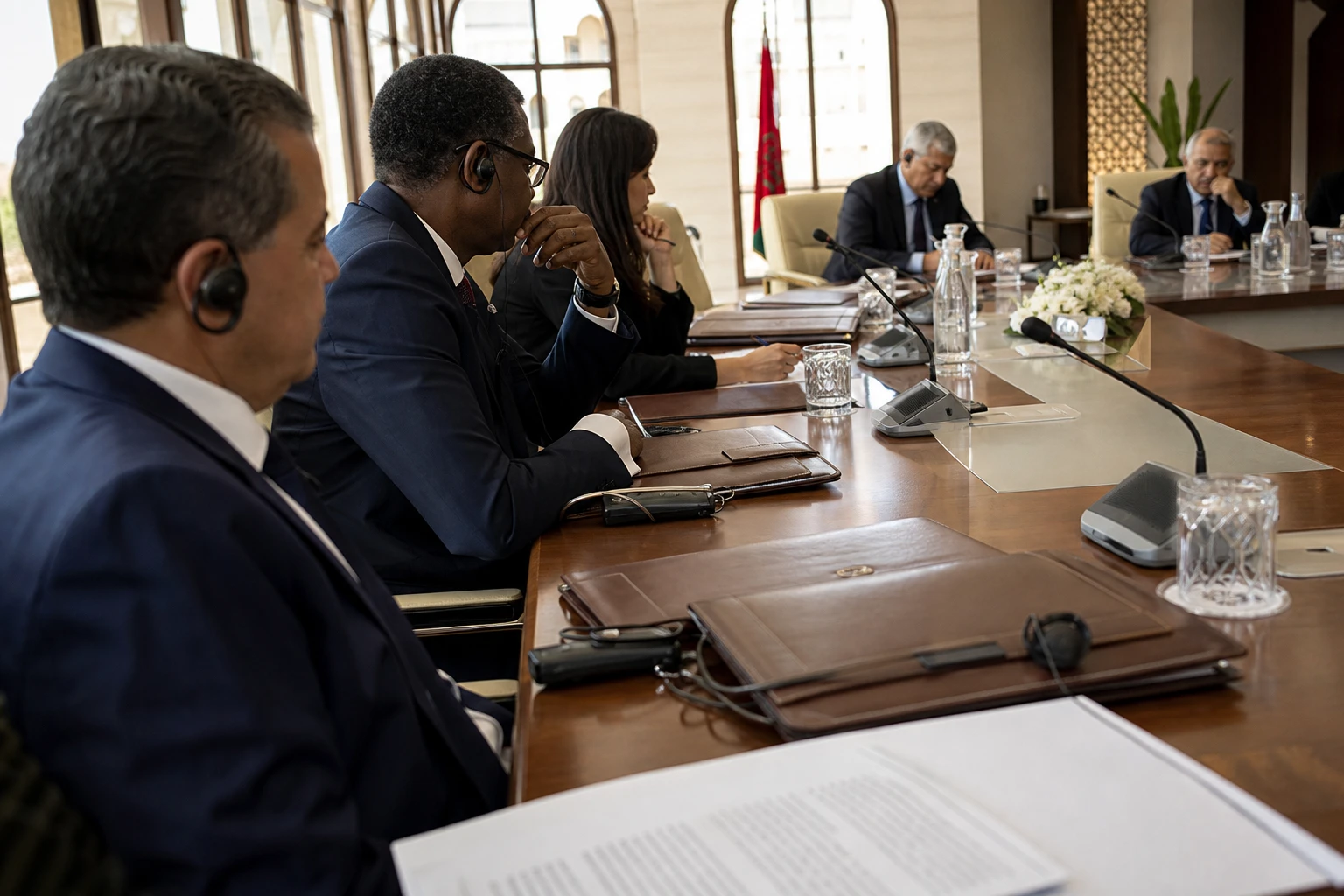
In Rabat, the formation of Morocco’s next government opens an unprecedented political chapter. On 29 September 2026, Fatima Ezzahra El Mansouri was tasked with forming the executive. She thus becomes the first woman called upon to lead the Moroccan government since independence.
Appointment announced at the Royal Palace in Rabat
King Mohammed VI received Fatima Ezzahra El Mansouri at the Royal Palace in Rabat before appointing her head of government under Article 47 of the Constitution. This provision stipulates that the sovereign chooses the head of the executive from the party that came first in the parliamentary elections.
The decision was announced in a statement from the Royal Household. Fatima Ezzahra El Mansouri must now hold consultations with the parties represented in parliament, then propose a government team to the sovereign.
Her party, the Authenticity and Modernity Party (PAM), came first in the parliamentary elections held on 23 September 2026, according to results reported by the African Press Agency. Morocco’s electoral system nevertheless makes it unlikely that a government could be formed by a single party. A coalition will therefore be necessary.
In her first statement, the new head of government said she wanted to present a team “equal to the expectations” of the king and the country’s citizens. The phrase sets the tone for the next stage: the appointment is a symbolic turning point, but it does not yet resolve the question of a parliamentary majority.
A leader already at the heart of the state apparatus
Fatima Ezzahra El Mansouri is not entering national politics without experience. A lawyer by training, she led the city of Marrakech and, until her appointment, held the portfolio for National Land Use Planning, Urban Planning, Housing and Urban Policy.
Her career has given her direct knowledge of local authorities, urban policies and major development projects. She must now move from a ministerial and municipal role to coordinating all government action.
The official Moroccan government portal lists her among the executive’s senior figures, at a time when the kingdom is accelerating investment in infrastructure, transport, housing and public facilities.
The next government will therefore inherit a packed agenda. It will have to address expectations around employment, purchasing power, the quality of public services and reducing disparities between regions. These issues play out differently in Rabat, Casablanca and Marrakech, in medium-sized cities and in rural areas.
The symbolism alone will not be enough
The appointment of a woman to lead the government marks an important shift in political representation in Morocco. It comes after several years of increasing numbers of Moroccan women in institutions, local authorities, the civil service and state-owned companies.
But this progress will be fully judged only by its results. The new team will have to turn political commitments into concrete measures. Urban households will watch how prices and employment develop. In rural areas, access to healthcare, water, transport and education will remain decisive.
How the government works will also be central. The head of government will have to work with parties with differing interests, parliamentary groups formed after a closely fought election and an administration accustomed to operating within an institutional framework strongly centred on the monarchy.
The PAM, a centrist party founded in the early 2000s, will also have to demonstrate that it can turn an electoral victory into a stable majority. Negotiations will concern the allocation of portfolios, as well as the priorities of the government programme and the timetable for reforms.
A change watched across North Africa
The appointment resonates beyond Morocco’s borders. In North Africa, Tunisia had already entrusted the leadership of its government to Najla Bouden, appointed in 2021. Morocco, however, is the first country in the region to see a woman take office as part of a new change of government resulting from parliamentary elections.
The regional significance nevertheless varies from country to country. The Maghreb currently has no political integration comparable to that of the Economic Community of West African States or the East African Community. The Arab Maghreb Union exists as an institutional framework, but its cooperation mechanisms remain limited.
Morocco will therefore continue to frame this political chapter through its bilateral relations, African partnerships and work within the African Union. The new head of government will have to maintain a balance between national priorities, the kingdom’s economic openness and its commitments across the continent.
The new government’s first tests
The first test will be parliamentary. Fatima Ezzahra El Mansouri will have to assemble a coalition able to secure MPs’ confidence and support the budget and key reforms.
The second test will be social. Morocco is investing in several major projects related to infrastructure and preparations for the 2030 FIFA World Cup. The government will have to show that these investments also benefit essential services and employment, beyond the main urban centres.
The third test will be territorial. National policies will have to take account of persistent disparities between regions. The new government’s success will be measured in the metropolises as much as in provinces far from the most dynamic economic centres.
The formation of the government will ultimately show whether this appointment ushers in a new way of governing or extends existing political arrangements. In the coming weeks, the make-up of the ministerial team and its programme will provide the first clues.