Algeria
 Egypt
 Libya
 Morocco
 Sudan
 Tunisia
 Benin
 Burkina Faso
 Cabo Verde
 Côte d'Ivoire
 Ghana
 Guinea
 Guinea-Bissau
 Liberia
 Mali
 Mauritania
 Niger
 Nigeria
 Senegal
 Sierra Leone
 The Gambia
 Togo
 Cameroon
 Chad
 DR Congo
 Equatorial Guinea
 Gabon
 Republic of the Congo
 São Tomé and Príncipe
 Burundi
 Comoros
 Djibouti
 Eritrea
 Ethiopia
 Kenya
 Madagascar
 Malawi
 Mauritius
 Mozambique
 Rwanda
 Seychelles
 Somalia
 South Sudan
 Tanzania
 Uganda
 Angola
 Botswana
 Eswatini
 Lesotho
 Namibia
 South Africa
 Zambia
 Zimbabwe
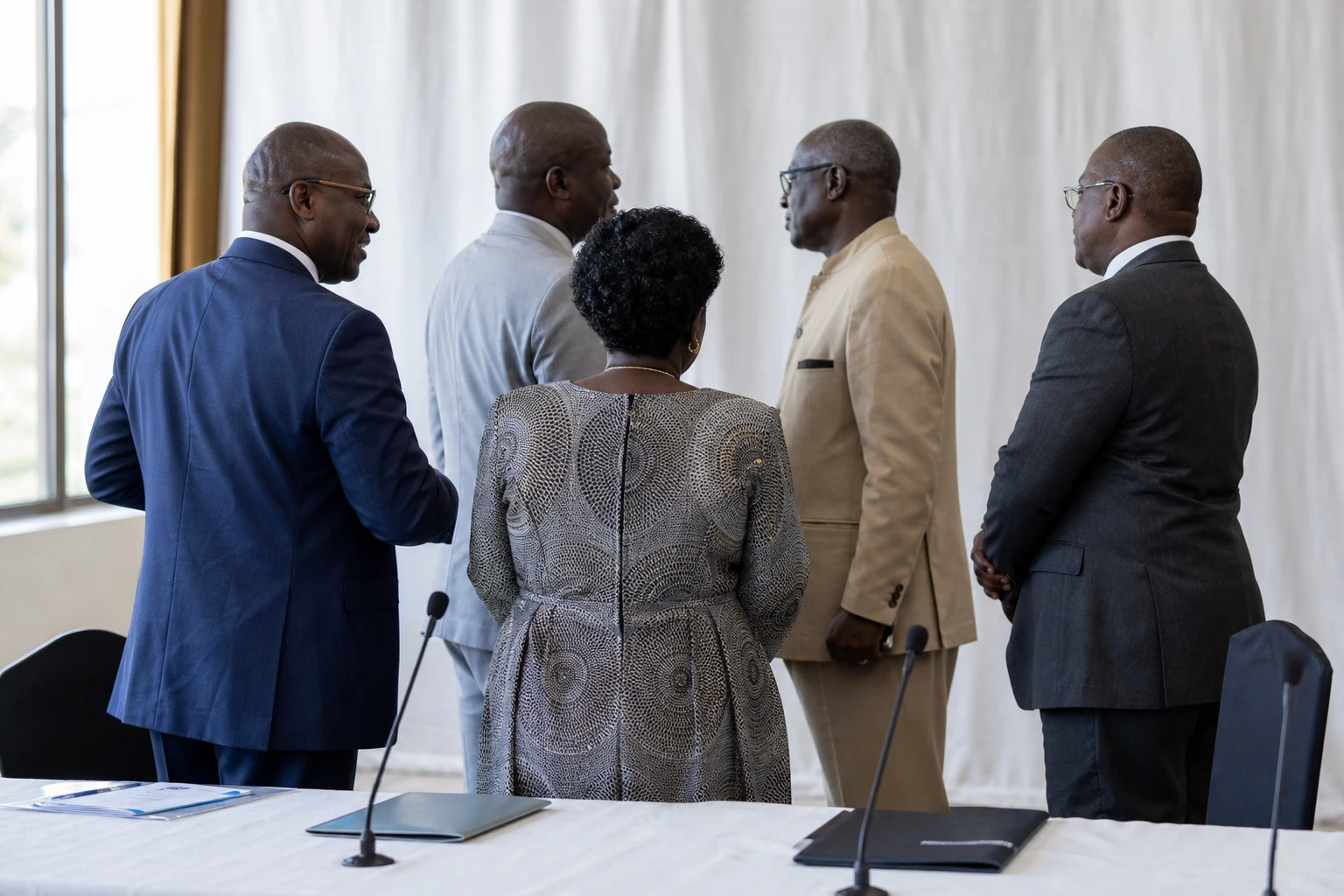
In Bangui, crossing to Zongo still depends on the ferry and dugout canoes. On the Ubangi River, this border crossing remains subject to the river’s level, operating hours and security conditions. A permanent road bridge is intended to turn this daily link into a regional economic corridor.
A strategic crossing between Bangui and Zongo
The Central African Republic and the Democratic Republic of the Congo are preparing to build a bridge of about 645 metres across the Ubangi. The structure will link Bangui, the Central African capital, with Zongo, a town in South Ubangi province in the north-west of the DRC.
In January 2026, the Congolese government adopted the dossier relating to preparations for the project. The minutes of the Council of Ministers refer to a concrete bridge, as well as approach roads measuring 650 metres on the Central African side and 850 metres on the Congolese side. These works are intended to ensure continuity between the bridge, national roads and border control posts.
The project is also documented by the African Development Bank. The institution describes the structure as a central component of the Bangui–Kisangani–Bujumbura–Kampala corridor, intended to facilitate transport and trade between several countries in Central Africa and the Great Lakes region.
The opening date has not yet been set. Available announcements focus mainly on studies, technical preparations and the structuring of financing. It is therefore premature to describe the bridge as « soon to open » to traffic.
A project within a regional corridor
For the landlocked Central African Republic, the quality of its connections with neighbouring countries directly determines the price of goods and access to markets. Bangui currently relies on several overland routes, including the corridor linking the Central African capital to the port of Douala in Cameroon. This route is the main entry point for imported goods, but it remains long, costly and vulnerable to disruption.
The future bridge would provide another connection to the DRC. From Zongo, trade could make use of Congolese road and river networks before continuing to Kisangani. In the longer term, the corridor also aims to reach Bujumbura in Burundi and Kampala in Uganda. The project is therefore more than a border crossing. The bridge is intended to serve as a link in a wider network connecting Central Africa with the Great Lakes.
This ambition aligns with the objectives of the Economic Community of Central African States, or ECCAS, a regional organisation tasked with strengthening economic co-operation among its members. It also fits the logic of the AfCFTA, the African Continental Free Trade Area, which seeks to reduce barriers to trade between African countries.
The Central African Republic and the DRC are also members of ECCAS. Membership alone, however, is not enough to make trade flow smoothly. Poor roads, repeated formalities, multiple checks and a lack of permanent infrastructure continue to slow the movement of people and goods.
Expected impact on trade and services
The bridge’s first effect would be to end dependence on the ferry for vehicles and goods. A permanent crossing could reduce waiting times and make journeys more predictable. For traders, this regularity matters as much as the distance travelled.
The effects could also reach households. Food, construction materials and consumer goods would move more easily between the two banks. However, a bridge will not automatically bring prices down. The outcome will depend on the condition of access roads, transport costs, taxes and the operation of border posts.
Residents of Bangui and Zongo could also benefit from easier access to services. Medical consultations, administrative procedures, education and commercial activities would no longer be subject to the same navigation constraints. This is particularly important for outlying neighbourhoods and communities far from provincial capitals.
The construction project could also create temporary jobs in civil engineering, transport, security and services related to the works. The lasting impact of these benefits will depend, however, on the role given to local companies, vocational training and the maintenance of the structure after it opens.
Funding remains to be clarified
The figure of $60 million sometimes associated with the project should be treated with caution. The public documents consulted do not make it possible to attribute this sum with certainty to World Bank funding for the Bangui–Zongo bridge alone.
Information published by the African Development Bank identifies the institution instead as a financial partner in the regional project. The World Bank, for its part, supports several infrastructure and transport programmes in Central Africa, including the Douala–Bangui corridor. In June 2026, it announced a regional programme worth $1.12 billion, including a first phase of $525 million for Cameroon, the Central African Republic and CEMAC. This programme mainly concerns the modernisation of the Douala–Bangui corridor and should not be confused with specific funding for the bridge over the Ubangi.
This distinction matters. Major cross-border projects often combine several sources: national budgets, multilateral banks, regional funds and concessional financing. The definitive funding structure, construction timetable and responsibilities of each state will need to be published before work begins.
A promise that will depend on corridor governance
The bridge could strengthen relations between the Central African Republic and the DRC, but its effectiveness will depend on everything around the structure. Impassable roads, slow customs procedures or costly checks would quickly limit its benefits.
The two countries will therefore need to harmonise formalities, organise co-ordinated checks and ensure the security of transport operators. They will also need to protect the livelihoods of boatmen and small traders who currently make their living from crossings on the Ubangi. Modernisation will be sustainable only if these groups are included in the new economic arrangements.
The next step will be to complete the technical, environmental and social studies, then approve the financing plan. For Bangui and Zongo alike, the challenge goes beyond building a spectacular structure. It is about turning a river border into a permanent crossing capable of supporting trade, public services and the integration of Central Africa.