Algeria
 Libya
 Morocco
 Sudan
 Tunisia
 Benin
 Burkina Faso
 Cabo Verde
 Côte d'Ivoire
 Ghana
 Guinea
 Guinea-Bissau
 Liberia
 Mali
 Mauritania
 Niger
 Nigeria
 Senegal
 Sierra Leone
 The Gambia
 Togo
 Cameroon
 Central African Republic
 Chad
 DR Congo
 Equatorial Guinea
 Gabon
 Republic of the Congo
 São Tomé and Príncipe
 Burundi
 Comoros
 Djibouti
 Eritrea
 Ethiopia
 Kenya
 Madagascar
 Malawi
 Mauritius
 Mozambique
 Rwanda
 Seychelles
 Somalia
 South Sudan
 Tanzania
 Uganda
 Angola
 Botswana
 Eswatini
 Lesotho
 Namibia
 South Africa
 Zambia
 Zimbabwe
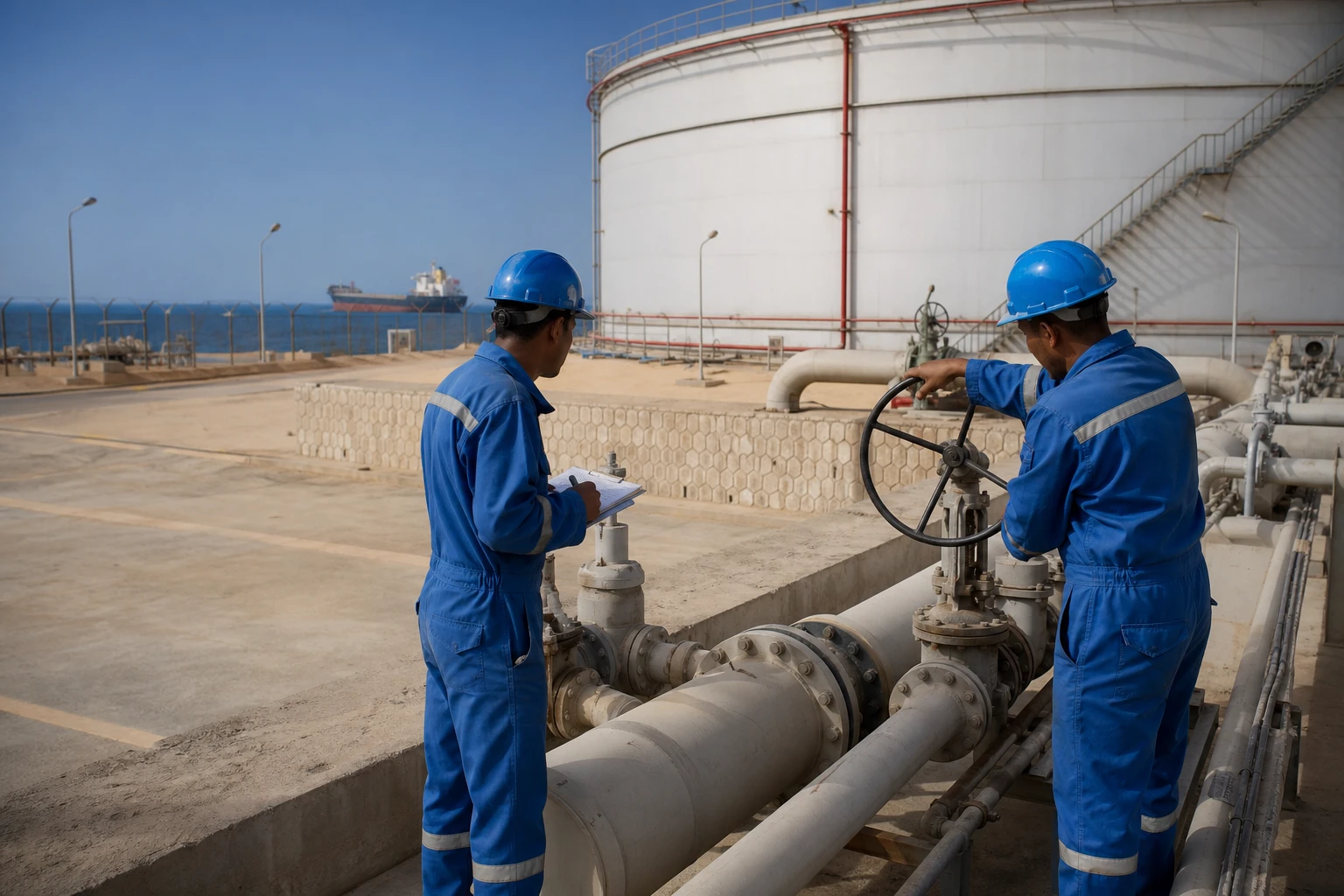
For Iraq, vulnerability is not measured only underground. It also plays out at sea, at the entrance to the Persian Gulf. The country is therefore seeking to broaden its logistical options. In this strategy, Egypt appears to be a possible gateway to the Mediterranean, although the project has yet to be developed.
A still-theoretical corridor between Basra and the Mediterranean
Baghdad is studying the possibility of storing some of its oil outside the country. Egypt is among the destinations under consideration, along with Oman and Singapore. The aim is to reduce dependence on routes exposed around the Strait of Hormuz, the maritime passage through which a large share of Gulf exports transits.
The plan under consideration would rely on several links. Crude would leave southern Iraq, probably from the Basra region, before reaching Jordan via a future land corridor. It could then reach the Jordanian port of Aqaba on the Red Sea, before being transported to El Arish in north-eastern Egypt.
This chain is not operational. It first depends on the construction of the Basra-Haditha corridor, followed by agreements with Jordan and Egypt. Storage in Egypt is therefore a strategic option, not yet an available solution for Iraqi exports.
Discussions also cover Iraqi participation in refinery and storage-terminal projects abroad. Iraq’s Ministry of Oil is examining several proposals. A final decision has not yet been announced.
Why Egypt has caught Baghdad’s attention
Egypt’s location gives its infrastructure particular value. The country controls the Suez Canal, which links the Red Sea to the Mediterranean. It also has the SUMED system, a pipeline that transports oil between Ain Sokhna on the Red Sea and Sidi Kerir, near Alexandria.
According to the US Energy Information Administration’s analysis, SUMED can transport up to 2.5 million barrels per day. That capacity does not mean Iraq could use it automatically. Volumes, commercial terms and the necessary authorisations would have to be agreed.
For Baghdad, the benefits would be twofold. Storage in Egypt would bring crude closer to European markets. It would also provide an alternative outlet to southern Iraqi terminals, which themselves depend on shipping in the Persian Gulf and passage through Hormuz.
This diversification addresses a structural vulnerability. Iraq’s economy remains heavily dependent on oil revenues. A prolonged disruption to maritime traffic could therefore affect public revenue, external payments and the state’s ability to fund its spending.
Oman has a head start
The Egyptian option is not the most advanced. In September 2025, the State Oil Marketing Organization, Iraq’s state-owned oil marketing company, signed two memorandums of understanding with Oman’s OQ and its subsidiary Oman Tank Terminal Company.
The first agreement provides for the development of an integrated Iraqi crude storage project at Ras Markaz, in the Special Economic Zone at Duqm. The announced initial capacity is 10 million barrels, with the possibility of expansion. The second agreement gives OQ Trading a role in marketing Iraqi oil on international markets.
The Omani daily Muscat Daily reported the signing of the agreements. The Ras Markaz terminal is located outside the Strait of Hormuz, on the Arabian Sea coast. It can therefore serve as a storage and redistribution point, although ships still have to contend with regional risks.
The difference between the two options is clear. In Oman, a framework for co-operation is already in place. In Egypt, the project still depends on a land corridor, new infrastructure and intergovernmental negotiations. Baghdad could nevertheless keep both options open to avoid replacing one dependency with another.
Egypt’s proposal comes at a difficult time for Cairo
Egyptian infrastructure is being sought at a time when its activity is being undermined by tensions in the Red Sea. Since late 2023, attacks on ships off Yemen have prompted many shipowners to avoid the Bab el-Mandeb Strait, the Red Sea’s southern entrance.
The drop in traffic has weighed heavily on Suez Canal revenues. According to figures reported by Associated Press, the canal’s annual revenue reached about $3.99 billion in 2024, compared with $10.25 billion in 2023. For Egypt, the loss goes beyond maritime activity. It reduces the foreign currency inflows Cairo needs to finance imports and stabilise its economy.
The International Monetary Fund has also estimated that disruptions in the Red Sea cut foreign currency revenues linked to the canal by 62% between January and November 2024, compared with the same period the previous year. This creates a paradox. Insecurity reduces Egypt’s immediate revenues, but at the same time increases the strategic importance of its pipelines and terminals.
Hosting Iraqi oil could generate storage, transit and port-service revenues for Cairo. But the operation would also require investment, co-ordination with Jordan and a careful assessment of security risks in the Red Sea and Sinai.
A project that reaches beyond the interests of Baghdad and Cairo
The project is part of a broader reshaping of Middle Eastern energy routes. Saudi Arabia already uses its Red Sea terminals and land infrastructure to limit its exposure to Hormuz. Oman, meanwhile, is seeking to consolidate Duqm as a regional energy and maritime hub.
Jordan could also play a central role. The country would gain an additional outlet for its port and land infrastructure. However, the route would cross areas where security, financing and political co-ordination remain decisive.
Across Africa, the project is a reminder of Egypt’s strategic value in trade between the Gulf, the Mediterranean and the continent. It also highlights the need for producing states to have several export routes. For Baghdad, the next step will be to turn a logistical possibility into a concrete agreement. For Egypt, the challenge will be to convert its geographical position into sustained activity without relying solely on a return of traffic to the Suez Canal.