Algeria
 Egypt
 Libya
 Morocco
 Sudan
 Tunisia
 Benin
 Cabo Verde
 Côte d'Ivoire
 Ghana
 Guinea
 Guinea-Bissau
 Liberia
 Mali
 Mauritania
 Niger
 Nigeria
 Senegal
 Sierra Leone
 The Gambia
 Togo
 Cameroon
 Central African Republic
 Chad
 DR Congo
 Equatorial Guinea
 Gabon
 Republic of the Congo
 São Tomé and Príncipe
 Burundi
 Comoros
 Djibouti
 Eritrea
 Ethiopia
 Kenya
 Madagascar
 Malawi
 Mauritius
 Mozambique
 Rwanda
 Seychelles
 Somalia
 South Sudan
 Tanzania
 Uganda
 Angola
 Botswana
 Eswatini
 Lesotho
 Namibia
 South Africa
 Zambia
 Zimbabwe
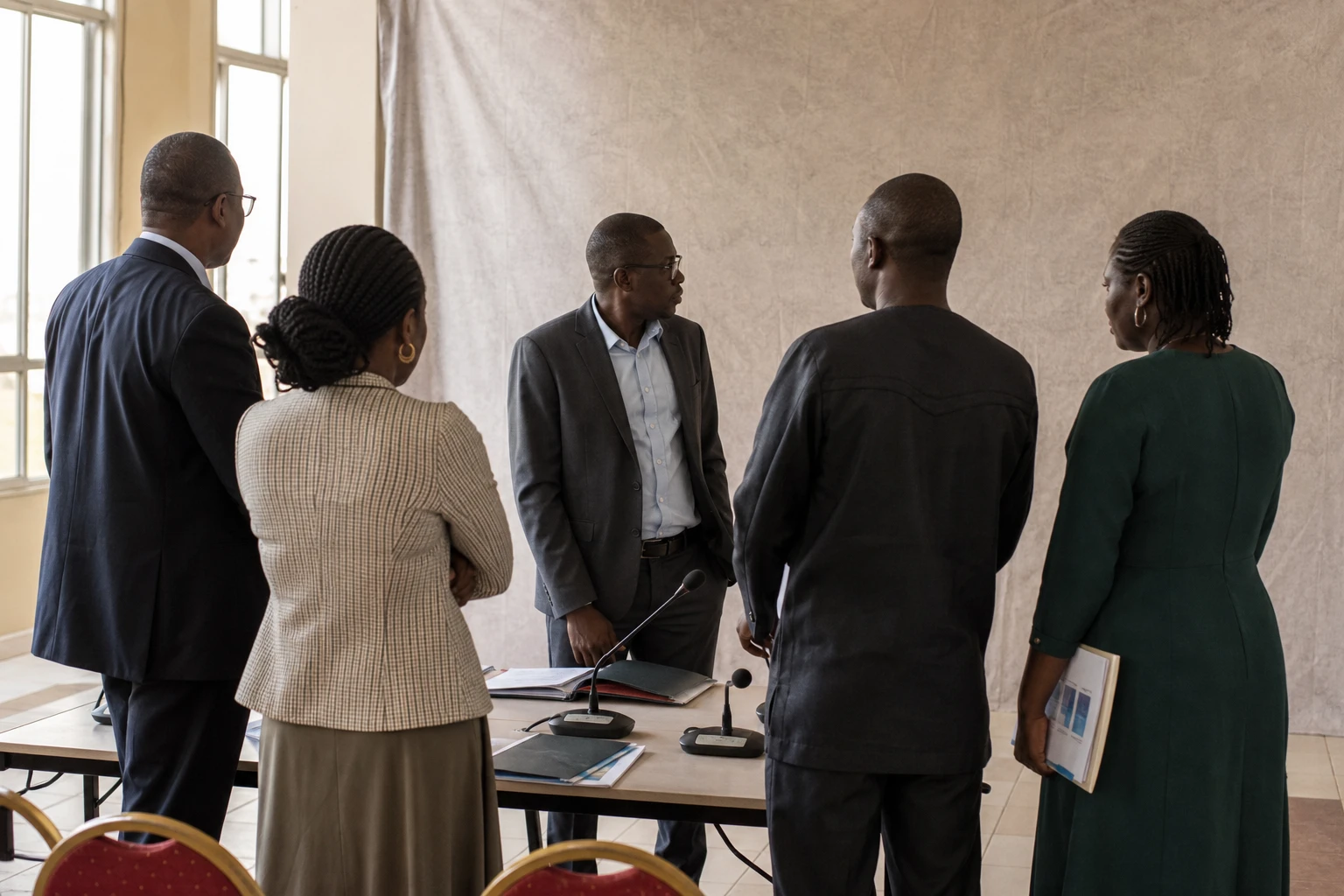
In Ouagadougou, references to Thomas Sankara are no longer merely about memory. They now serve as a lens through which to view Ibrahim Traoré’s government, which seeks to link sovereignty, local production and national mobilisation. But four years of military transition cannot be measured solely by the strength of a political narrative.
An anniversary framed by comparison
30 September 2026 will mark four years since Ibrahim Traoré came to power in Burkina Faso. This matches the length of Thomas Sankara’s rule, from 4 August 1983 to 15 October 1987. The comparison is therefore unavoidable in public debate, even if the two periods reflect very different realities.
Thomas Sankara took power at the age of 33, amid the Cold War and challenges to political models dependent on former colonial powers. He renamed Upper Volta Burkina Faso in 1984, launched a democratic and popular revolution, and set about reforming agriculture, health, education, housing and women’s rights. The Burkinabè presidency notes that this period ended with his assassination on 15 October 1987.
Ibrahim Traoré belongs to a different chapter. Burkina Faso is facing an armed insurgency that has particularly affected several areas in the north and east. Security absorbs a considerable share of government action. It is also reshaping relations between the state, the armed forces, civilian volunteers and the population.
Sovereignty as a political thread
The most visible common ground between the two leaders lies in their political vocabulary. They emphasise pan-Africanism, economic autonomy and reducing external dependencies. This line responds to a real expectation in Burkina Faso, where some of the population want national decisions to be made more firmly in Ouagadougou.
Since 2022, the military government has broken with several cooperation frameworks established with France and diversified its international partnerships. Burkina Faso has also moved closer to Mali and Niger. The three countries left the Economic Community of West African States, ECOWAS, a regional organisation responsible, among other things, for economic cooperation and collective security, before creating the Alliance of Sahel States.
This break is changing West African power dynamics. It gives the authorities in Ouagadougou greater freedom of expression. However, it also narrows some channels for dialogue with regional institutions. The central question, then, is whether this new direction can tangibly improve security, incomes and public services.
Producing more, controlling resources
Ibrahim Traoré’s government puts industrialisation and local processing at the heart of its messaging. Production facilities have been announced or inaugurated in agribusiness, livestock and other sectors. The authorities also want to strengthen national control over mineral resources, particularly gold, the country’s main export commodity.
This strategy recalls some of the objectives of the Sankara era, which sought to reduce imports and encourage consumption of products made in Burkina Faso. The promotion of Faso Dan Fani, a cotton fabric associated with Burkinabè identity, is part of this effort to boost local industries.
The Faso Mêbo programme illustrates this approach. Presented as an initiative to improve access and urban development, it mobilises equipment and workers to build or rehabilitate roads. The project aims in particular to ease travel between towns and rural areas. It must, however, be judged by lasting results: the quality of the works, their maintenance, access to markets and benefits for residents.
This is where the parallel with Sankara has its limits. In the 1980s, vaccination campaigns, reforestation drives and housing programmes produced quickly visible effects in several sectors. Today, projects are being carried out in a more populous, more urbanised country facing a protracted security crisis. Their success will depend as much on funding as on the administration’s ability to reach remote regions.
War changes the nature of power
The main difference between the two periods concerns security. Thomas Sankara’s regime made improving access to remote areas and popular mobilisation tools for national transformation. Today’s government, by contrast, must constantly balance military efforts, aid for displaced people, the continuity of public services and productive investment.
This pressure varies from one area to another. In Ouagadougou, residents can see new construction sites, industrial announcements and official ceremonies. In some rural areas, access to markets, schools and health centres depends first and foremost on the security of roads. For the informal economy, which is widespread in towns and the countryside, an impassable road or a closed market can cause an immediate loss of income.
The authorities say they have increased the resources available to combat forces and developed some domestic production capabilities. However, the existence of additional equipment is not enough to establish that the overall situation has improved. Security assessments remain difficult to verify independently, while humanitarian organisations continue to report population displacement and disruption to access to essential services in the central Sahel.
A historical reference, but not an identical model
Invoking Thomas Sankara gives Ibrahim Traoré powerful historical legitimacy. The revolutionary captain remains a major figure in African political history. His image extends beyond Burkina Faso and resonates with young people across the continent drawn to messages about dignity, independence and control of resources.
But this reference should not obscure the differences. Sankara championed a social revolution structured around mobilisation campaigns and collective reforms. Traoré governs under an extended military transition, dominated by war and a strong concentration of decision-making.
Both regimes also resorted to coercive practices. The Sankara era saw the use of revolutionary tribunals, purges and the labelling of people as enemies of the revolution. Under Ibrahim Traoré, human rights organisations and civil society actors have denounced restrictions targeting journalists, magistrates, opponents and critical voices. These allegations must be documented case by case, but they raise an essential political question: can sovereignty advance without avenues for scrutiny and debate?
The next test will be concrete
After four years, Ibrahim Traoré’s record will depend less on the stated resemblance to Thomas Sankara than on the ability to deliver verifiable results. Securing territories, reopening public services, creating jobs for young people, processing gold and cotton, and maintaining infrastructure will be decisive.
Across West Africa, the Burkinabè experience will continue to be watched by the populations and governments of the Alliance of Sahel States. It will also feed into continental debate on military transitions, economic sovereignty and the role of regional organisations. Sankara’s legacy can inspire a project. It cannot, however, replace institutions, results or the protection of fundamental rights.