
 Algeria
 Egypt
 Libya
 Morocco
 Sudan
 Tunisia
 Benin
 Burkina Faso
 Cabo Verde
 Côte d'Ivoire
 Ghana
 Guinea
 Guinea-Bissau
 Liberia
 Mali
 Mauritania
 Niger
 Nigeria
 Senegal
 Sierra Leone
 The Gambia
 Togo
 Cameroon
 Central African Republic
 Chad
 Equatorial Guinea
 Gabon
 Republic of the Congo
 São Tomé and Príncipe
 Burundi
 Comoros
 Djibouti
 Eritrea
 Ethiopia
 Kenya
 Madagascar
 Malawi
 Mauritius
 Mozambique
 Rwanda
 Seychelles
 Somalia
 South Sudan
 Tanzania
 Uganda
 Angola
 Botswana
 Eswatini
 Lesotho
 Namibia
 South Africa
 Zambia
 Zimbabwe
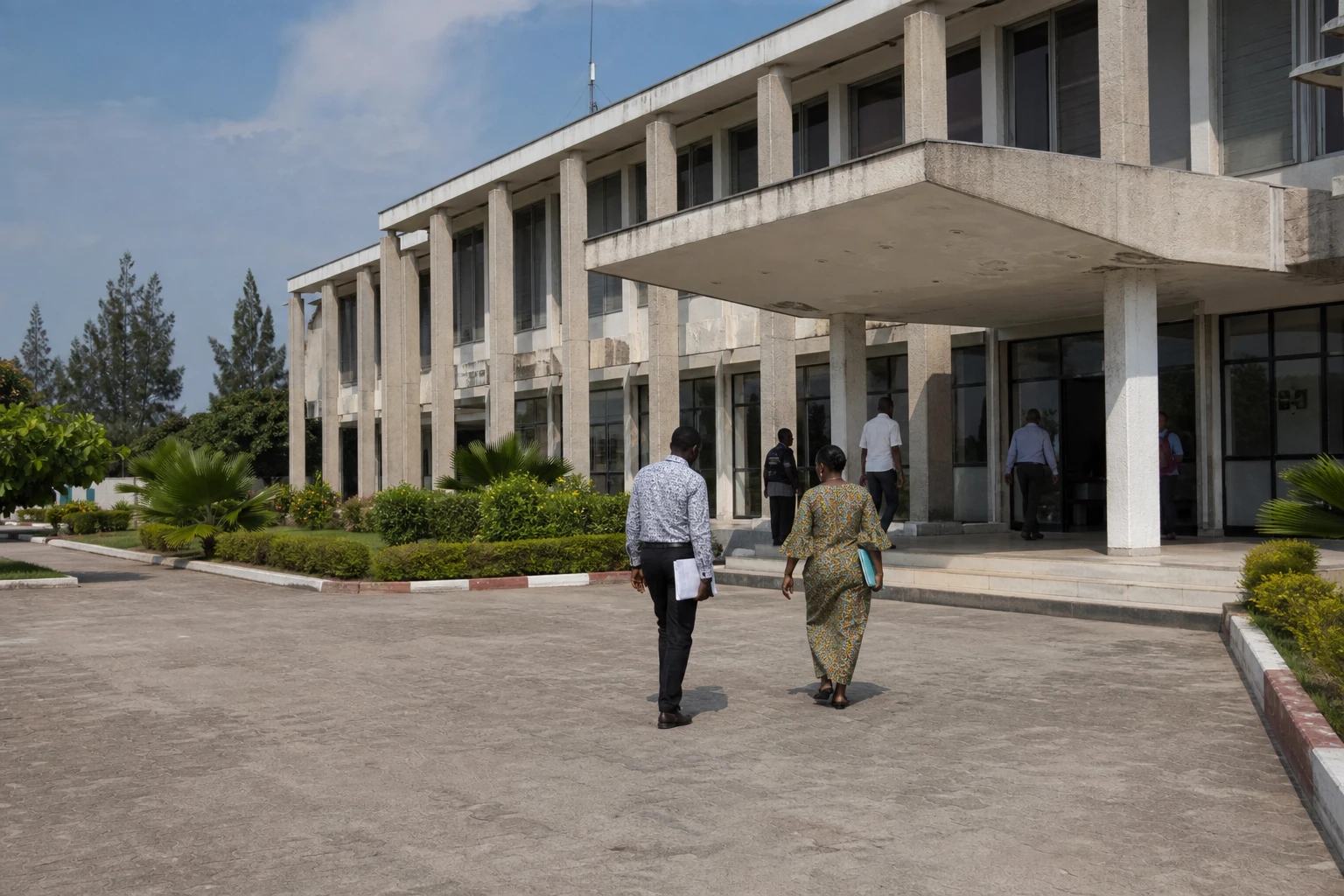
In Kenge, in Kwango Province, the crash of an aircraft operated by TRACEP Congo Aviation has put air safety in the Democratic Republic of the Congo under scrutiny. Beyond the death toll, investigators will have to reconstruct the flight’s final minutes and establish whether the aircraft still had adequate conditions to continue its journey to Kinshasa.
A flight cut short between Kikwit and Kinshasa
The accident occurred on Friday 25 September 2026, at about 14:00, near Kenge. The Let 410, registration 9S-GUC, was on the return leg between Kikwit and Kinshasa. According to information released by the authorities, the aircraft was carrying 13 passengers and four crew members. All 17 people on board died.
The death toll was revised in the hours after the crash. Initial local reports said there were 13 people on board. Flight data later published by Tryphon Kin-Kiey Mulumba, chairman of the board of the Régie des voies aériennes, listed 16 people on board. The Ministry of Transport ultimately put the number of victims at 17: 13 passengers and four crew members.
Among the passengers were two senior officials in the Congolese military justice system: Lieutenant General Joseph Mutombo Katalayi Tiende, first president of the High Military Court, and Lieutenant General Lucien-René Likulia Bakumi, auditor general of the Armed Forces of the DRC. Several other military personnel were also on the aircraft.
Provincial officials said the aircraft may have circled Kenge several times before looking for a place to land. Kwango Deputy Governor Rémy Saki referred to a problem that arose between Kikwit and Kinshasa. This account remains preliminary, however. It will need to be checked against technical data, crew communications and evidence gathered at the site.
The requests addressed to the Civil Aviation Authority and the Régie des voies aériennes concern, among other things, the aircraft’s technical condition and the date of its last airworthiness inspection. This information should help establish whether the aircraft met regulatory requirements before departure.
Two investigations to establish the facts and responsibility
The Permanent Bureau of Investigations into Aviation Accidents and Incidents, or BPEA, sent a team to the scene on the night of 25–26 September. This safety investigation is not primarily intended to identify someone for criminal prosecution. It must reconstruct the sequence of events and, if necessary, make recommendations to prevent another accident.
Investigators will examine the wreckage, cockpit instruments, maintenance records, flight plan and communications between the crew and air traffic control. They will also check the weather, the amount of fuel, the nature of the reported problem and whether an emergency landing was possible.
The BPEA has called for the site to be secured and for no items to be moved or removed. This precaution is essential. In an air accident, a deformed part, the position of the impact or a fragment of an instrument can help distinguish between mechanical failure, a navigational error, a fuel problem or difficulty related to the airfield environment.
A second procedure has been opened by the Ministry of Justice. This is a preliminary judicial investigation intended to establish the exact circumstances of the tragedy and any possible responsibility. The two processes are separate, but they will have to share relevant information in accordance with the applicable rules.
The Ministry of Transport, for its part, has suspended TRACEP Congo Aviation’s air operator certificate. The measure applies to the company’s operations across the DRC, pending the outcome of the investigations. It follows another accident involving a TRACEP aircraft in Walikale, North Kivu, on 24 July 2026, which killed the pilot.
Kenge airstrip at the centre of questions
The crash has also reignited debate about secondary air infrastructure in the DRC. Tryphon Kin-Kiey Mulumba said Kenge’s former airstrip was about 930 metres long and that its land had gradually been occupied by housing. He argued that a compliant airstrip might have offered the crew a different option.
This statement is not an investigative finding. It nevertheless raises a practical question: could an aircraft in trouble really have attempted to land at Kenge? Investigators will have to establish whether the airstrip was officially operational, what condition it was in and whether it was among the options available to the crew.
The issue also concerns land management around airfields. In several Congolese cities, urban expansion is reducing areas originally reserved for public infrastructure. This pressure directly affects the safety of nearby residents, as well as the authorities’ ability to maintain emergency options for regional flights.
An issue that goes beyond Kwango
The DRC has a vast territory and relies heavily on air transport to connect Kinshasa with distant cities. Domestic routes serve government agencies, businesses, humanitarian organisations and families. In provinces without roads that are passable all year round, flying is sometimes the fastest, or even the only regular, way to travel.
This reality demands a balance between maintaining connections and enforcing rigorous oversight. The suspension of TRACEP is a precautionary measure. It may, however, disrupt travel for passengers and personnel in areas where air services remain limited. The challenge is therefore to strengthen checks without further isolating inland cities.
The case also forms part of wider efforts to improve air transport safety in Central Africa. The DRC must clarify the respective responsibilities of the Civil Aviation Authority, the BPEA, the Régie des voies aériennes and private operators. Publishing a comprehensive, accessible and precise report will be crucial to restoring confidence.
In the short term, the next steps will be detailed confirmation of the victims’ identities, analysis of the technical evidence and publication of the first official findings. The cause of the crash cannot be established until that work is complete. For families and users of Congolese air transport alike, the priority remains the same: to understand what happened and prevent a similar accident from happening again.



