Algeria
 Egypt
 Libya
 Morocco
 Sudan
 Tunisia
 Benin
 Burkina Faso
 Cabo Verde
 Côte d'Ivoire
 Ghana
 Guinea
 Guinea-Bissau
 Liberia
 Mali
 Mauritania
 Niger
 Nigeria
 Sierra Leone
 The Gambia
 Togo
 Cameroon
 Central African Republic
 Chad
 DR Congo
 Equatorial Guinea
 Gabon
 Republic of the Congo
 São Tomé and Príncipe
 Burundi
 Comoros
 Djibouti
 Eritrea
 Ethiopia
 Kenya
 Madagascar
 Malawi
 Mauritius
 Mozambique
 Rwanda
 Seychelles
 Somalia
 South Sudan
 Tanzania
 Uganda
 Angola
 Botswana
 Eswatini
 Lesotho
 Namibia
 South Africa
 Zambia
 Zimbabwe
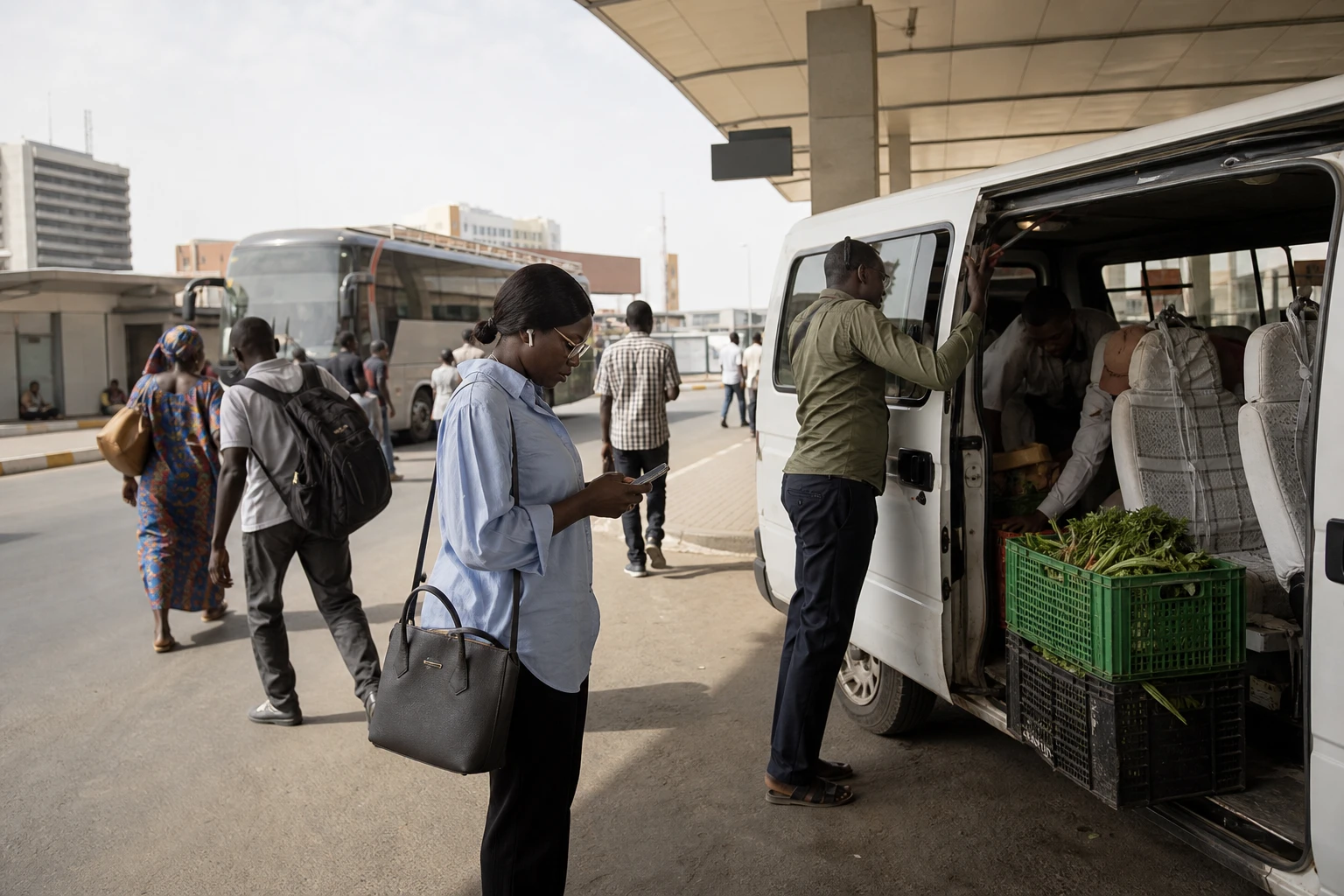
In Dakar and across the regions, access to finance remains a major obstacle for Senegalese small and medium-sized enterprises. The Islamic Recovery Fund is seeking to address this by gradually directing its resources towards production, local value chains and scientific education.
New investment in four Senegalese businesses
The Islamic Recovery Fund (FIR) formally announced on Tuesday 22 September 2026 a total allocation of CFAF 600 million to four Senegalese businesses. The operation brings its cumulative investments to CFAF 7.5 billion, in equity and in the form of mudaraba loans.
Mudaraba is an Islamic finance mechanism based on the sharing of profits and risks between the provider of capital and the business receiving funding. Unlike a conventional loan, it does not involve a fixed interest rate applied to the principal.
The beneficiaries of this latest operation are Agro Industries du Nord, Mintou Rassoul, Bassari Baobab and École Scientifique Internationale d’Excellence. Their activities span agrifood, agricultural processing and science education.
Agro Industries du Nord and Mintou Rassoul operate in the rice sector, particularly in the Senegal River Valley. The funding is intended to support the modernisation of equipment, increased storage capacity and more secure supplies.
The FIR also says that its investment in École Scientifique Internationale d’Excellence is intended to help equip new educational facilities. The school plans, in particular, to open a second secondary school in Keur Massar, in the Dakar region.
These details were provided by the Sovereign Strategic Investment Fund. An independent report by the Senegalese press confirms the amount, the date of formalisation and the identities of the four beneficiary businesses.
A fund created after the health crisis
The FIR is a subsidiary of the Sovereign Strategic Investment Fund, FONSIS. It was established with the support of the Islamic Development Bank and the state of Senegal to strengthen the equity and financing capacity of SMEs affected by the Covid-19 crisis.
Its initial allocation is CFAF 20 billion. The scheme has two components. The first, endowed with CFAF 5 billion, is dedicated to strengthening equity. The second, worth CFAF 15 billion, is intended for financing in the form of debt or instruments compliant with Islamic finance principles.
At its launch, the fund primarily targeted SMEs and small and medium-sized industries facing a drop in activity or cash-flow difficulties. Planned investments were generally to range from CFAF 10 million to CFAF 50 million, with an initial target of supporting 400 businesses.
The strategy has since evolved. In October 2024, FONSIS allocated CFAF 5 billion to Taysir Finance. The microfinance institution is to channel these resources to Senegalese SMEs at an announced rate of 5.5%. Taysir Finance became the FIR’s third partner, after Banque Islamique du Sénégal and Coris Bank Baraka.
In January 2025, an additional CFAF 2.5 billion credit line was granted to Al Rahma, a subsidiary of Banque Nationale pour le Développement Économique. The operation is aimed in particular at very small businesses, social and solidarity economy organisations, and entrepreneurs with limited access to bank lending.
The amounts and dates of these two operations are documented in FONSIS’s statements on its partnership with Taysir Finance and in the agreement published on Al Rahma and SME financing.
From emergency recovery to support for productive sectors
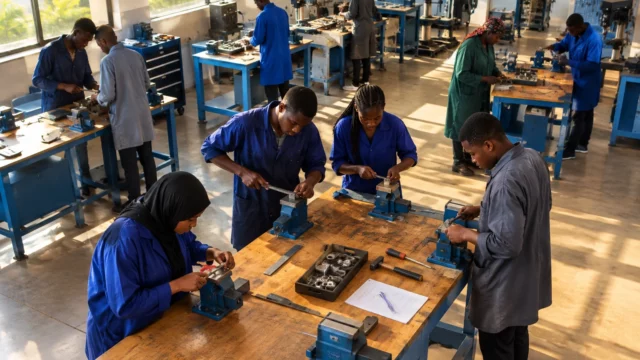
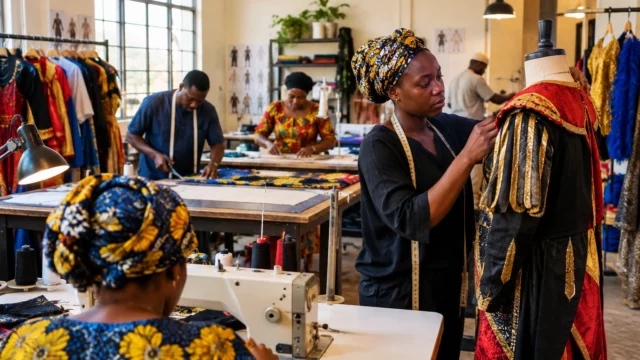
The FIR’s portfolio is no longer limited to repairing the effects of the pandemic. Its investments now cover agricultural processing, agribusiness, adding value to local resources, textiles, healthcare and education.
This focus addresses a structural challenge in the Senegalese economy. Many businesses have a market or expertise, but lack the capital to buy equipment, build up stocks or take the next step towards industrialisation.
Investments in the rice sector illustrate the challenge. They cover both processing and storage. Their potential impact therefore extends beyond the businesses receiving funding, and could reach producers, transporters, equipment suppliers and traders linked to the value chain.
In areas far from Dakar, the intended impact is also regional. A better-equipped agrifood business can help stabilise local jobs and provide producers with more reliable outlets. However, these results will depend on businesses’ ability to sustain their operations, access markets and control costs.
Scientific education is another important priority. Support for private school facilities does not replace public investment, but it can expand the provision of training in fields where Senegal is seeking to strengthen its expertise: science, engineering, healthcare and research.
In March 2025, the FIR had already invested CFAF 586.5 million in five businesses: Contanna, Dialibatou, By Tchico, Prozen Industries and Clinique du Littoral. According to the FONSIS report on the investment, the operation covered the processing of agricultural and fishery products, textiles and healthcare.
An instrument within West Africa’s financial landscape
The FIR operates within the financial environment of the West African Economic and Monetary Union. Senegal shares the CFA franc with several countries in the region, as well as a regional financial market and common banking networks.
Islamic finance still has a limited presence there, but it has institutional and commercial channels. Islamic banks, microfinance companies and instruments such as sukuk offer alternatives that complement conventional credit.
For Senegalese businesses, the challenge is not just to mobilise resources. It is also to strengthen governance, accounting transparency and the ability to present viable projects. Without these conditions, available funds risk benefiting only a limited number of businesses that are already well established.
The increase to CFAF 7.5 billion invested therefore marks a milestone, but not the completion of the scheme. The key indicators to watch will now be its tangible impact: the number of businesses supported, jobs preserved or created, growth in local production and the distribution of investment between Dakar and Senegal’s other regions.
With this latest operation, the FIR confirms a shift in its role. Created as a post-Covid recovery tool, it is gradually becoming a financing vehicle to support Senegalese productive capacity. Its reach in the coming years will depend on its ability to serve growing businesses and turn announced investments into lasting results.