
 Algeria
 Egypt
 Libya
 Sudan
 Tunisia
 Benin
 Burkina Faso
 Cabo Verde
 Côte d'Ivoire
 Ghana
 Guinea
 Guinea-Bissau
 Liberia
 Mali
 Mauritania
 Niger
 Nigeria
 Senegal
 Sierra Leone
 The Gambia
 Togo
 Cameroon
 Central African Republic
 Chad
 DR Congo
 Equatorial Guinea
 Gabon
 Republic of the Congo
 São Tomé and Príncipe
 Burundi
 Comoros
 Djibouti
 Eritrea
 Ethiopia
 Kenya
 Madagascar
 Malawi
 Mauritius
 Mozambique
 Rwanda
 Seychelles
 Somalia
 South Sudan
 Tanzania
 Uganda
 Angola
 Botswana
 Eswatini
 Lesotho
 Namibia
 South Africa
 Zambia
 Zimbabwe
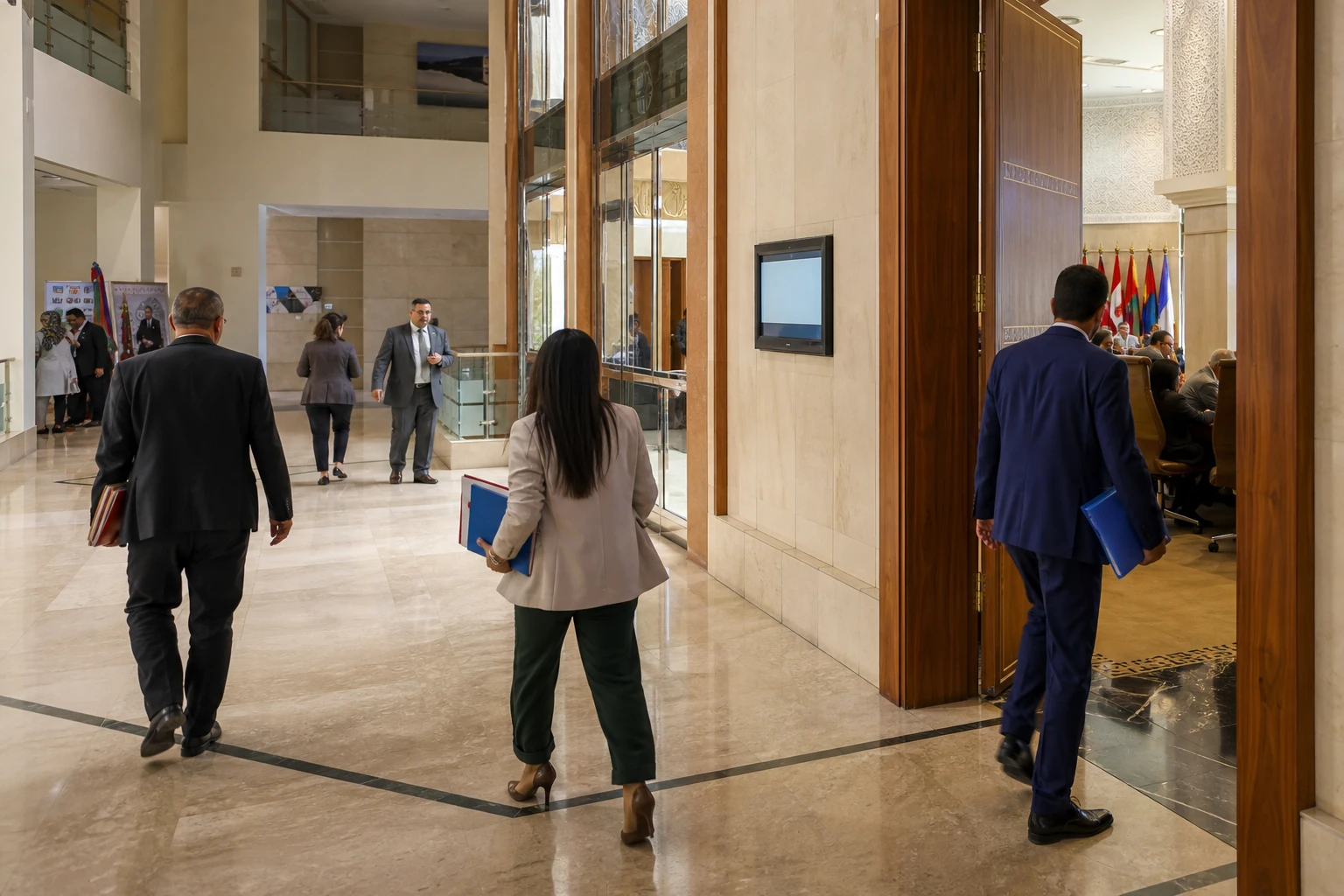
The 23 September election opens a new political phase in Morocco. The Authenticity and Modernity Party (PAM) has come first, but it will have to turn its electoral lead into a parliamentary majority. With 97 of 395 seats, it still needs 101 more lawmakers to reach the threshold of 198 seats.
A fragmented parliament after the 23 September vote
Provisional results announced overnight from Wednesday 23 to Thursday 24 September 2026 put the PAM in first place in the House of Representatives. The party won 97 seats, according to figures released by Morocco’s interior minister, Abdelouafi Laftit.
The National Rally of Independents (RNI) came second with 66 seats. It was closely followed by the Istiqlal Party (PI), which won 65. The Justice and Development Party (PJD) returned to fourth place with 54 lawmakers.
The Popular Movement won 29 seats. The Socialist Union of Popular Forces took 26. The Party of Progress and Socialism has 19 lawmakers, while the Constitutional Union won 17.
The Democratic and Social Movement and the Alliance of the Left each won eight seats. Four other parties shared the remaining six seats: the Front of Democratic Forces and the Party of Equity won two each, while the Party of Neo-Democrats and the Party of Unity and Democracy each won one.
These figures remain provisional. However, they point to a House with no dominant force. Even if it added its seats to those of the RNI and Istiqlal, the PAM would reach 228 MPs. This would give a majority to the bloc formed by the three parties in the outgoing coalition, but would require a new political agreement between parties that are now rivals.
PAM leads, but does not hold all the cards
The PAM’s result gives it a significant institutional advantage. Article 47 of Morocco’s Constitution provides that the king appoints the head of government from the party that comes first in elections to the House of Representatives. The PAM therefore has the first responsibility: to propose a team capable of winning the House’s confidence.
That rule does not, however, turn a first-place finish into sole power. The government must present its programme to both houses of parliament, then win the confidence of an absolute majority of the members of the House of Representatives. The future head of government will therefore have to negotiate quickly with several partners.
The RNI and Istiqlal have enough weight to become pivotal to the next majority. Their alignment with the PAM would offer a relatively straightforward solution, continuing the previous coalition. However, the balance of power has changed. The RNI, which dominated the House after the 2021 legislative elections, has fallen sharply in the provisional 2026 results. The PAM, by contrast, has become the largest parliamentary force.
Talks could also involve the Popular Movement, the Socialist Union of Popular Forces and the Party of Progress and Socialism. Their participation would broaden the next government’s parliamentary base. In return, it would make decisions on the allocation of ministerial portfolios and the priorities of the government programme more complex.
Turnout falls, with regional differences
Turnout reached 38.08% nationwide, compared with 50.86% in 2021 and 42.27% in 2016, according to figures released by the interior ministry. Nearly six million voters took part in the 23 September election.
The decline is one of the election’s major political facts. It puts the balance of power between the parties into perspective. The results reflect the choices of those who voted, but also the persistent distance between some of the population and elected institutions.
Turnout did not, however, change uniformly. Moroccan authorities reported markedly higher rates in several southern regions: 77% in Laâyoune-Sakia El Hamra, 53.48% in Guelmim-Oued Noun and 61% in Dakhla-Oued Eddahab. These differences are a reminder that electoral mobilisation varies considerably according to territory, local networks and the issues residents consider important.
The number of registered voters stands at 15,801,162, of whom 46% are women. The next legislature will therefore have to respond to demands for broader representation, particularly among young people, women and residents of areas less connected to the country’s economic centres.
Jobs, purchasing power and social protection top expectations
The next majority will first have to address issues that directly affect households. Youth employment remains central, while gaps between major cities, smaller towns and rural areas make access to stable incomes more difficult.
Purchasing power will also shape relations between the government and the population. Rising prices, housing costs and spending on health or education are immediate concerns. They call for clear measures, as well as the capacity to implement them over time.
Social protection is another major challenge. Extending it requires co-ordination between the administration, local authorities and economic stakeholders. It will also have to take account of the different circumstances of the formal economy, self-employment and informal activities.
The next government will also have to support investment and entrepreneurship without concentrating the benefits of growth along the Casablanca-Rabat axis. Reducing regional disparities will be crucial to assessing the effectiveness of the new legislature.
A national milestone within a regional ambition
The formation of the government will take place at a strategic time for Morocco. The country is pursuing several infrastructure projects and preparing for the 2030 World Cup with Spain and Portugal. These investments could boost economic activity, employment and the appeal of regions. They will also raise expectations around transparency, the distribution of benefits and Moroccan businesses’ access to the relevant contracts.
In North Africa, the election underscores the importance of national institutions in a regional environment marked by the fragmentation of the Arab Maghreb Union. Morocco is also seeking to strengthen its economic and diplomatic partnerships across the continent, particularly in West Africa. The stability of its domestic governance will therefore affect its ability to pursue this policy.
The next step will be the appointment of a head of government from the PAM, followed by the conclusion of coalition agreements. The key indicator to watch will not only be the make-up of the executive. It will also be the coherence of the programme presented to the House of Representatives and the majority’s ability to respond to the expectations revealed by low turnout.



