
 Algeria
 Egypt
 Libya
 Morocco
 Sudan
 Tunisia
 Benin
 Burkina Faso
 Cabo Verde
 Côte d'Ivoire
 Ghana
 Guinea
 Guinea-Bissau
 Liberia
 Mali
 Mauritania
 Niger
 Nigeria
 Senegal
 Sierra Leone
 The Gambia
 Togo
 Cameroon
 Central African Republic
 Chad
 Equatorial Guinea
 Gabon
 Republic of the Congo
 São Tomé and Príncipe
 Burundi
 Comoros
 Djibouti
 Eritrea
 Ethiopia
 Kenya
 Madagascar
 Malawi
 Mauritius
 Mozambique
 Rwanda
 Seychelles
 Somalia
 South Sudan
 Tanzania
 Uganda
 Angola
 Botswana
 Eswatini
 Lesotho
 Namibia
 South Africa
 Zambia
 Zimbabwe
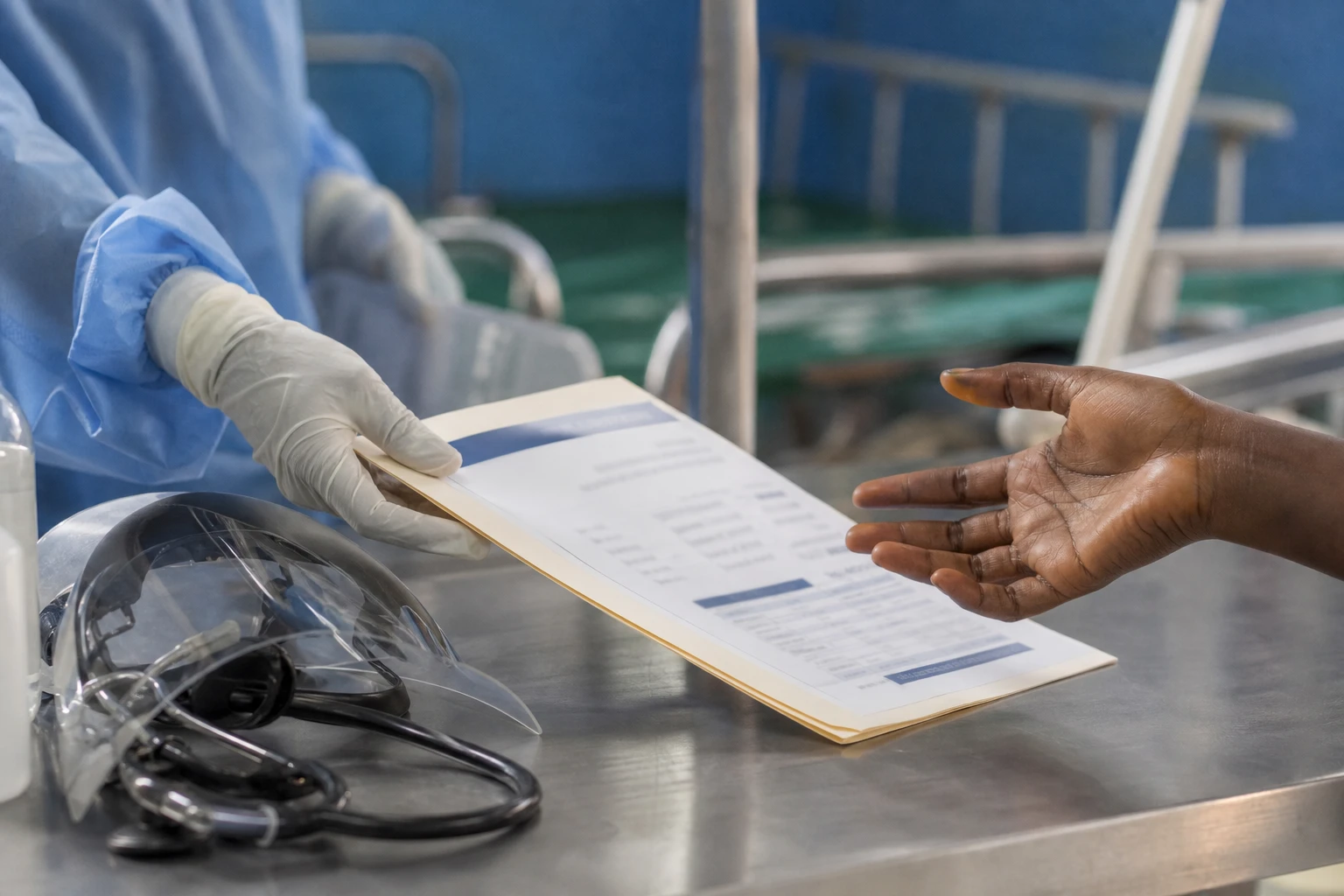
In Kisangani, the fight against Ebola has taken on a human face with the death of a doctor involved in caring for patients. In Butembo, North Kivu, a survivor has chosen to stay alongside the sick. These two stories show the toll of the epidemic, but also the solidarity taking shape in treatment centres.
In Kisangani, a doctor’s death weakens the frontline
Dr Victor Kingombe died on Thursday 24 September 2020 at the Ebola treatment centre in Kisangani. He had been receiving treatment there after contracting the disease. The announcement was made by the provincial executive bureau of the National Union of Doctors in Tshopo, SYNAMED.
The doctor worked notably at Kisangani University Clinics and Desmet Hospital. His colleagues described him as an available doctor, devoted to his patients and to the demands of his profession. He became the first doctor to die of Ebola in Tshopo province since this outbreak began.
He died in the same facility where he had helped care for infected people. This situation illustrates the risks health workers continue to face. They work in close proximity to patients, in conditions that require appropriate equipment, strict procedures and constant monitoring.
The figures released on 22 September by the provincial health authorities recorded 42 confirmed cases and 17 deaths in Tshopo. Twelve health professionals were among those infected. A local update published two days later reported 43 confirmed cases, with the number of deaths unchanged.
These figures should be treated with caution. Epidemiological figures change as tests are confirmed, deaths recorded and recoveries updated. They nevertheless reflect the pressure on medical teams in a province where the response still needed to strengthen its capacity.
The new Ebola treatment centre in Kisangani had been operational since the beginning of September. It had 22 beds and was supported by Médecins Sans Frontières, in coordination with the Congolese health authorities. This capacity was intended to enable patients to be isolated, improve care and reduce the risk of transmission in ordinary healthcare facilities.
In North Kivu, a survivor chooses to stay at the centre
Several hundred kilometres from Kisangani, the story of Kahindo Manzekele Devotte offers a different perspective. Having recovered nearly two weeks earlier, this resident decided to stay at the Kitatumba Ebola treatment centre in Butembo to support patients and help health workers.
Her choice is rooted in her own experience. During her illness, she saw patients arrive in a very serious condition. She now wants to offer them a presence and practical support, as far as she is able.
“When I was sick here, I saw that many people were at death’s door,” she explained in an account reported by MediaCongo Press. She said she wanted to contribute to the work of the teams caring for them.
The survivor also stresses the importance of seeking medical advice quickly. She says she went to a health facility the day after her first symptoms appeared. In her view, this response helped her recover.
Her account echoes the messages shared by health teams. When symptoms are suspicious, waiting several days can delay diagnosis and treatment. Early consultation also helps identify contacts and break chains of transmission.
An epidemic weighing on cities and communities
As of 22 September 2020, North Kivu had recorded 1,402 confirmed cases and 850 deaths, according to data reported by the health services. Sixteen of its 34 health zones were affected. The province therefore remained one of the main centres of the Ebola epidemic in eastern Democratic Republic of the Congo.
The situation in North Kivu followed the tenth Ebola outbreak, which was declared over on 25 June 2020 after nearly two years of response efforts. The virus’s renewed spread in other provinces nevertheless showed that an official end did not remove vulnerabilities in the health system.
The World Health Organization was then highlighting the difficulties faced in several areas of the Democratic Republic of the Congo. Some localities remain difficult to reach. Samples sometimes have to travel long distances before they can be analysed. Teams must also continue contact tracing and arrange safe and dignified burials.
In cities, the epidemic disrupts hospitals and economic activity. In rural areas, the distance to healthcare facilities can delay consultations. Families, meanwhile, must contend with fear of infection, restrictions on visits and the need to protect relatives without breaking social ties.
Survivors play an important role in the response. Their testimony can reduce mistrust of treatment centres. Their presence also shows that a person who has recovered is more than their status as a patient. They can once again play an active role in their community, provided they receive appropriate medical and social support.
An issue that extends beyond DR Congo’s borders
Tshopo and North Kivu are not isolated from the rest of the region. Kisangani is a major transport hub in Central Africa. Butembo, for its part, lies in a border area oriented towards Uganda and trade across the east of the continent. Monitoring movements and regional coordination therefore remain essential.
The fight against Ebola rests on several pillars: vaccination of people exposed to the virus, testing, isolation, care, contact tracing and communication with communities. It also depends on protecting health workers. The death of Dr Victor Kingombe is a reminder of the human cost borne by those on the frontline.
By contrast, Kahindo Manzekele Devotte’s commitment shows that the response is not limited to institutions. It also relies on survivors, families and community networks. For the Democratic Republic of the Congo, the challenge now is to preserve this capacity beyond the emergency, so that the gains made in the response can strengthen the health system over the long term.



