Algeria
 Egypt
 Libya
 Morocco
 Sudan
 Tunisia
 Benin
 Burkina Faso
 Cabo Verde
 Côte d'Ivoire
 Ghana
 Guinea
 Guinea-Bissau
 Liberia
 Mali
 Mauritania
 Nigeria
 Senegal
 Sierra Leone
 The Gambia
 Togo
 Cameroon
 Central African Republic
 Chad
 DR Congo
 Equatorial Guinea
 Gabon
 Republic of the Congo
 São Tomé and Príncipe
 Burundi
 Comoros
 Djibouti
 Eritrea
 Ethiopia
 Kenya
 Madagascar
 Malawi
 Mauritius
 Mozambique
 Rwanda
 Seychelles
 Somalia
 South Sudan
 Tanzania
 Uganda
 Angola
 Botswana
 Eswatini
 Lesotho
 Namibia
 South Africa
 Zambia
 Zimbabwe
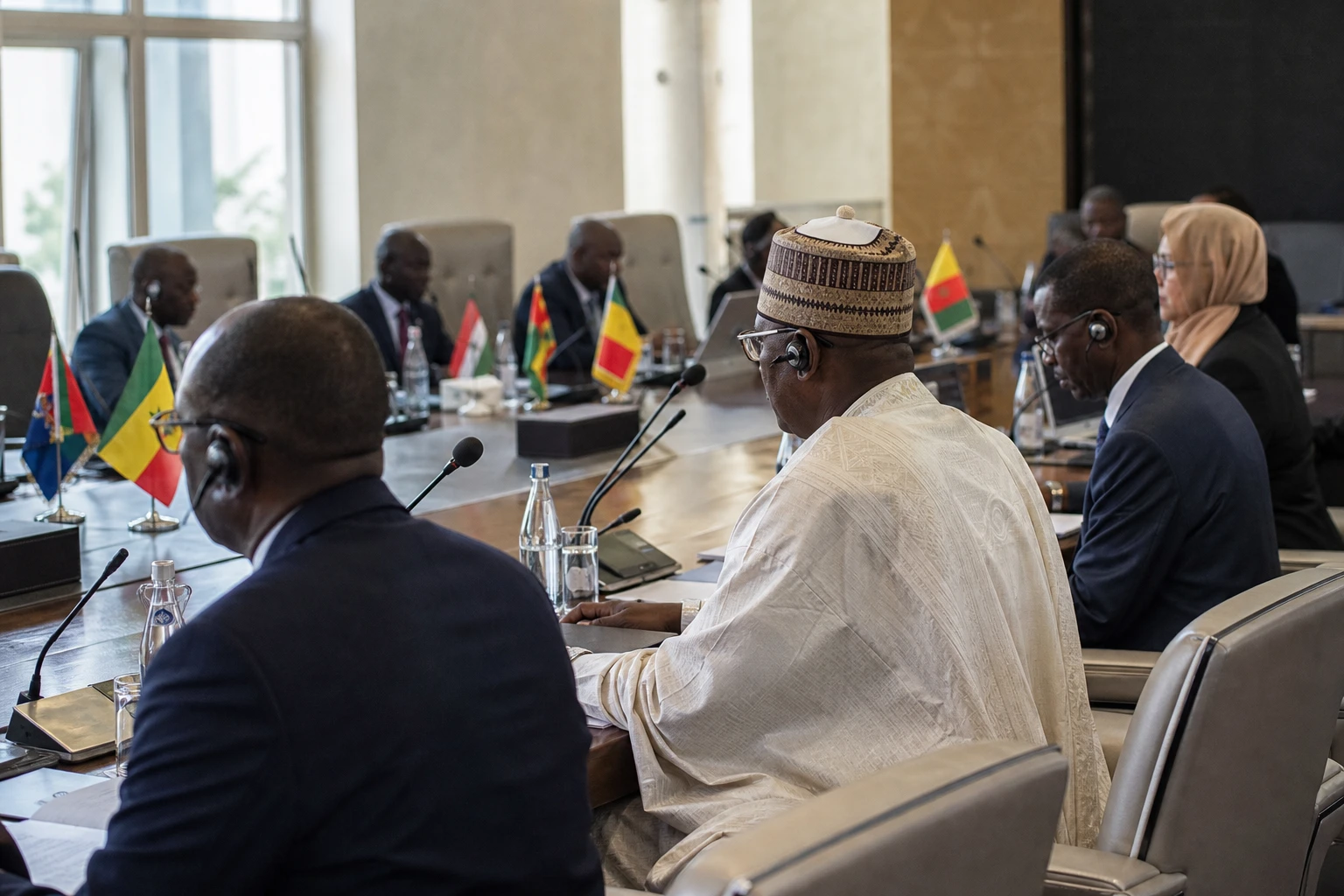
In northern Niger, the framework for the Madaouela uranium project is changing. After several years of uncertainty, Niamey wants to get the deposit back on track with a new shareholding structure and immediate financial commitments.
Agreement signed to get Madaouela moving again
Niger’s Ministry of Mines and the Madaouela Mining Company, or MAMICO, signed a new mining agreement on 23 September 2026. The project is near Arlit, in the Agadez region in the north of the country.
The new agreement provides for the Nigerien state to hold 40% of MAMICO. Australian group Atomic Eagle retains 60% of the shares and operational control of the project. This structure replaces the previous arrangement, under which the state’s stake was reported to be 20%.
The agreement provides for an initial royalty of $10 million. According to information released by the Nigerien authorities, $5 million is to be paid within 30 days of the mining permit being issued. The balance is to be paid when construction begins.
The text also includes commitments to support local development. These include strengthening the capacity of the mining administration and training young Nigeriens. The ministry says about 1,000 jobs will be created, but has not yet specified when or how they will be divided between the construction and production phases.
MAMICO is linked to the Madaouela project, previously developed by GoviEx Uranium. The mining permit was withdrawn by the Nigerien authorities in July 2024, before the project returned to the public domain of Niger. The decision ushered in a period of legal disputes and uncertainty over the deposit’s future.
A new step in taking back control of the mining sector
The revival of Madaouela is part of the policy pursued by the transitional authorities since the coup of 26 July 2023. In Niamey, control of the mining value chain is presented as an issue of economic sovereignty. The government is seeking to increase the share of revenue going to the national budget and secure greater benefits for the communities concerned.
This approach is not limited to Madaouela. In 2024 and 2025, the Nigerien state also toughened its stance towards Orano, the French group with a longstanding presence in uranium mining in Niger.
The Nigerien government withdrew the permit for the Imouraren project in June 2024. A month later, it also revoked the Madaouela permit held by GoviEx. The Nigerien Press Agency reported at the time that the authorities accused the Canadian company of failing to meet certain obligations related to the project’s development.
The dispute with Orano, however, is separate from the agreement reached with Atomic Eagle. Until recently, Orano held a majority stake in the Société des mines de l’Aïr, or SOMAÏR, which mines uranium around Arlit. The group says it lost operational control of the company in December 2024. It subsequently launched several arbitration proceedings against the Nigerien state.
For its part, Niamey accuses its former French partner of failing to contribute sufficiently to the development of the country’s resources. The two sides therefore offer opposing accounts of the governance of mining assets and the terms of their transfer.
Economic promises must be turned into results
For people in the Agadez region, the stakes go beyond the signing of an agreement. The central questions will be how many jobs are actually created, how many contracts go to local businesses and how much is invested in infrastructure.
Building a mine can generate significant activity in transport, maintenance, construction and services. It also requires skilled labour, suitable equipment and reliable logistics. Nigerien businesses will therefore need to be able to access the contracts and training programmes that have been announced.
The distribution of benefits will be another area to watch. A 40% state stake could increase future government revenue. On its own, however, it does not guarantee a direct impact on households. The results will depend on the project’s costs, the price of uranium, the production timetable and the transparency of financial flows.
Environmental issues will also have to be addressed as the project resumes. Uranium mining uses large quantities of water and produces mine waste that requires long-term monitoring. Protecting local resources and keeping communities informed will need to be part of the oversight system, alongside industrial safety.
A project with implications beyond Niger
Madaouela comes amid a profound reshaping of the regional landscape. Niger, Mali and Burkina Faso left the Economic Community of West African States, ECOWAS, on 29 January 2025. The three Sahelian countries have since strengthened their co-operation within the Alliance of Sahel States.
This break is changing the conditions for the movement of capital, goods and skills in the region. It is also prompting the Nigerien authorities to diversify their mining partners and reduce their reliance on groups linked to former colonial powers.
The agreement with Atomic Eagle nevertheless shows that the pursuit of sovereignty does not mean an end to foreign partnerships. Niger retains a substantial state stake, but still relies on an international operator to finance, develop and run the project.
The next stage will therefore be decisive. The effective granting of the mining permit, payment of the first $5 million instalment and start of construction will need to be verified. Whether these deadlines are met will show if Madaouela is genuinely entering a production phase or remains a mining project on hold.
Across Africa, the project illustrates a broader trend: mineral-producing states want to renegotiate their place in strategic minerals value chains. Madaouela’s success will depend as much on Niger’s ability to defend its interests as on its capacity to turn an underground resource into jobs, skills and sustainable revenue.