Algeria
 Egypt
 Libya
 Morocco
 Sudan
 Tunisia
 Benin
 Burkina Faso
 Cabo Verde
 Côte d'Ivoire
 Ghana
 Guinea
 Guinea-Bissau
 Liberia
 Mali
 Mauritania
 Niger
 Nigeria
 Senegal
 Sierra Leone
 The Gambia
 Togo
 Cameroon
 Central African Republic
 Chad
 Equatorial Guinea
 Gabon
 Republic of the Congo
 São Tomé and Príncipe
 Burundi
 Comoros
 Djibouti
 Eritrea
 Ethiopia
 Kenya
 Madagascar
 Malawi
 Mauritius
 Mozambique
 Rwanda
 Seychelles
 Somalia
 South Sudan
 Tanzania
 Uganda
 Angola
 Botswana
 Eswatini
 Lesotho
 Namibia
 South Africa
 Zambia
 Zimbabwe
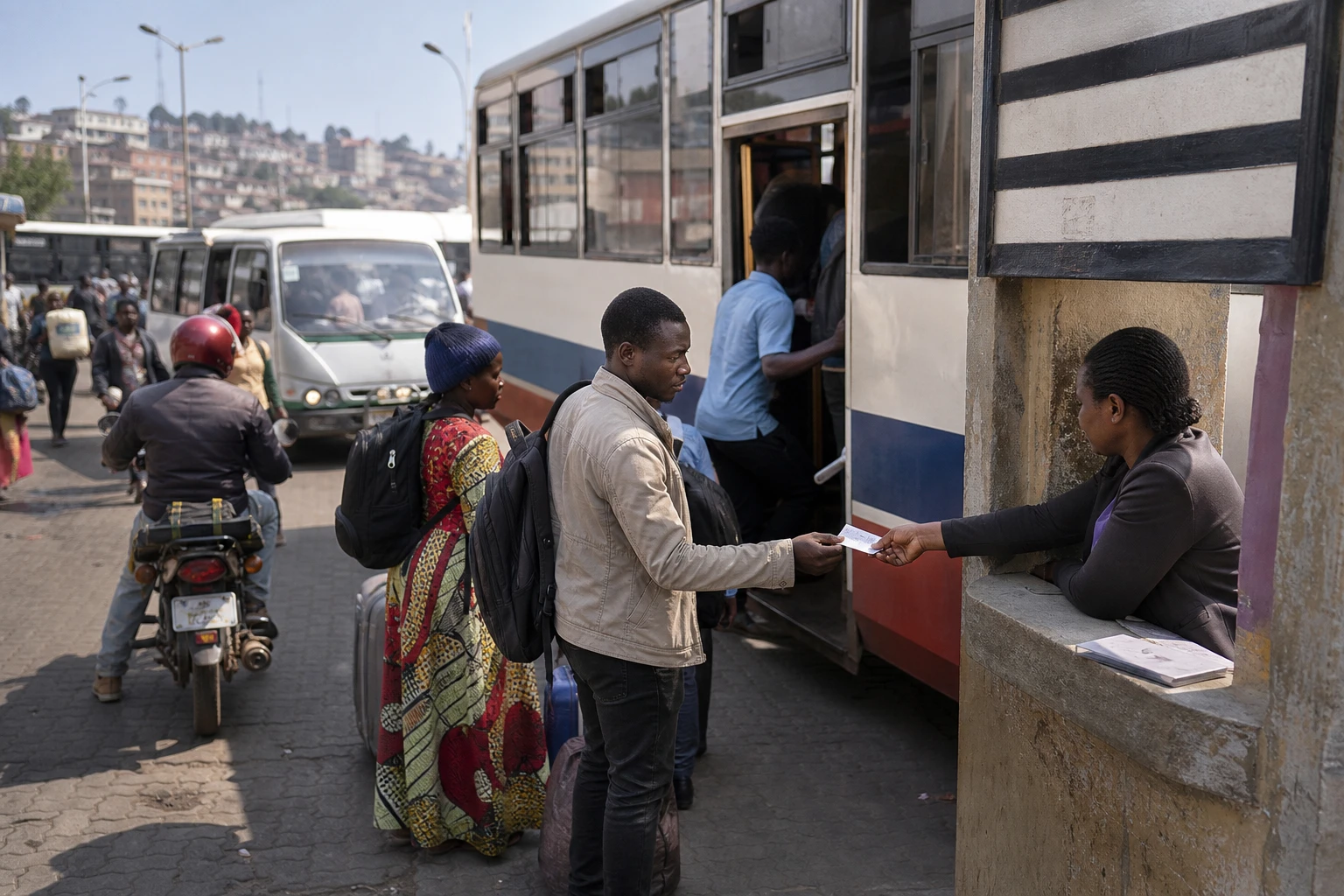
In eastern Democratic Republic of the Congo, diplomacy has produced several texts in less than eighteen months. Yet for residents of Goma, Bukavu, Uvira and neighbouring rural areas, signing an agreement does not yet mean a return to security. This gap between international commitments and their implementation on the ground now dominates debate between Kinshasa and Kigali.
In New York, two governments make the same demand: implement the agreements
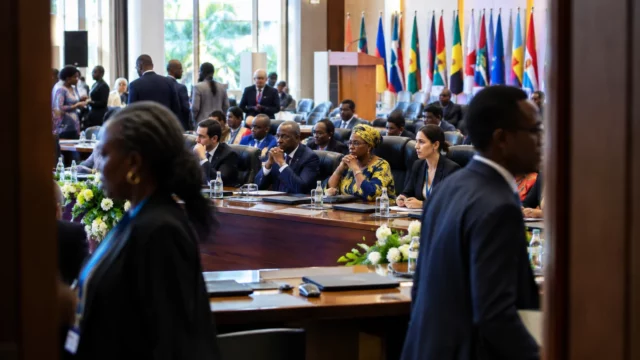
On 23 September 2026, during the general debate of the 81st session of the United Nations General Assembly, Rwandan Prime Minister Justin Nsengiyumva called on regional and international actors to support the Washington and Doha processes. He presented the two frameworks as steps towards a political solution to the conflict in eastern DR Congo.
The Washington agreement, signed on 27 June 2025 between the Democratic Republic of the Congo and Rwanda, deals mainly with the interstate dimension of the crisis. It includes commitments on the cessation of hostilities, military disengagement and the coordination of security mechanisms. The text also provides for a joint mechanism to monitor its implementation.
The Doha process, meanwhile, concerns talks between the Congolese government and the Congo River Alliance-March 23 Movement, or AFC/M23. This politico-military coalition controls or claims several areas of North Kivu and South Kivu. Its framework agreement, signed on 15 November 2025, sets out the basis for negotiations leading to a broader political and security settlement.
From Kigali, Justin Nsengiyumva emphasised the political dimension of the conflict. He referred to long-standing grievances, exclusion and weaknesses in governance. This interpretation is in line with Rwanda’s position that the issue of the Democratic Forces for the Liberation of Rwanda, the FDLR, must be addressed before the situation can be durably normalised.
The Congolese government, however, disputes the idea that Rwanda’s military presence can be maintained in the name of this threat. In New York, Prime Minister Judith Suminwa acknowledged diplomatic progress while stressing that peace remains out of reach in practice for millions of Congolese.
Kinshasa is now calling for a precise timetable. It is also demanding coordinated implementation of the Washington and Doha mechanisms and those of the African Union, as well as independent verification. The Congolese authorities say every violation must be established quickly and have clearly defined consequences.
The main obstacle remains the gap between the text and the reality on the ground
The difficulty is not a lack of mechanisms. Several structures are already in place. They include the DRC, Rwanda, Qatar, the United States, Togo as the African Union facilitator, and the African Union Commission. In August 2026, a sixth meeting on security coordination again focused on monitoring and verifying the Washington agreement.
The problem is instead one of trust. Kinshasa accuses Kigali of supporting the M23 and keeping Rwandan forces on Congolese territory. Rwanda rejects this account and says its security is threatened by the FDLR, an armed group active in eastern DR Congo for several decades.
A repatriation carried out on 8 September 2026 with the support of the United Nations Organization Stabilization Mission in the Democratic Republic of the Congo, Monusco, was presented by Kinshasa as a first concrete measure. It involved 120 people associated with the FDLR. The Congolese government says the operation shows that the FDLR issue can be addressed through targeted mechanisms, without justifying the presence of foreign troops.
Kigali does not share this interpretation. Rwanda is calling for the lasting neutralisation of the FDLR and considers their continued presence a source of threat on its borders. The divergence is therefore as much about the means as about the diagnosis of the conflict.
The population, meanwhile, is bearing the effects of these delays. In urban centres, displacement is putting pressure on public services, rents and commercial activity. In rural areas, insecurity is disrupting harvests, markets and travel. Informal-economy workers are particularly exposed, as they have little protection when control of roads changes hands.
Local authorities and humanitarian organisations must also contend with competing administrations in some areas. The return of the state therefore means more than deploying security forces. It also requires the restoration of justice, essential services, freedom of movement and access to land.
A regional architecture under strain
The crisis goes beyond relations between Kinshasa and Kigali. It directly involves the East African Community, of which the DRC is a member, as well as the Southern African Development Community, SADC, which has launched security initiatives in the region. It also brings in the International Conference on the Great Lakes Region and the African Union.
This overlap of organisations has an advantage: several channels remain open. It also carries a risk of fragmentation. If mandates overlap without a common timetable, each side can choose the mechanism most favourable to it and delay binding decisions.
The Doha process and the Washington agreement are legally distinct, but their implementation is linked. Disengagement between the DRC and Rwanda cannot deliver lasting peace if talks between Kinshasa and the AFC/M23 remain deadlocked. Likewise, a political agreement with the armed movement would not be enough if questions of borders, external support and security guarantees remained unanswered.
The African Union’s role will therefore be closely watched. Its ability to coordinate verification, establish responsibility and maintain dialogue with all parties will affect the credibility of the peace architecture. Togo, tasked with facilitating the process on behalf of the continental organisation, will in particular have to help prevent international initiatives from becoming parallel agendas.
Next steps will determine the credibility of the commitments
Following the statements in New York, the challenge will be to turn principles into verifiable decisions. This will require publication of a common timetable, clarification of chains of command, access to disputed areas and regular communication of information to the populations concerned.
Congolese people are above all waiting for tangible signs: fewer clashes, safer roads, the return of displaced people and the resumption of civilian administration. In Rwanda, border security will remain a central concern. For mediators, the challenge is to address these concerns without allowing any one of them to serve as a permanent justification for the presence of foreign forces or the continuation of offensives.
The process launched in 2025 has therefore reached a diplomatic milestone, but not yet one of stabilisation. The New York meeting confirmed this: Kinshasa and Kigali are now talking about implementation. They still disagree on how to enforce it, or on who is responsible for the violations reported. It is on this point, more than on signing ceremonies, that the agreements’ real impact on eastern DR Congo and the Great Lakes region will be decided.