
 Algeria
 Egypt
 Libya
 Morocco
 Sudan
 Tunisia
 Benin
 Burkina Faso
 Cabo Verde
 Côte d'Ivoire
 Ghana
 Guinea
 Guinea-Bissau
 Liberia
 Mali
 Mauritania
 Niger
 Nigeria
 Senegal
 Sierra Leone
 The Gambia
 Togo
 Cameroon
 Central African Republic
 Chad
 Equatorial Guinea
 Gabon
 Republic of the Congo
 São Tomé and Príncipe
 Burundi
 Comoros
 Djibouti
 Eritrea
 Ethiopia
 Kenya
 Madagascar
 Malawi
 Mauritius
 Mozambique
 Rwanda
 Seychelles
 Somalia
 South Sudan
 Tanzania
 Uganda
 Angola
 Botswana
 Eswatini
 Lesotho
 Namibia
 South Africa
 Zambia
 Zimbabwe
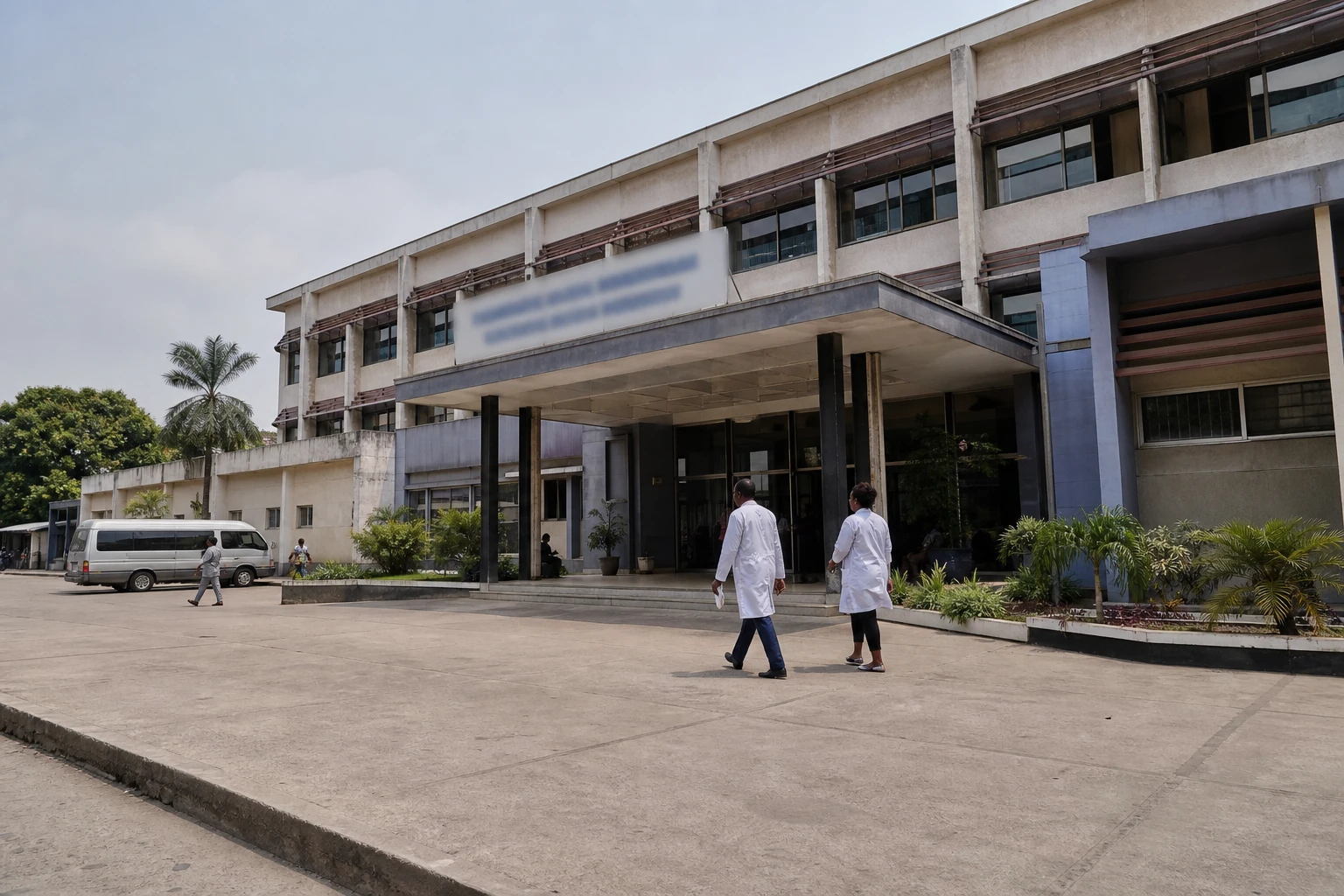
In eastern Democratic Republic of the Congo, the fight against Ebola is not taking place only in treatment centres. It is also unfolding on roads, in ports, at borders and in places where travellers, displaced families and traders cross paths.
As the epidemic advances, Congolese authorities and their partners are therefore stepping up surveillance of population movements. The aim is simple: to quickly identify people showing symptoms and prevent the virus from reaching new areas.
An epidemic concentrated in the east, but monitored beyond affected areas
The Democratic Republic of the Congo is facing its 17th Ebola epidemic since the virus was identified in 1976. This outbreak, declared in May 2026, is linked to the Bundibugyo virus, a strain different from the one behind several previous outbreaks in the country.
As of 7 September 2026, the World Health Organization reported 6 757 confirmed cases and 3 267 deaths in the Democratic Republic of the Congo. These figures amount to a crude case fatality rate of 48.3 %. Transmission was then affecting 61 health zones across six provinces: Ituri, North Kivu, South Kivu, Tshopo, Haut-Uélé and Bas-Uélé.
Ituri remains the epicentre of the epidemic. The province alone had 5 406 confirmed cases as of 7 September. North Kivu is also a focus of concern, particularly since cases emerged in the Kayna health zone.
The situation is unfolding in an environment already weakened by population displacement, insecurity and unequal access to healthcare. In sites hosting displaced people, water, sanitation and hygiene services are sometimes inadequate. These conditions complicate early detection and contact tracing.
Checks follow the main travel corridors
The public health response is now extending to the main routes used by the population. Surveillance teams are working at land crossings, ports and areas near borders. They are looking in particular for fever, symptoms consistent with Ebola and possible links to a confirmed case.
At transit points, travellers may be asked about their health and recent itinerary. Anyone showing suspicious signs is referred for sampling. A test can then distinguish Ebola virus disease from other infections, including cholera and malaria.
This surveillance does not mean that every traveller is considered ill. Its aim is to reduce the time between the onset of symptoms, a health alert and treatment. That interval is critical, because transmission increases when cases are detected late.
Health authorities are also working with the International Organization for Migration, whose teams operate in several mobility contexts in the Democratic Republic of the Congo. Their role includes monitoring movements, informing travellers and supporting community-based surveillance mechanisms.
A particular challenge for displaced people and informal activities
The control measures affect different groups. In cities, they apply to passengers on public transport, traders and workers travelling between neighbourhoods. In rural areas, they cover river routes, markets and movements linked to agriculture or mining.
Displaced people are particularly vulnerable to breaks in monitoring. Some move several times in response to insecurity. Others live in overcrowded spaces where access to water and healthcare remains limited. This makes it difficult for health teams to identify contacts and provide regular follow-up.
Surveillance must therefore avoid two pitfalls. The first would be to allow infected people to travel undetected. The second would be to turn checks into a punitive measure, potentially driving travellers away from health teams. Information, confidentiality and free treatment remain essential to maintaining communities’ trust.
This issue is all the more sensitive because there is not yet an approved vaccine or specific treatment for the Bundibugyo virus. The WHO is also calling for clinical research to be accelerated, while proven measures remain in place: rapid isolation, supportive care, infection prevention and control, contact tracing and community engagement.
Vigilance that extends beyond DR Congo’s borders
The regional risk stems from the geography of trade and travel. Eastern Democratic Republic of the Congo has daily ties with Uganda, Rwanda, Burundi, South Sudan and the Central African Republic. Population movements do not stop at administrative boundaries, especially in border areas and trading hubs.
Uganda has already reported cases linked to this outbreak. The WHO and national authorities are therefore monitoring entry points, strengthening surveillance and coordinating alerts between neighbouring countries. This cooperation does not involve a general closure of borders. Rather, it aims to share information quickly and direct suspected cases to healthcare.
At the regional level, the challenge also involves keeping trade flowing. Poorly targeted restrictions could harm markets, transport operators and families who depend on cross-border travel. Conversely, inadequate surveillance would allow the virus to spread before the first symptoms are even identified.
In Kinshasa, the government and its partners launched a revised 180-day plan on 4 September 2026 to step up the response. The document is intended to coordinate health, logistics and community action. Its implementation will be closely monitored in affected provinces, as well as in areas serving as transport corridors.
The next step will be to maintain surveillance without exhausting teams or alienating communities. In this epidemic, rapid testing matters. So does community trust. Mobility controls will be effective only if they are accompanied by accessible healthcare, clear information and close cooperation between the Democratic Republic of the Congo and its neighbours.



