Algeria
 Egypt
 Libya
 Morocco
 Sudan
 Tunisia
 Benin
 Burkina Faso
 Cabo Verde
 Côte d'Ivoire
 Ghana
 Guinea
 Guinea-Bissau
 Liberia
 Mali
 Mauritania
 Niger
 Nigeria
 Senegal
 Sierra Leone
 The Gambia
 Togo
 Cameroon
 Central African Republic
 DR Congo
 Equatorial Guinea
 Gabon
 Republic of the Congo
 São Tomé and Príncipe
 Burundi
 Comoros
 Djibouti
 Eritrea
 Ethiopia
 Kenya
 Madagascar
 Malawi
 Mauritius
 Mozambique
 Rwanda
 Seychelles
 Somalia
 South Sudan
 Tanzania
 Uganda
 Angola
 Botswana
 Eswatini
 Lesotho
 Namibia
 South Africa
 Zambia
 Zimbabwe
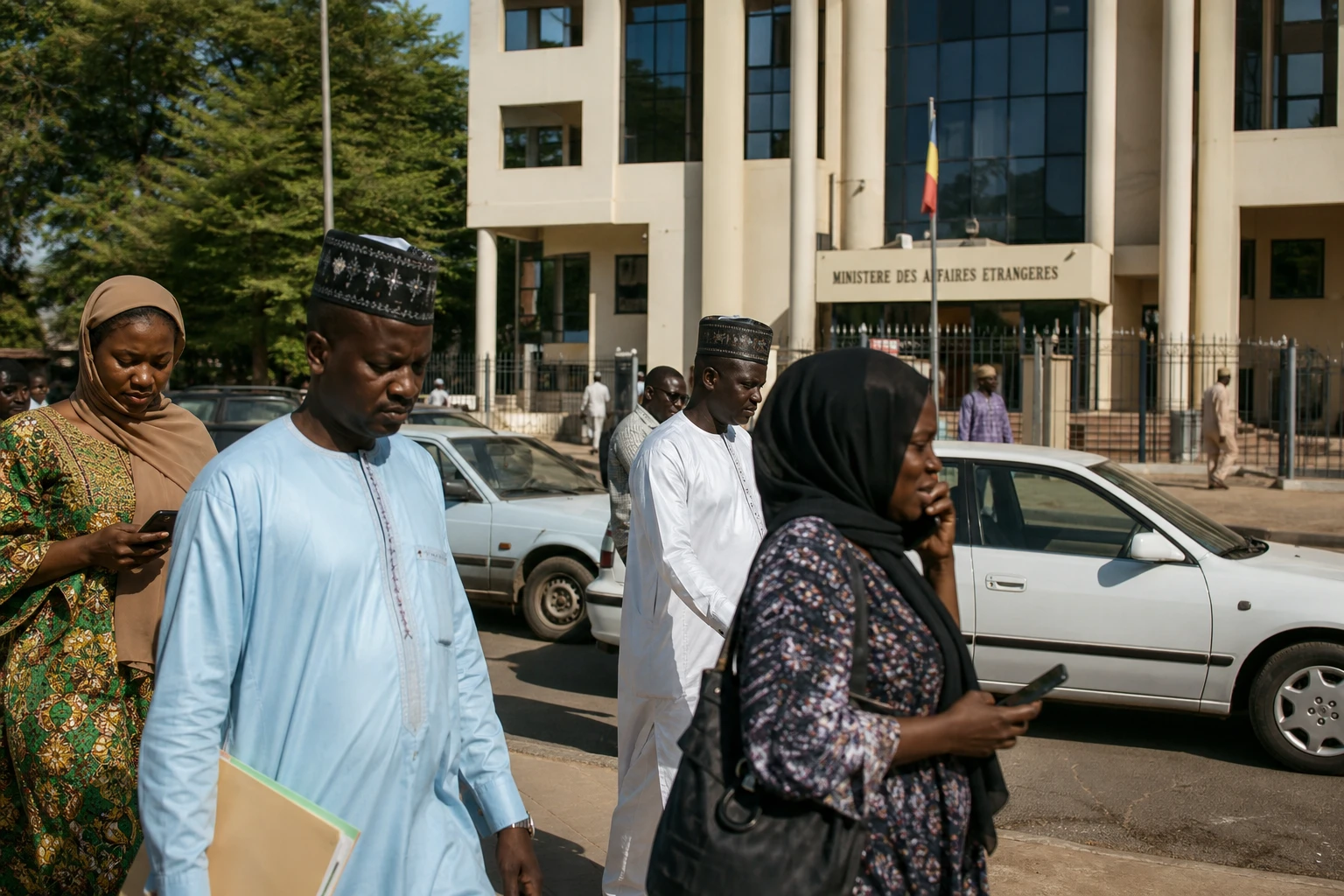
In N’Djamena, Chad’s diplomacy is changing hands as neighbouring crises weigh directly on national security. The appointment of Ahmat Kogri places a former intelligence official at the centre of discussions on Sudan, borders and military partnerships.
From intelligence to foreign affairs
Ahmat Kogri officially took up his post on 22 September 2026. He becomes Minister of State, Minister of Foreign Affairs, African Integration and Chadians Abroad. He succeeds Abdoulaye Sabre Fadoul, who was appointed by decree on 21 September and then replaced without a detailed public explanation.
The handover took place at the ministry, under the supervision of Ramatou Mahamat Houtouin, Minister and Secretary-General of the Government. The appointment was announced by the Portail de la Renaissance du Tchad and confirmed by the African Press Agency.
Before joining the government, Ahmat Kogri had served since July 2025 as an adviser to President Mahamat Idriss Déby Itno on African and international affairs. The role had already brought him into contact with diplomatic matters and relations with neighbouring states.
His career, however, is primarily associated with the security and intelligence sectors. Chadian media describe him as a former director-general of the National State Security Agency, the ANSE, which handles domestic and foreign intelligence. He left the post in February 2024, after several years at the head of the agency, before joining the presidency as private secretary to the head of state.
Available sources differ on some details of his career and the exact titles of several positions he held before 2024. They do, however, agree on one point: the new minister has an insider’s knowledge of national security decision-making and regional relations.
Sudan, the first item on the agenda
The war in Sudan is the main test for Chad’s new diplomacy. Since April 2023, fighting between the Sudanese army and the Rapid Support Forces has destabilised Darfur, a region bordering Chad. The conflict has also brought an influx of refugees and heightened the risk of weapons, fighters and armed groups crossing the border.
On 23 February 2026, Chadian authorities announced the immediate and strict closure of the border with Sudan following repeated armed incursions. The decision was intended, according to the government, to protect Chadian territory, local populations and refugees. France 24 and RFI reported the measure and its direct link to the spread of violence in Sudan towards the border.
N’Djamena faces a twofold challenge: preventing the conflict from spilling over while responding to the needs of refugees and Chadian communities living in border areas. Closing a border crossing can reduce infiltration, but it also affects trade, family travel and access to markets.
Ahmat Kogri will therefore have to bring security, humanitarian assistance and regional dialogue together. Chad cannot treat the Sudan crisis as a mere matter of territorial control. It also affects relations with the Sudanese authorities, armed groups in Darfur, Gulf countries and international organisations operating on the ground.
Borders under pressure
The eastern border is not the only sensitive issue. To the west, the Lake Chad basin remains exposed to attacks by groups linked to Boko Haram and the Islamic State in West Africa. The region involves several countries: Chad, Cameroon, Nigeria and Niger. Military cooperation there is channelled in particular through the Multinational Joint Task Force, established to co-ordinate operations against armed groups.
To the south, relations with the Central African Republic also require constant vigilance. The movement of fighters, trafficking and tensions in border areas can quickly take on a regional dimension. In this context, Chadian diplomacy extends beyond embassies. It is directly involved in border management and crisis prevention.
Chad is also part of the Central African Economic and Monetary Community, CEMAC, which brings together six countries that share, among other things, a currency and mechanisms for economic co-operation. The organisation does not have the same security role as some military coalitions, but it provides a political forum for discussing regional stability, trade and the movement of people.
Realigning partnerships
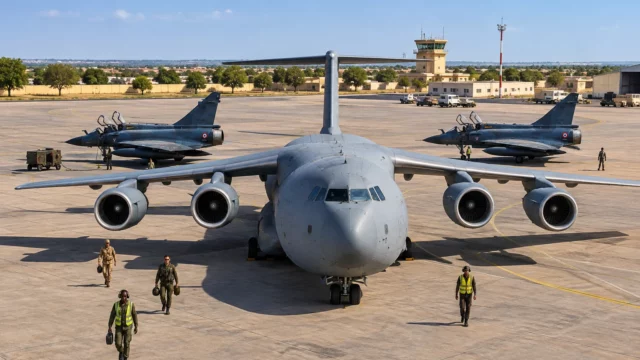
The new minister will also have to oversee the realignment of Chad’s military partnerships. N’Djamena announced in November 2024 that it was ending its defence co-operation agreement with France. The withdrawal of the last French forces from the country was completed on 30 January 2025, ending a permanent military presence established several decades earlier.
Since then, Chadian authorities have sought to diversify their partnerships. There have been exchanges with several players, including Russia, Turkey and the United Arab Emirates. Each option, however, comes with diplomatic, financial and operational constraints. The resumption of talks with Paris, discussed in 2026, appears to be heading towards more limited and less visible co-operation than before.
France’s Ministry for Europe and Foreign Affairs confirms Chad’s intention to reshape the defence partnership. Analyses published in 2026 also refer to discussions on restoring military co-operation without returning to the permanent arrangement that existed before 2025.
For Ahmat Kogri, the challenge will be to preserve Chad’s room for manoeuvre while securing support suited to its needs. The issue goes beyond equipment or intelligence. It also concerns sovereignty, perceptions of foreign presence and a public keen to see tangible results from foreign policy.
A mandate on several fronts
The ministry will also have to defend the interests of Chadians living abroad and improve the functioning of the diplomatic network. At the handover, Abdoulaye Sabre Fadoul cited peace, the protection of nationals and diplomats’ working conditions among the department’s priorities.
The new minister’s security background may facilitate co-ordination between the presidency, defence services and diplomacy. He will nevertheless have to give diplomacy its own capacity for anticipation and negotiation. In an environment shaped by the war in Sudan and shifting alliances in the Sahel and Central Africa, decisions taken in N’Djamena will have effects beyond Chad’s borders.
The next indicators will therefore be tangible: developments along the Sudanese border, refugee management, co-operation in the Lake Chad basin and the shape of military dialogue with France. They will show whether this appointment marks simply a change of office-holder or a new alignment of security, diplomacy and regional integration.