Algeria
 Egypt
 Libya
 Morocco
 Sudan
 Benin
 Burkina Faso
 Cabo Verde
 Côte d'Ivoire
 Ghana
 Guinea
 Guinea-Bissau
 Liberia
 Mali
 Mauritania
 Niger
 Nigeria
 Senegal
 Sierra Leone
 The Gambia
 Togo
 Cameroon
 Central African Republic
 Chad
 DR Congo
 Equatorial Guinea
 Gabon
 Republic of the Congo
 São Tomé and Príncipe
 Burundi
 Comoros
 Djibouti
 Eritrea
 Ethiopia
 Kenya
 Madagascar
 Malawi
 Mauritius
 Mozambique
 Rwanda
 Seychelles
 Somalia
 South Sudan
 Tanzania
 Uganda
 Angola
 Botswana
 Eswatini
 Lesotho
 Namibia
 South Africa
 Zambia
 Zimbabwe
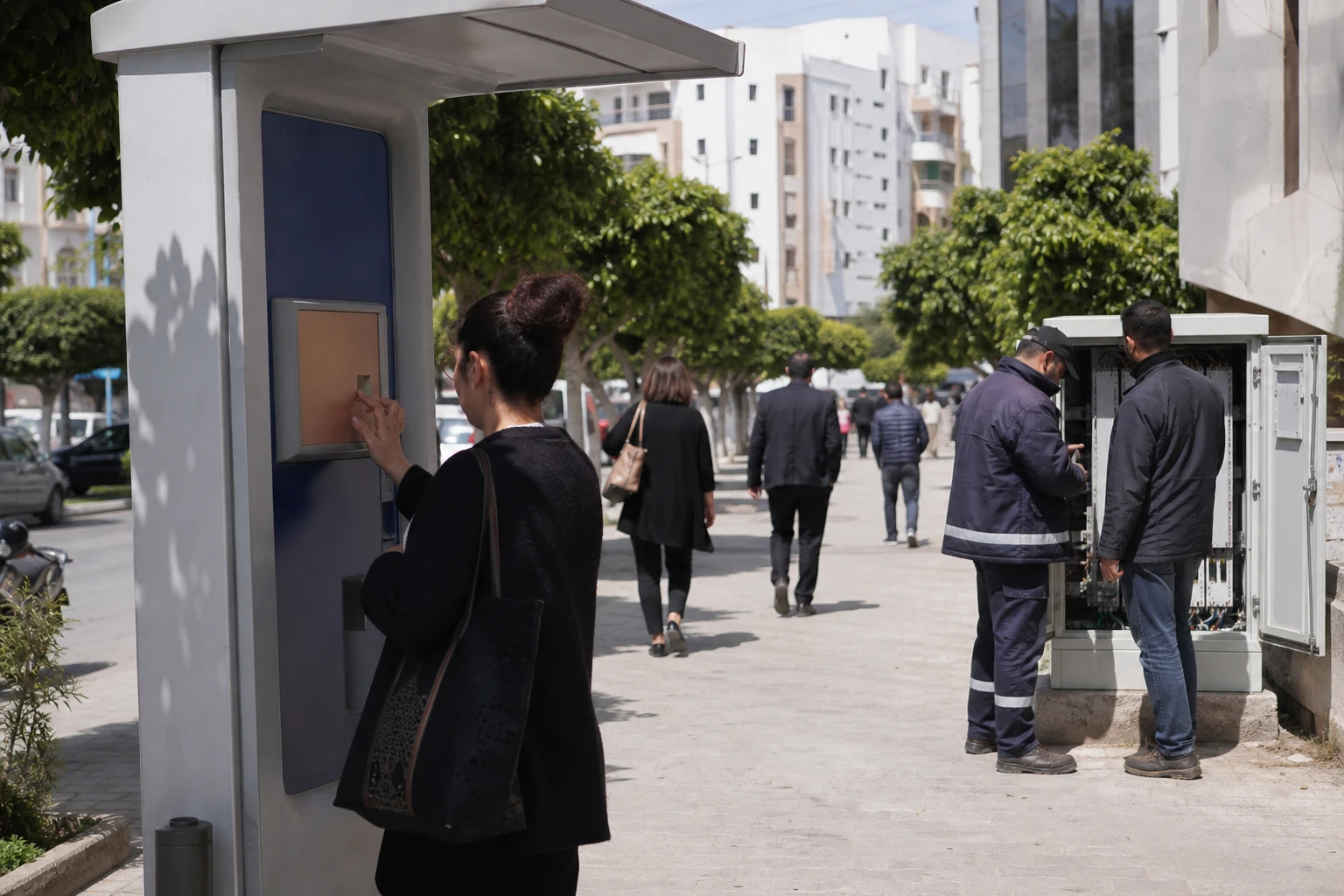
In Tunis, the telecoms battle is now being fought as much in control rooms as on masts, cables and fibre lines. For the incumbent operator, knowing precisely where every piece of equipment is located has become essential before expanding 5G, fibre optics and international links.
On 22 September 2026, Tunisie Telecom announced that it had signed an agreement with Dutch company VC4 B.V. The contract covers the deployment of Service2Create, a platform designed to centralise the operator’s fixed and mobile network inventory nationwide.
Bringing data together before accelerating investment
In a telecoms network, an inventory is more than a list of machines. It links physical equipment to its location, connections and operational status. This visibility then makes maintenance, planning and staff interventions easier.
The chosen solution is intended to bring together data on fibre-optic lines, transmission equipment, mobile sites, access infrastructure, IP components and related resources. It also covers several generations of technology, from fibre to 5G mobile networks.
VC4 describes Service2Create as a single source of information for a network’s physical, logical and virtual assets. In practice, the aim is to reduce the fragmentation of information across different systems and departments. This centralisation could reduce errors during works and improve incident tracking.
The agreement forms part of the modernisation of OSS, or “operational support systems”, which operators use to monitor, manage and develop their infrastructure. For Tunisie Telecom, this shift is therefore part of a broader transformation of its working methods.
Transformation began before the new contract
The state-owned operator is not embarking on digitalisation for the first time. Tunisie Telecom had already launched projects to map and manage its infrastructure geospatially. Its GeoNetwork system was intended in particular to improve the location of equipment and knowledge of the network.
In 2022, the company also said it had completed a project to connect areas with no coverage. It connected 164 schools, 59 basic healthcare centres and around 180,000 residents in 94 sectors across 47 delegations and 15 governorates.
These experiences underscore the importance of reliable network data. When an operator extends fibre or upgrades an antenna, it needs to know what capacity is available, what technical constraints apply and what equipment is already in place. This requirement is even more pressing in rural areas and regions far from Tunis.
Funding secured from the European Bank for Reconstruction and Development reinforces this trajectory. The EBRD plans to provide a loan of up to €190 million, structured in four tranches, including a first committed tranche of €50 million.
The programme aims to gradually move mobile networks from 3G and 4G to 5G, extend fibre and connect up to 200,000 households. It also includes the modernisation of the backbone network, the infrastructure that carries communications between different parts of the country.
The financing also provides for investment in energy efficiency, cybersecurity and digital skills. The EBRD says the loan is linked to transformation objectives. Some of its terms therefore depend on progress towards certain operational milestones.
A more competitive Tunisian market
This modernisation is taking place as usage grows and competition remains intense. In Tunisia, Tunisie Telecom, Ooredoo Tunisie and Orange Tunisie are competing for mobile and internet subscribers. The incumbent nevertheless retains a structural advantage in the fixed network.
Figures published by the National Telecommunications Authority for the second quarter of 2026 put Tunisie Telecom behind Ooredoo in mobile, but ahead of its competitors in fixed telephony. Competition in fixed internet is more evenly balanced, particularly with Ooredoo and Orange Tunisie.
This creates particular pressure. Tunisie Telecom must defend its established position while financing the shift to new technologies. The challenge is not merely technical. It also concerns costs, service quality and the ability to offer services suited to households, businesses and public administrations.
The reform could also change relations between operators. The EBRD has linked its programme to regulatory support for better infrastructure sharing and more structured wholesale access. Sharing fibre or network capacity could increase competition, but requires clear rules and effective oversight by the regulator.
For users, the effects will vary from place to place. Densely populated districts may benefit more quickly from new services. In inland regions, the outcome will depend above all on the deployment timetable, the quality of connections and the ability to maintain equipment in the field.
International connectivity as a strategic issue
Modernisation does not stop at Tunisia’s borders. The programme provides for Tunisie Telecom to connect to the MEDUSA submarine cable. More than 8,000 kilometres long, the system is intended to link several countries in southern Europe, North Africa and the Middle East.
Tunisia therefore has a geographical advantage between the two shores of the Mediterranean. This position could support data exchanges, digital services, call centres and outsourcing activities. It could also strengthen the country’s resilience by diversifying its international connectivity routes.
The MEDUSA cable has already entered a new phase in Tunisia. Orange Tunisie announced that it became operational in June 2026, after the cable came ashore in Bizerte in November 2025. Tunisie Telecom, for its part, signed an agreement to operate a dedicated link between Bizerte and Marseille.
This development places Tunisian operators within a regional dynamic. Competition is no longer limited to mobile plans. It also involves submarine cables, transport networks, business services and the protection of critical infrastructure.
The next step will be to assess tangible results. The actual reach of 5G, the number of households connected to fibre, service quality in the regions and changes in infrastructure sharing will all need to be monitored. For Tunisie Telecom, digital inventory is thus becoming a tool for industrial, commercial and territorial management.