Egypt
 Libya
 Morocco
 Sudan
 Tunisia
 Benin
 Burkina Faso
 Cabo Verde
 Côte d'Ivoire
 Ghana
 Guinea
 Guinea-Bissau
 Liberia
 Mali
 Mauritania
 Niger
 Nigeria
 Senegal
 Sierra Leone
 The Gambia
 Togo
 Cameroon
 Central African Republic
 Chad
 DR Congo
 Equatorial Guinea
 Gabon
 Republic of the Congo
 São Tomé and Príncipe
 Burundi
 Comoros
 Djibouti
 Eritrea
 Ethiopia
 Kenya
 Madagascar
 Malawi
 Mauritius
 Mozambique
 Rwanda
 Seychelles
 Somalia
 South Sudan
 Tanzania
 Uganda
 Angola
 Botswana
 Eswatini
 Lesotho
 Namibia
 South Africa
 Zambia
 Zimbabwe
In Niamey, the issue is no longer simply the promise of a major gas pipeline linking Nigeria to Europe. For Algeria and Niger, the question is now more concrete: when will studies of the Nigerien route make it possible to move on to construction? Discussions on 21 and 22 September 2026 placed this technical stage at the centre of energy cooperation between the two countries.
A continental project still awaiting preparatory work
The Trans-Saharan Gas Pipeline, or TSGP, is intended to link Nigeria’s gas fields to Hassi R’mel in Algeria, crossing Niger. The announced route extends for about 4,128 kilometres. The Nigerien section would account for nearly 841 kilometres.
Ultimately, the infrastructure is intended to carry Nigerian gas into Algeria’s network and then to external markets. It also aims to strengthen energy exchanges between three African countries and support the integration of the continent’s infrastructure.
The project nevertheless remains subject to several conditions. The route must be specified, terrain constraints assessed, environmental impacts evaluated and geotechnical parameters confirmed. These operations precede construction itself. They also determine the cost, timetable and safety conditions for the work.
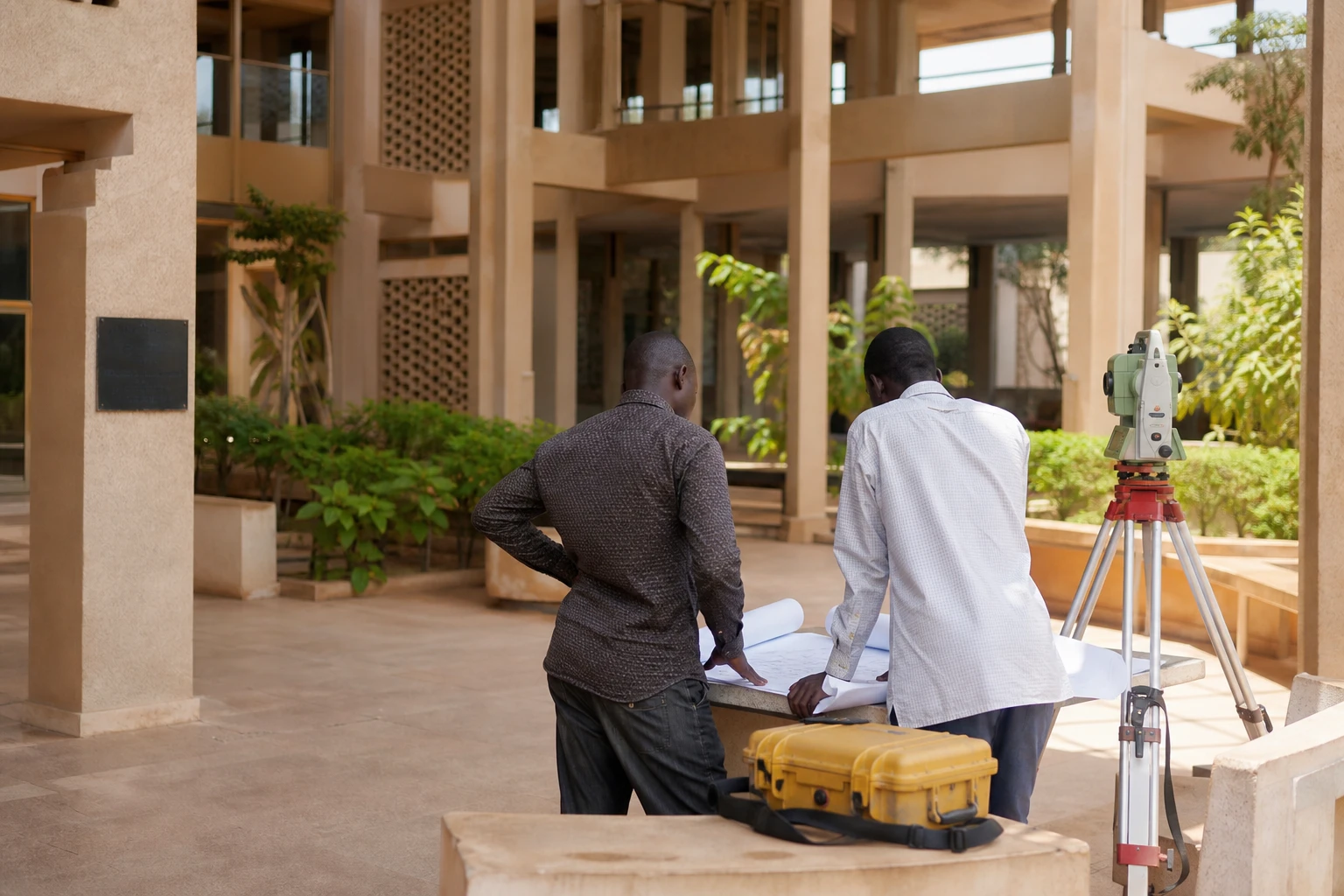
The Algeria Press Service report says discussions in Niamey stressed the launch of a topographical survey campaign along the route in Niger. The Nigerien News Agency confirmed the same priority in its account of the meeting between Abdourahamane Tiani and Mohamed Arkab.
Algiers and Niamey seek to synchronise their timetables
Algerian Minister of State for Hydrocarbons Mohamed Arkab travelled to Niamey on Monday 21 and Tuesday 22 September 2026. He was accompanied by officials from Sonatrach, Algeria’s national hydrocarbons company, as well as representatives of its subsidiaries.
On 22 September, he was received by Nigerien Prime Minister Ali Mahaman Lamine Zeine. The discussions covered the TSGP as well as Sonatrach’s activities in the Kafra oil block. The Algerian delegation then met Nigerien President Abdourahamane Tiani.
According to the African Press Agency, the 48-hour visit was intended to follow up on joint energy projects. It comes after work on the Algerian section of the pipeline was announced as having started in June 2026.
This difference in pace matters. A first phase is under way in Algeria, while the Nigerien section remains at the study and preparation stage. The meetings in Niamey therefore focused mainly on bringing the two countries’ timetables closer together, without announcing a firm start date for construction in Niger.
The Nigerien government will notably have to organise topographical surveys, environmental studies and geotechnical analyses. These operations require coordination with local authorities, technical bodies and communities affected by the route of the future pipeline.
A partnership extending beyond the gas pipeline
The discussions also covered expanding the partnership between Sonatrach and the Nigerien Petroleum Products Company, Sonidep. The stated aim is to encompass more activities: exploration, production, processing, marketing and skills development.
Sonatrach is already conducting exploration operations in the Kafra block in northern Niger. The two sides also discussed assessing other blocks, including Bilma. The launch of an exploration well at Kafra, announced in August 2026, is one of the recent developments in this energy rapprochement.
The proposed cooperation includes training Nigerien executives, support for maintenance at refining facilities, equipping a petroleum laboratory and improving data management. It also covers expertise in marketing and crude-oil negotiations.
The Zinder refinery has a particular place in this arrangement. Monitoring its maintenance operations is intended to help preserve Niger’s processing capacity. For Niamey, the challenge is to derive greater value from its resources and strengthen the capabilities of its state-owned companies. For Algiers, it is a matter of extending industrial cooperation based on its hydrocarbons expertise.
This dimension is essential to assessing the partnership’s real impact. The TSGP could generate activity in construction, maintenance and technical services. However, its benefits will depend on local content, worker training and the ability of Nigerien companies to take part in the project’s various stages.
Bilateral ties viewed in a Sahel-Saharan context
The rapprochement between Algiers and Niamey is part of a relationship shaped by geographical proximity and shared security, economic and diplomatic interests. It also comes amid a regional context in which Sahelian states are seeking to diversify their partnerships and strengthen national control over their resources.
Niger, Algeria and Nigeria are jointly backing a project that is not confined to a single bilateral relationship. Its success depends on coordination between the three capitals, the mobilisation of financing and the stability of the corridor it crosses. It also depends on the ability to involve the affected areas, beyond the central authorities alone.
For Algeria, the TSGP would strengthen its role as a gas hub between sub-Saharan Africa and the Mediterranean. For Niger, the project could open up investment and transit-revenue prospects, provided the agreements guarantee lasting benefits for the national economy. For Nigeria, it would offer an additional route to external markets.
In the short term, the most closely watched milestone will therefore be the effective launch of studies on Nigerien territory. Until this stage is completed, the acceleration announced in Niamey will remain a political direction rather than a construction timetable. The next measure of progress will be the translation of technical commitments into concrete operations on the ground.