
 Algeria
 Egypt
 Libya
 Morocco
 Sudan
 Tunisia
 Benin
 Burkina Faso
 Cabo Verde
 Côte d'Ivoire
 Ghana
 Guinea
 Guinea-Bissau
 Liberia
 Mali
 Mauritania
 Niger
 Nigeria
 Senegal
 Sierra Leone
 The Gambia
 Togo
 Cameroon
 Central African Republic
 Chad
 Equatorial Guinea
 Gabon
 Republic of the Congo
 São Tomé and Príncipe
 Burundi
 Comoros
 Djibouti
 Eritrea
 Ethiopia
 Kenya
 Madagascar
 Malawi
 Mauritius
 Mozambique
 Rwanda
 Seychelles
 Somalia
 South Sudan
 Tanzania
 Uganda
 Angola
 Botswana
 Eswatini
 Lesotho
 Namibia
 South Africa
 Zambia
 Zimbabwe
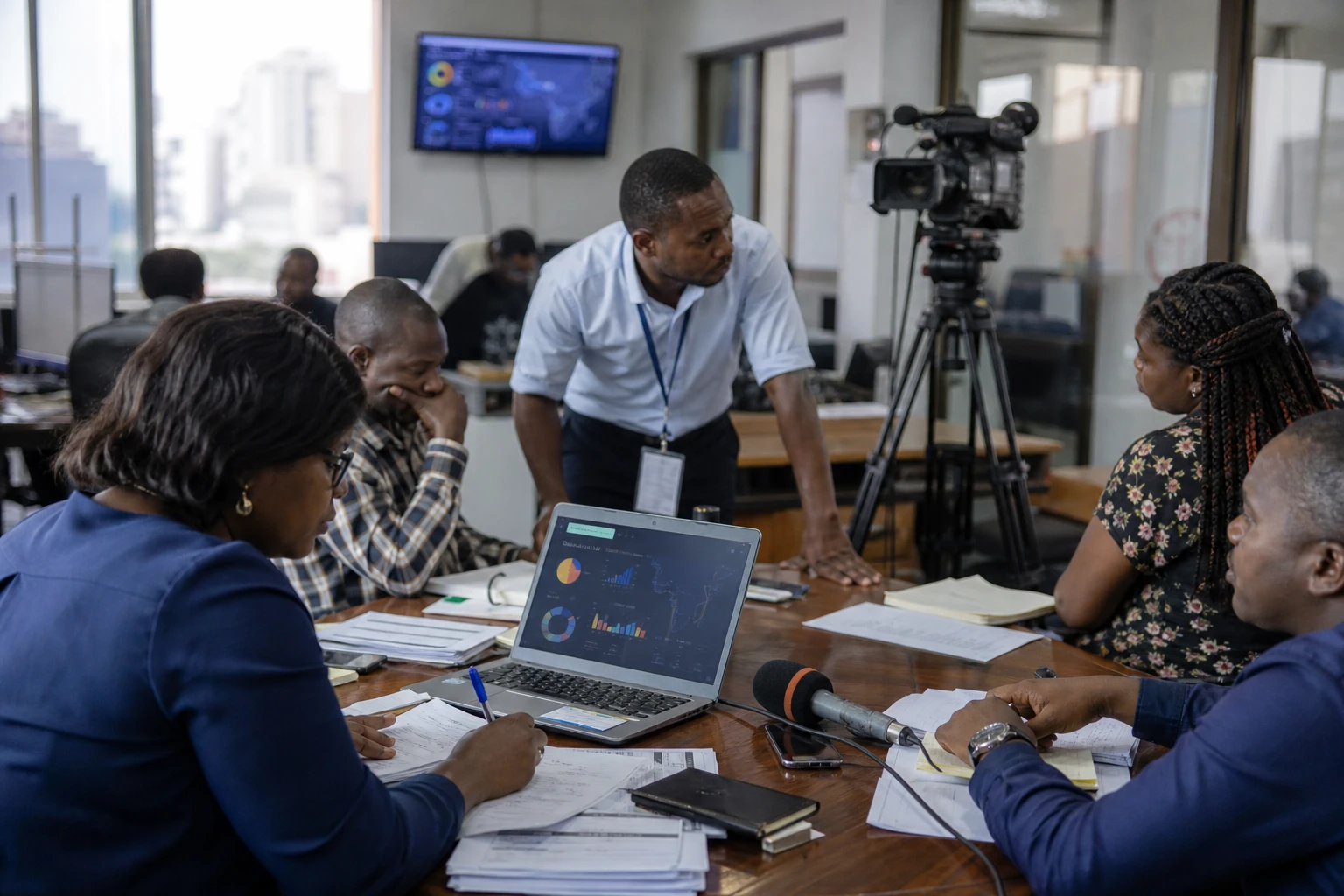
In the Democratic Republic of the Congo, health emergencies do not always follow one another. They overlap. While an Ebola outbreak mobilises field teams, cholera and measles continue to take their toll, in a system already under strain and in areas where fighting makes access to care more difficult.
This reality says something broader than the epidemic of the moment. In DR Congo, public health operates in an environment shaped by population displacement, logistical difficulties, high humanitarian needs and insufficient funding. The country remains one of the continent’s humanitarian epicentres, with its 2026 response plan revised to $2.13 billion and funded at less than half by the end of August, according to figures provided by humanitarian actors.
A health system caught between multiple emergencies
The figures convey the scale of the shock. For measles, the World Health Organisation reported 122,236 suspected cases and 1,593 deaths in DR Congo by epidemiological week 34 of 2026. The WHO says transmission remains active in several provinces and that children under five account for a very high proportion of those affected.
Cholera is also taking a heavy toll on the country. In the first half of 2026, the WHO had already recorded 32,193 cases and 908 deaths, with transmission still high in the east. Other figures subsequently reported by health authorities and the Congolese press pointed to a marked increase over the course of the year. In other words, the disease continues to spread where access to drinking water and sanitation, and population mobility, remain precarious.
Ebola adds to the burden, in its 17th outbreak since 1976. The WHO says the response is mobilising experts, laboratories, medical supplies and emergency coordination mechanisms. The Congolese health ministry is also publishing situation reports, a sign that the response remains active and organised at national level.
When the same resources have to serve every emergency
That is the heart of the problem: the same people and equipment often have to serve several crises at once. Health workers, vehicles, laboratories, cold chains, medicines and community surveillance. When Ebola intensifies, priority naturally goes to isolating cases, contact tracing and preventing transmission. But this concentration of resources can leave other services without the staff they need.
In its recommendations on the Bundibugyo Ebola outbreak, the WHO stresses the importance of a robust supply chain and a logistics coordination unit to prevent shortages and duplication. This is crucial in DR Congo, where distance, insecurity and road conditions make logistics a public health factor in its own right.
The Health Cluster, which brings together health-response partners under humanitarian coordination, is warning specifically of this risk of resources being diverted. If the Ebola response absorbs everything, vaccination, childbirth services, mental health care and support for survivors of sexual violence all suffer. This is no abstract debate. In a country where hospitals are sometimes overwhelmed even before an epidemic arrives, a poorly calibrated trade-off can disrupt the entire primary care system.
Funding: the blind spot in the response
Underfunding makes this fragility worse. By the end of August, the 2026 humanitarian response in DR Congo had received less than half of the funds required, even as needs had been revised upwards. This shortfall affects not only high-profile campaigns, but also less visible activities: surveillance, supplies, basic care, nutritional support and protection for displaced people.
On the ground, this financial pressure has tangible effects. Health centres have to choose between several emergencies. Community teams are called on to monitor cases, raise awareness and trace contacts, even though they should also be helping to prevent cholera and follow up children who have not been vaccinated. In a country as vast as DR Congo, the trade-off between epidemic emergencies and continuity of care is never neutral: it means occupied beds, delayed transfers, cancelled consultations and, sometimes, preventable deaths.
The Congolese government is trying to organise the response. In April 2026, Kinshasa relaunched the National Humanitarian Coordination Framework, a mechanism designed to improve information sharing and strengthen coordination between the state and its partners. In a context of multiple crises, this structure matters as much as medical supplies. It helps bring the health response closer to provincial realities, particularly in the east.
What this says about DR Congo and the continent
The situation in DR Congo extends beyond its national borders. The country is part of Central Africa, but its health system is also connected to regional dynamics: cross-border movement, the movement of displaced people and exchanges across the Congo and Great Lakes basins. When cholera, measles and Ebola converge, neighbouring countries also monitor the spread of imported cases and response capacity in border areas.
Across Africa, the Congolese case is a reminder of a reality that is too often underestimated: health resilience depends as much on roads, water, laboratories and predictable funding as it does on hospitals. DR Congo also shows that a country can produce science, organise a response and conduct clinical trials, while remaining vulnerable because it lacks sufficient budgetary leeway. This is one of the underlying challenges for the African Union and regional public health mechanisms: turning emergency responses into lasting capacity.
The next point to watch, then, is less a single figure than the performance of the system as a whole: slowing Ebola, continuing cholera surveillance, controlling measles and maintaining essential care. In DR Congo, the real question is not only how to defeat one epidemic. It is how to stop other diseases from gaining ground while one is being fought.



