Algeria
 Egypt
 Libya
 Morocco
 Sudan
 Tunisia
 Benin
 Burkina Faso
 Cabo Verde
 Côte d'Ivoire
 Ghana
 Guinea
 Guinea-Bissau
 Liberia
 Mauritania
 Niger
 Nigeria
 Senegal
 Sierra Leone
 The Gambia
 Togo
 Cameroon
 Central African Republic
 Chad
 DR Congo
 Equatorial Guinea
 Gabon
 Republic of the Congo
 São Tomé and Príncipe
 Burundi
 Comoros
 Djibouti
 Eritrea
 Ethiopia
 Kenya
 Madagascar
 Malawi
 Mauritius
 Mozambique
 Rwanda
 Seychelles
 Somalia
 South Sudan
 Tanzania
 Uganda
 Angola
 Botswana
 Eswatini
 Lesotho
 Namibia
 South Africa
 Zambia
 Zimbabwe
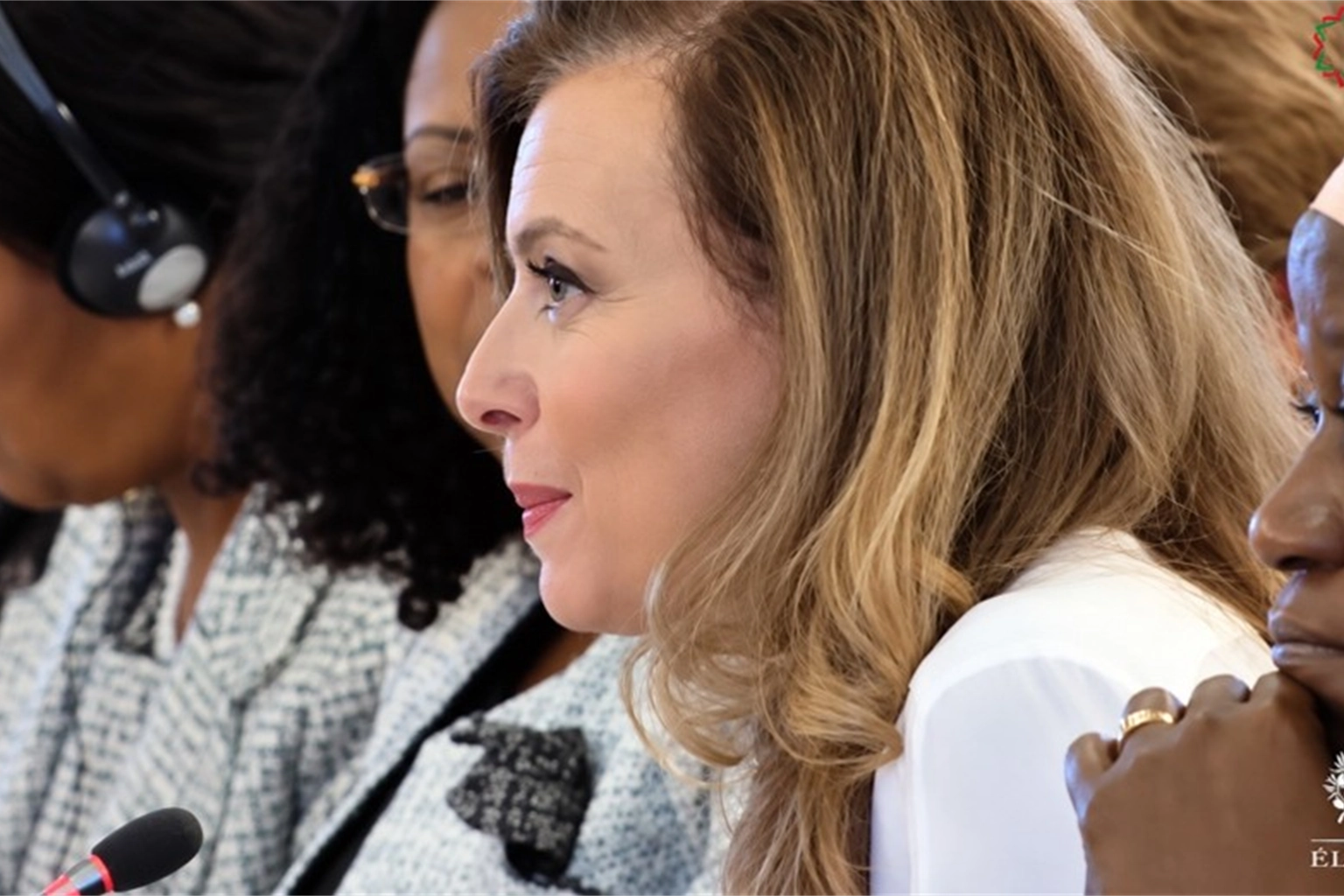
On 6 and 7 December 2013, François Hollande brought 53 African countries to Paris for the Élysée Summit for Peace and Security in Africa. The event was a major one: representatives from 53 African countries attended, alongside the United Nations secretary-general, European leaders and major international institutions.
But on the sidelines of the discussions between heads of state, another meeting was organised. At Valérie Trierweiler’s initiative, first ladies and the partners of delegation heads gathered on 6 December to discuss a subject that rarely featured prominently on the diplomatic agenda at the time: the use of sexual violence as a weapon of war.
The initiative was more than symbolic. Among those gathered around Valérie Trierweiler were African first ladies, NGO representatives and Zainab Hawa Bangura, the UN secretary-general’s special representative on sexual violence in conflict. Victims’ testimonies were presented, and a film by Cameroonian director Osvalde Lewat about violence in the Democratic Republic of the Congo was screened.
At the end of the meeting, participants signed a joint appeal condemning the “intolerable persistence of sexual violence in conflicts”. They called in particular for a policy of “zero tolerance”, better access to justice for victims, training for security and justice professionals, and greater participation by women in peace and reconstruction processes.
From Gao to Bukavu, a commitment on the ground
The initiative did not come out of nowhere. A few months earlier, Valérie Trierweiler had already made Africa one of the main focuses of her humanitarian work. In May 2013, she travelled to Mali, including to Gao, where she attended the launch of a programme to help people displaced by the war return home.
Her main focus was the plight of women who had suffered sexual violence in the Democratic Republic of the Congo. On 30 May 2013, before the United Nations Human Rights Council in Geneva, she called on the international community to combat impunity for perpetrators. A few weeks later, she travelled to Bukavu, in eastern DRC, to meet women who had suffered sexual violence, before continuing to Burundi for a UN conference on the role of women in the Great Lakes region.
These visits gave her commitment a practical dimension. It was no longer just a matter of welcoming organisations in Paris or supporting a cause from the Élysée, but of going into the field and meeting victims and the organisations supporting them. At a time when sexual violence in African conflicts was only beginning to gain recognition as a major international diplomatic issue, Valérie Trierweiler chose to use her public profile to help bring it to wider attention.
Diplomacy without a mandate, but not without influence
The episode also raises a broader question: what can a first lady do? The role has no legal basis and confers no diplomatic powers. Valérie Trierweiler herself was aware of this: the wives and partners of heads of state gathered in Paris had no political mandate. Their ability to act rested first and foremost on the visibility their position gave them.
But that was precisely the value of this parallel diplomacy. Without replacing governments, it could shine a light on issues less prominent in official communiqués, mobilise associations, international officials and the media, and give political visibility to victims who were often denied a voice. The 2013 gathering at the Musée d’Orsay showed how a largely ceremonial role could be turned into a platform for raising awareness.
It would be an overstatement to credit these initiatives with results that only action by states and international organisations could achieve. Their value lay elsewhere: in helping to keep an issue on the public agenda. By placing sexual violence in conflicts at the centre of an international meeting held alongside a summit of heads of state, Valérie Trierweiler helped bring it onto the agenda.
When the role also served African causes
Thirteen years on, this episode merits a fresh look in the light of how relations between France and Africa have evolved. They have changed profoundly, amid declining French influence in several countries, the rise of new partners and a growing desire among African societies to be seen as more than a succession of crises, development aid or former relationships of dependence.
The 2013 initiative clearly belonged to a different era. But it had one distinctive feature: it started with a concrete African issue and gave a voice to those living through it. Valérie Trierweiler did not claim to direct France’s Africa policy. She chose a cause, met those involved and put the media profile attached to her role at its service.
Perhaps that is what stands out about this episode today. A first lady has no ministry, administration or elected mandate. But she has a rare ability to attract attention. The question is what she chooses to do with it.
In 2013, from Gao to Bukavu and from the Human Rights Council in Geneva to Paris, Valérie Trierweiler made a clear choice: to devote some of that visibility to Africa, and especially to women affected by conflict. At a time when the usefulness and role of first ladies are regularly questioned, this story is a reminder that a role without institutional power can nevertheless become a genuine tool for mobilisation when it takes up a cause.