Algeria
 Egypt
 Libya
 Morocco
 Sudan
 Tunisia
 Benin
 Burkina Faso
 Cabo Verde
 Ghana
 Guinea
 Guinea-Bissau
 Liberia
 Mali
 Mauritania
 Niger
 Nigeria
 Senegal
 Sierra Leone
 The Gambia
 Togo
 Cameroon
 Central African Republic
 Chad
 DR Congo
 Equatorial Guinea
 Gabon
 Republic of the Congo
 São Tomé and Príncipe
 Burundi
 Comoros
 Djibouti
 Eritrea
 Ethiopia
 Kenya
 Madagascar
 Malawi
 Mauritius
 Mozambique
 Rwanda
 Seychelles
 Somalia
 South Sudan
 Tanzania
 Uganda
 Angola
 Botswana
 Eswatini
 Lesotho
 Namibia
 South Africa
 Zambia
 Zimbabwe
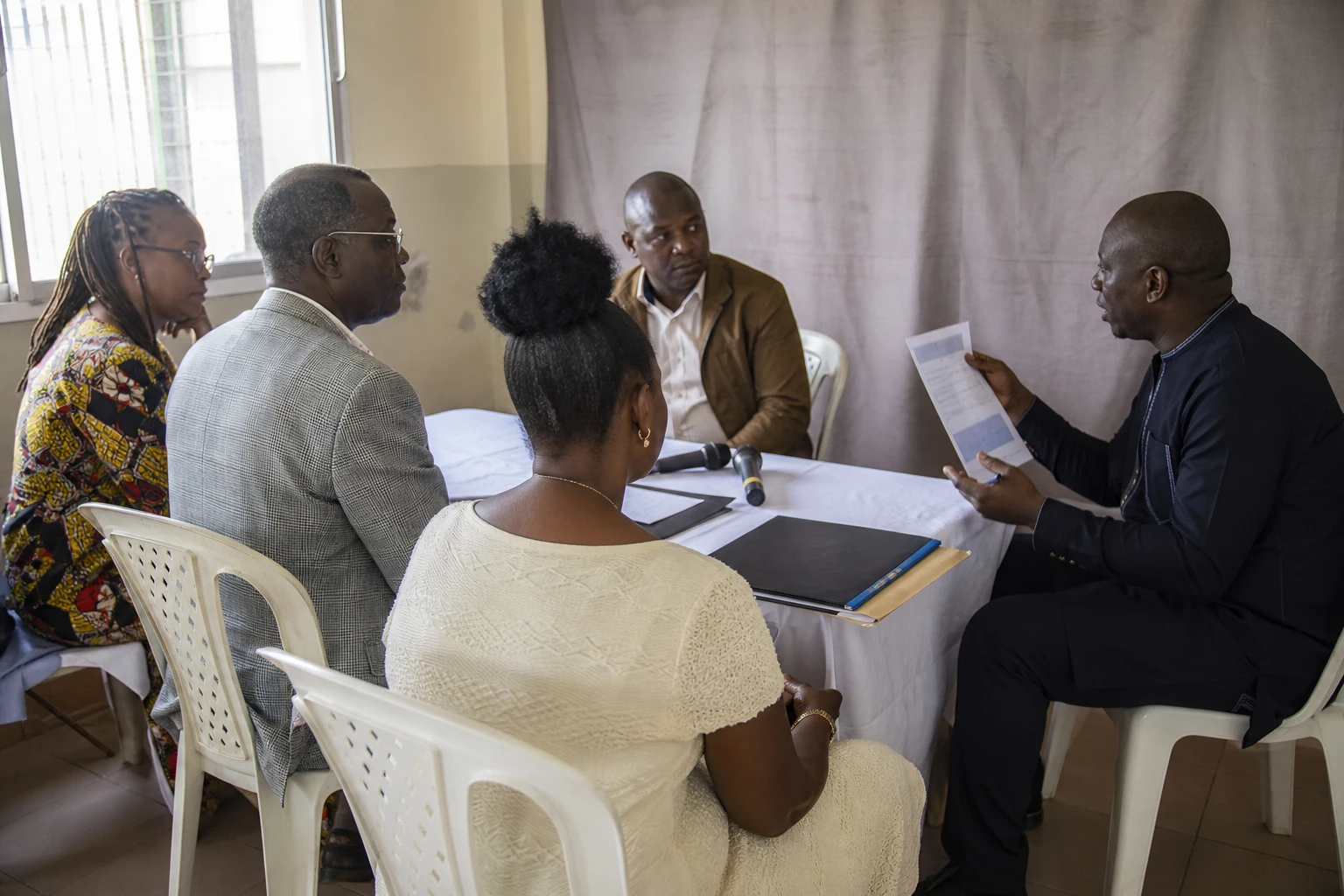
In Koumassi, procedure matters as much as the bulldozers
In Abidjan, a demolition leaves more than walls on the ground. It also raises a simple but decisive question: who made the decision, on what basis, and with what safeguards for the families affected? At Koumassi Campement, this question continues to shape residents’ anger and the ongoing legal proceedings.
In the municipality of Koumassi, the case has grown beyond a property dispute alone. It concerns the legal security of plots, the management of occupation in densely populated urban areas, and the way authorities handle evictions in the Autonomous District of Abidjan. In Côte d’Ivoire, whose political capital is Yamoussoukro and whose main economic metropolis is Abidjan, cases of this kind can quickly weigh on the confidence of residents, property owners and traders.
Inquiry opened, then victims call for it to move faster
On 3 June 2026, homes were demolished at Koumassi Campement. A few days later, the Abidjan public prosecutor’s office denied that a blanket judicial authorisation had covered the operation. The prosecutor explained that the request in question related only to five specific homes and had been rejected by the court. He also ordered an inquiry to establish responsibility and identify those involved.
On 18 June 2026, the High Authority for Good Governance announced a documentary verification phase in the case. The institution said it wanted to clarify several points: the alleged allocation of 34 hectares, land-filling operations, the use of public force and the demolitions themselves. It also said its investigations would cover land titles, allocation documents and any eviction authorisations.
Since then, the affected families have been calling for the proceedings to be speeded up. According to the victims’ collective, more than 3,800 families have been affected. Other local sources say at least several hundred households were still without a stable solution in the first few days after the operation. On the ground, the reality remains the same: families want to rebuild, but the site remains sealed.
The collective is also calling for the seals to be lifted, so that those who are able can recover belongings or reassess their situation. Its message is direct: without swift clarification, households remain trapped between losing their homes and being unable to move forward in practical terms. This demand is not solely about compensation. It is first and foremost a call for a clear procedure.
A land case, but also a test of urban governance
The Koumassi Campement case highlights a sensitive issue in Africa’s major cities: pressure on land is growing faster than the mechanisms for securing titles, controlling occupation and rehousing people. In Abidjan, rising flood risks have already led the authorities to carry out increasing numbers of eviction operations in several municipalities. But whenever an evacuation takes place without clear notice or a legal basis that people understand, the debate shifts to the legality of the decision and the protection of the households concerned.
The Ivorian government has already had to manage the social consequences of previous evictions. In March 2024, it announced support measures for households affected in Abidjan, including financial assistance and a rehousing scheme that was publicly discussed. This shows that the issue is no longer only about security or public health. It has become a matter of urban policy, land law and social cohesion.
In this case, the authorities have an interest in clearly distinguishing three levels. On the one hand, the legality of the title or land claim. On the other, the lawfulness of the physical intervention at the site. Finally, the social situation of the families evicted. When these three aspects are conflated, distrust takes hold quickly. When they are separated and documented, the case can be handled without fuelling lasting suspicion. This distinction matters to the property owner claiming a right, the municipality managing urban space and the families bearing the consequences of the decision.
The Koumassi case also shows how exposed Abidjan’s working-class neighbourhoods remain to the competing demands of land development, urban sanitation and the continuation of everyday activities. For residents, the issue is not theoretical. It concerns the next night, children at school, closed shops, lost rent and makeshift solutions. For the state, it affects the credibility of administrative and judicial action.
What is now being watched in Abidjan and beyond
The next stage of the case will depend first on the evidence that the judicial and good governance authorities can gather. They will need to establish in particular whether the property documents presented really cover the whole site, whether court decisions were correctly interpreted, and whether public officials played a role in carrying out the demolitions. Identifying individual responsibility will be crucial to ensuring that the case is not reduced to a simple clash between property owners and people evicted.
Across Côte d’Ivoire, the case resonates with a broader challenge: modernising cities without causing social hardship. Across West Africa, it speaks to questions facing several capitals of ECOWAS, the regional organisation of West African states: how can risk prevention become a means of protection rather than another driver of insecurity? Abidjan offers a concrete case, closely watched by cities facing the same tensions over land, density and safety.
In the coming days, the decisive issue will not be just whether the inquiry continues. It will be whether institutions can make the process clear to victims and neighbours alike, and state plainly what falls under the law, administration and social policy. In Koumassi, that is the clarity families are now waiting for, even more than another statement.