
 Algeria
 Egypt
 Libya
 Morocco
 Sudan
 Tunisia
 Benin
 Burkina Faso
 Cabo Verde
 Côte d'Ivoire
 Ghana
 Guinea
 Guinea-Bissau
 Liberia
 Mali
 Mauritania
 Niger
 Nigeria
 Senegal
 Sierra Leone
 The Gambia
 Togo
 Cameroon
 Central African Republic
 Chad
 Equatorial Guinea
 Gabon
 Republic of the Congo
 São Tomé and Príncipe
 Burundi
 Comoros
 Djibouti
 Eritrea
 Ethiopia
 Kenya
 Madagascar
 Malawi
 Mauritius
 Mozambique
 Rwanda
 Seychelles
 Somalia
 South Sudan
 Tanzania
 Uganda
 Angola
 Botswana
 Eswatini
 Lesotho
 Namibia
 South Africa
 Zambia
 Zimbabwe
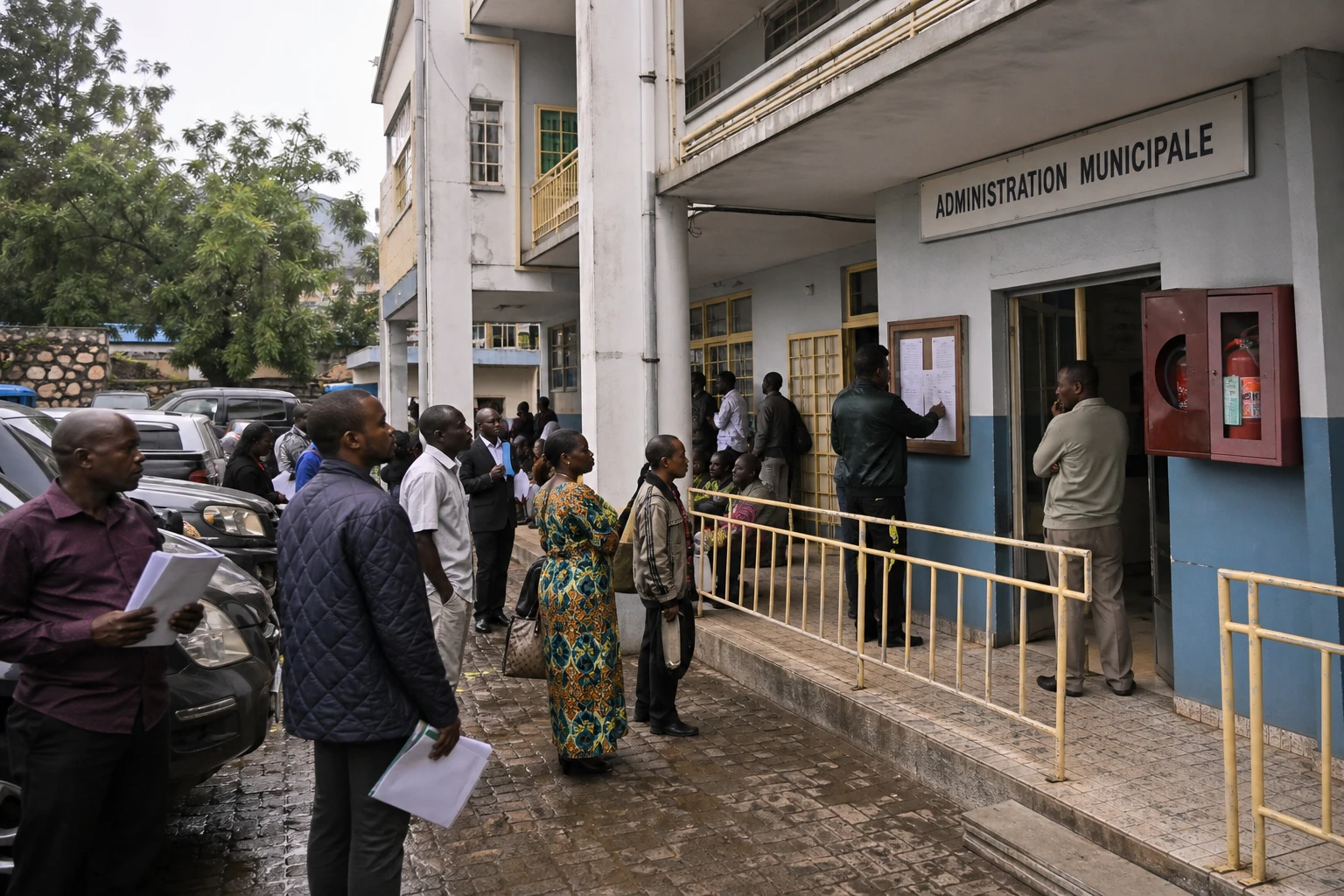
In Bukavu, fires expose a city under pressure
In a city where people count the damage before they have even had time to save what matters, each new fire becomes more than a news incident. It says something about housing, electricity networks, urban density and, above all, the fragile daily lives of people in Bukavu. For several weeks, the capital of South Kivu has been beset by repeated disasters, with families moving from one roof to another, or straight onto the streets, in just a few minutes.
The tragedy on Monday 21 September is part of this mounting toll. According to several local sources, a new fire broke out in the Nyalukemba district, in Ibanda commune, at around 11pm. The figures vary in initial reports, so caution is needed: one source cites at least three deaths and more than 300 homes burnt down, while another reports at least five deaths and more than 500 homes destroyed. In any case, the scale of the losses is already considerable.
An urban crisis compounded by the situation in South Kivu
Bukavu is no ordinary city in the current crisis in DR Congo. The provincial capital of South Kivu has shifted its political centre of gravity since the AFC/M23 took the city, complicating the local chain of command and the public response to emergencies. The South Kivu provincial government continues to operate from Uvira and says it depends on Kinshasa, while the day-to-day administration of Bukavu remains contested on the ground. This duality hampers prevention, emergency response and reconstruction.
This instability is not confined to military security. It also affects basic services, urban planning, emergency access and trust between the authorities and the population. The African Commission on Human and Peoples’ Rights warned in late 2025 of the deteriorating humanitarian situation in South Kivu, with mass forced displacement and essential services under strain. Since the beginning of 2026, a succession of tensions and regional negotiations involving the African Union, SADC and the East African Community has added to the pressure, showing that eastern DR Congo remains a regional as well as a national issue.
What happened on the night of 20–21 September
The fire started on Sunday night into Monday, around midnight, in the Nyalukemba area, on Irambo 1 and Irambo 2 avenues, according to initial accounts. Residents tried to get their belongings out; others attempted to protect their homes with whatever means they had. Several were injured as they fled the flames. Witnesses also reported deaths, including children in some sub-districts, but the exact toll has yet to be confirmed. Initial local counts also cite hundreds of wooden homes destroyed, a common building material in Bukavu’s low-income neighbourhoods.
This is not an isolated disaster. Since the beginning of September, Bukavu has seen a series of fires affecting Panzi, Nyamugo, Cimpunda and other urban areas. On 10 September, a deadly fire had already killed many pupils and destroyed homes and schools. Ten days earlier, other fires had ravaged hundreds of homes. The cumulative total has already reached several thousand homes affected over a short period, according to figures compiled by the provincial authorities and local media.
After this latest incident, residents speak of a city that burns too quickly and recovers too slowly. Serge Bahati says he was woken by screams before injuring himself while trying to save a few belongings. Other fire victims describe total loss: clothes, food supplies, furniture, money, documents and sometimes the business that supported an entire family. In densely populated neighbourhoods, a fire does not destroy just a home; it halts economic activity, disrupts a family and sometimes cuts off access to school or the market.
Prevention is no longer optional: it is the political crux
The repeated fires raise a simple question: why does the city remain so exposed? The explanations put forward often point to the same causes. First, densely packed plots and the spread of buildings made from lightweight materials. Then, precarious electricity connections, overloaded circuits and makeshift installations. Finally, a lack of rapid-response resources, while neighbourhoods are often cut off and water supplies, access roads and emergency equipment have failed to keep pace with urban growth. Residents also speak of suspicions of deliberate arson, but no investigation has yet established a single, definitive cause.
After the tragedies at the beginning of the month, local authorities announced preventive measures, including a requirement to have fire extinguishers and a ban on rebuilding on sites deemed unsuitable. On paper, the logic is clear. In practice, many residents consider these requirements difficult to meet in an urban economy dominated by informal work and where purchasing power remains low. This is where the central challenge lies: urban safety policy cannot rely solely on orders. It must also address access to durable housing, safe electricity, emergency access routes and realistic mechanisms for reconstruction.
The contrast between official statements and the experience of fire victims is fuelling anger. Families are first asking for immediate assistance: shelter, healthcare, food, child protection and the means to restart their livelihoods. The authorities, meanwhile, are expected to focus on prevention. In a city where the local administration is operating under political and security constraints, every delay comes at a steep cost. The fires in Bukavu show that the emergency is not only humanitarian; it is also urban, social and institutional.
A warning for the entire Great Lakes region
What is happening in Bukavu goes beyond South Kivu alone. Eastern DR Congo is grappling with overlapping crises: armed conflict, competing administrations, fragile public services and forced population movements. In this environment, a fire exposes the city’s overall condition. It shows what happens when security, urban planning and civil protection are no longer provided continuously. Regional institutions are also following the situation closely, as stability in Bukavu affects the entire Great Lakes basin.
Across Africa, the episode is a reminder of a reality too often underestimated: urban resilience is now a central issue for the continent’s development. Cities are growing, building materials are changing and energy needs are increasing, but protection systems are often lagging behind. Bukavu currently embodies this gap. The coming days will show whether the response stops at expressions of sympathy or whether a more coherent approach finally emerges, involving the provincial authorities, Kinshasa and regional actors engaged in pacifying eastern DR Congo.



