Algeria
 Egypt
 Libya
 Morocco
 Sudan
 Benin
 Burkina Faso
 Cabo Verde
 Côte d'Ivoire
 Ghana
 Guinea
 Guinea-Bissau
 Liberia
 Mali
 Mauritania
 Niger
 Nigeria
 Senegal
 Sierra Leone
 The Gambia
 Togo
 Cameroon
 Central African Republic
 Chad
 DR Congo
 Equatorial Guinea
 Gabon
 Republic of the Congo
 São Tomé and Príncipe
 Burundi
 Comoros
 Djibouti
 Eritrea
 Ethiopia
 Kenya
 Madagascar
 Malawi
 Mauritius
 Mozambique
 Rwanda
 Seychelles
 Somalia
 South Sudan
 Tanzania
 Uganda
 Angola
 Botswana
 Eswatini
 Lesotho
 Namibia
 South Africa
 Zambia
 Zimbabwe
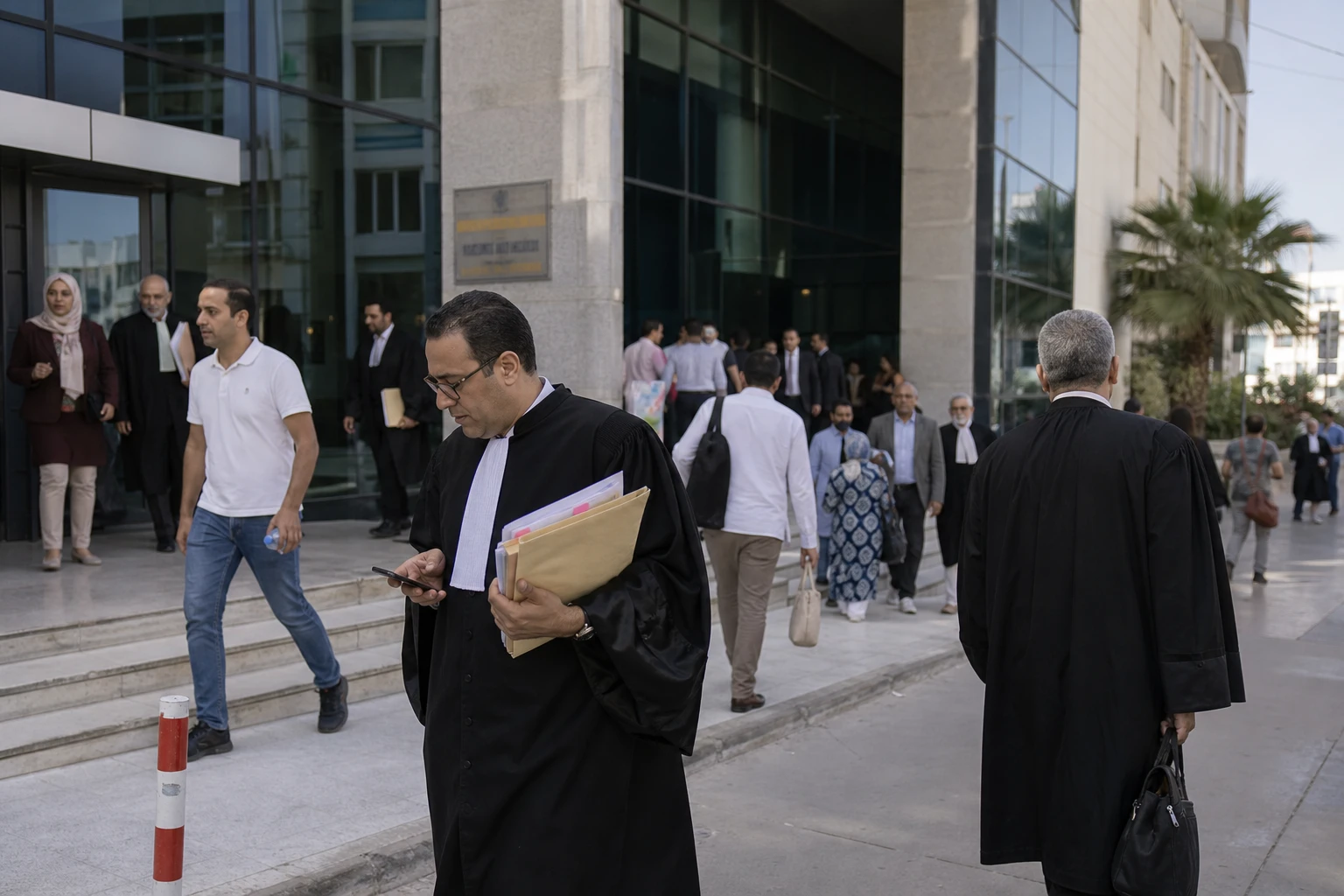
In Tunis, solidarity with Gaza is now facing a legal test
In the Tunisian capital, a rally in support of Gaza is no longer just a symbolic gesture. It has also become a political test for the authorities, the judiciary and a civil society that continues to regard the Palestinian cause as a shared point of reference. In Tunisia, the issue touches public sentiment, the freedom to demonstrate and the way the state deals with activist movements.
This latest episode is part of a sequence that began in March 2026, when several people linked to the Tunisian coordination of the Global Sumud Flotilla were arrested in Tunis in a financial case. Since then, four activists have remained in pre-trial detention, and their case has been closely followed by lawyers, associations and support committees. On 19 September 2026, a Tunisian judge extended their detention by four months, according to Tunisian public media.
What is known about Saturday’s arrests
On Saturday 20 September, several hundred people demonstrated in central Tunis, calling for the release of the four activists. At least 11 people were arrested after the rally, according to lawyer Ghassen Besbes, who represents several of them. Activists put the number of arrests at 13. The discrepancy shows that, when the first reports emerged, the exact figure was still changing.
Another lawyer, Fedy Snene, said a judge had extended their police custody by 48 hours. Those detained were reportedly questioned, among other things, about the slogans chanted during the protest. At that stage, the Tunisian authorities had not publicly confirmed the arrests.
The demonstrators were calling for the release of four pro-Palestinian activists held since March. They are the subject of an investigation into suspected money laundering and the misappropriation of funds collected for the Global Sumud Flotilla, a maritime initiative presented as non-violent and intended to deliver aid to Gaza. The Tunisian judiciary opened the case at the economic and financial judicial centre, a court specialising in financial cases.
According to information made public by the media and organisers, the case is not limited to the question of donations. It has become entangled in an already sensitive context, marked by tensions around the flotilla, allegations of drone attacks on boats moored at Sidi Bou Saïd in September 2025, and the subsequent interception of the vessels by Israel before they reached Gaza.
A case that goes beyond the flotilla
In Tunisia, the Palestinian cause holds a distinctive place in public life. It cuts across party divisions and mobilises trade unions, associations, lawyers and ordinary citizens. This also explains the significance of this sequence of events. In Tunis, support for Gaza is not merely a foreign policy issue. It has become a marker of the balance between political expression, security controls and the judicial response.
The authorities, for their part, are treating the case as a criminal and financial matter. They cite suspicions of fraud, forgery and money laundering. This legal framing puts the activists in a difficult position, as it turns a solidarity campaign into an ordinary criminal case. The detainees’ supporters, by contrast, see the proceedings as a way of criminalising political commitment. The sources consulted therefore show two opposing interpretations of the same case.
The health of some detainees adds a human dimension to the case. Activists say Wael Nouar has been on hunger strike for more than a month and that his condition is critical. This information has been reported by several international media outlets and by supporters of the collective. It remains, however, attributed to the supporters in the absence of any publicly released official medical assessment.
Domestically, the case comes at a time when the Tunisian authorities have stepped up their security and judicial presence in several sensitive cases. In March 2026, public media had already reported arrests linked to the flotilla’s financial affairs. More broadly, Tunisian institutions regularly present the fight against financial offences and security threats as a state priority.
A signal being watched beyond Tunisia
This sequence of events is also of interest to North Africa and, more broadly, the Arab and Mediterranean regions. Tunisia remains one of the places where pro-Palestinian protests are most visible in public life. What is happening there is therefore being watched well beyond Tunis, particularly by activist networks, rights organisations and civil society groups in the Maghreb. The Arab Maghreb Union, long paralysed politically, does not currently provide a strong regional framework for managing this kind of tension.
At the continental level, the case also highlights a broader reality: mobilisations around Gaza are now moving between African ports, capitals and activist networks. The Tunisian episode, following those of 2025 and spring 2026, shows how a solidarity initiative can quickly become an issue of sovereignty, security and civil liberties. In the coming days, attention will focus on developments in police custody, any possible charges and the detainees’ medical condition. That is where the case’s next chapter will be decided, far more than in the story of a demonstration being dispersed alone.