
 Algeria
 Egypt
 Libya
 Morocco
 Sudan
 Tunisia
 Benin
 Burkina Faso
 Cabo Verde
 Côte d'Ivoire
 Ghana
 Guinea
 Guinea-Bissau
 Liberia
 Mali
 Mauritania
 Niger
 Nigeria
 Senegal
 Sierra Leone
 The Gambia
 Togo
 Cameroon
 Central African Republic
 Chad
 Equatorial Guinea
 Gabon
 Republic of the Congo
 São Tomé and Príncipe
 Burundi
 Comoros
 Djibouti
 Eritrea
 Ethiopia
 Kenya
 Madagascar
 Malawi
 Mauritius
 Mozambique
 Rwanda
 Seychelles
 Somalia
 South Sudan
 Tanzania
 Uganda
 Angola
 Botswana
 Eswatini
 Lesotho
 Namibia
 South Africa
 Zambia
 Zimbabwe
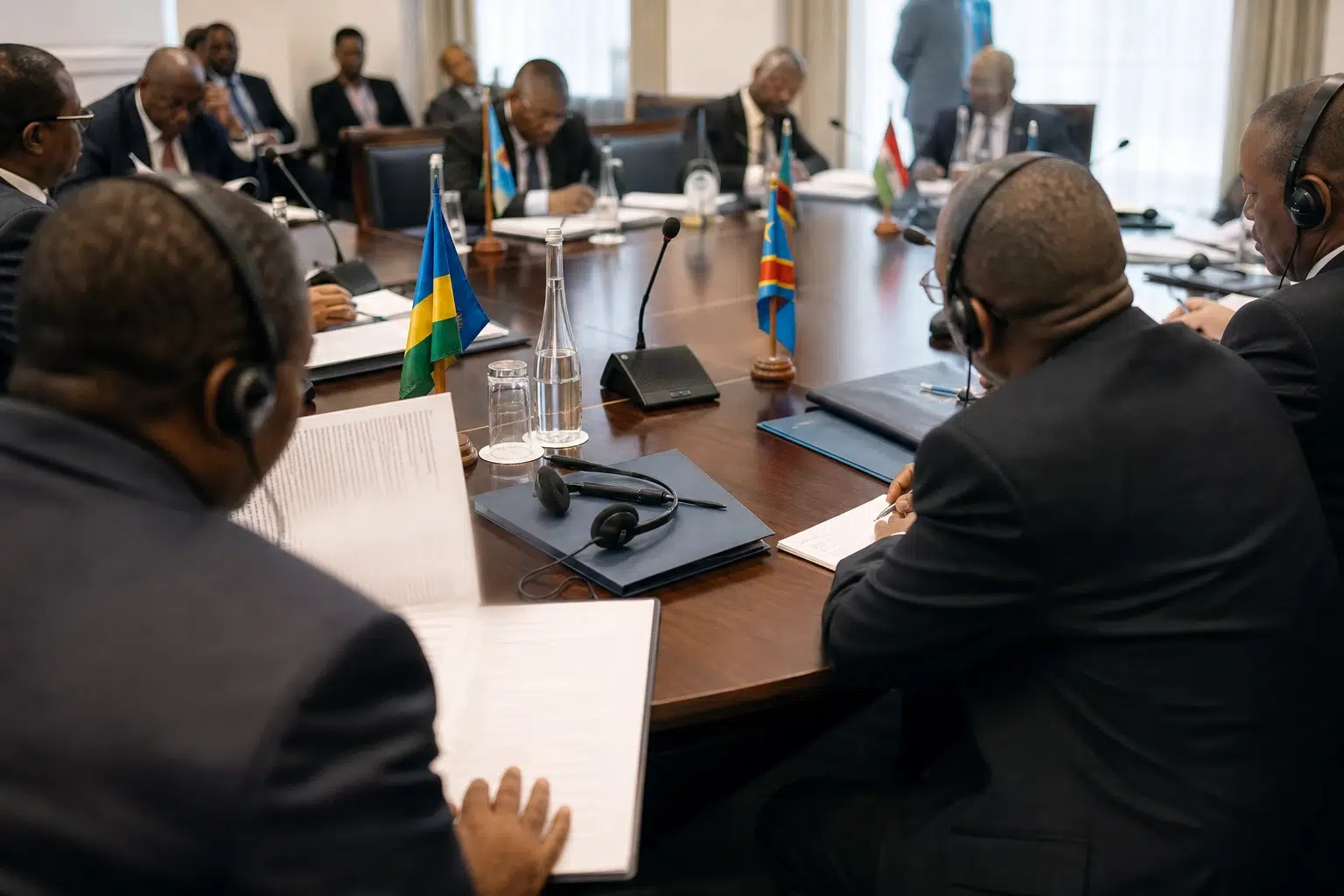
In eastern Congo’s mines, the war takes a new turn
In the east of the Democratic Republic of the Congo, mines are not merely places of extraction. They have become spaces of control, profit and fear. At Rubaya, in North Kivu, and Lomera, in South Kivu, the issue is no longer just strategic minerals. It is also about children caught up in an armed economy beyond their control.
The issue goes to the heart of a conflict that has become structural. Since the AFC/M23 seized several localities, the movement of people, goods and minerals has become even more complicated in a region already weakened by the presence of multiple armed groups. The DRC belongs to several regional security and integration frameworks, including the East African Community and SADC, which are closely monitoring the crisis in eastern Congo. But on the ground, protection mechanisms remain weak, especially in remote mining areas.
A report made public on 21 September 2026 by Amnesty International accuses the AFC/M23 of serious abuses at artisanal mining sites controlled by the group. The NGO says it draws on 26 interviews, photographs and videos. It describes summary executions, torture, forced labour and forced recruitment targeting artisanal miners, in an environment where mining is already marked by informality and social vulnerability.
According to the investigation, at least 18 artisanal miners were allegedly executed at two sites, in Rubaya and Lomera. The report attributes ten of these deaths to fatal beatings, two to gunfire and six to deaths following abduction. Amnesty International also cites sixteen miners and local residents who were mistreated or tortured. In Rubaya, more than 20 workers were allegedly held in an underground cell and beaten several times a day.
The document also says that some miners were forced to remain underground for more than a week. Others allegedly received direct threats: pay to get out, or be sent to M23 military training centres. In a region where artisanal mining provides a livelihood for thousands of families, this kind of practice further blurs the line between extraction, survival and coercion.
The report does not stop at violence against people. It says that gold and coltan were allegedly transported illegally to Rwanda. Bags of gold-bearing earth were reportedly taken by boat from Lomera to Kamembe, in western Rwanda. This is a sensitive issue, as coltan from Rubaya has long been the subject of allegations of cross-border smuggling. United Nations Group of Experts reports have already described a system of taxation, parallel exports and a de facto monopoly exercised by the AFC/M23 over this mining supply chain.
This is therefore not an isolated incident. It extends a reality already documented by several international and UN investigations: in eastern DRC, territorial control and control of minerals often go hand in hand. This fuels a war economy that finances weapons, sustains command networks and limits the Congolese authorities’ room for manoeuvre. For Kinshasa, the problem is twofold. It is a security issue, because it consolidates armed positions. It is also a budgetary issue, because it deprives the state of revenue from a key sector.
Rubaya, Lomera and the battle over the mineral supply chain
On the ground, the first to lose out are families, then artisanal miners, and finally neighbouring communities. When a mine is militarised, revenue shifts to the armed force controlling access, not to the workers. Residents then pay several times over: through insecurity, falling legal incomes and forced displacement linked to fighting.
The political significance is just as clear. Amnesty’s allegations come as the crisis in eastern Congo remains at the centre of African and international diplomatic efforts. SADC reaffirmed its support for peace initiatives around the DRC in 2026. The East African Community also remains engaged on the issue. But fragile ceasefires and successive agreements have yet to bring lasting stability to strategic mining routes.
The report also places Rwanda at the heart of the regional debate, not merely as a neighbour, but as an actor whose role is regularly highlighted in the movement of minerals from areas under armed control. This interpretation is not new. It has already been put forward by several UN sources and investigative media outlets, which have described coltan and gold supply routes crossing the eastern border. The issue in this case is therefore not limited to human rights. It also concerns international supply chains, where coltan is used in electronic components and many digital devices.
For the DRC, the stakes are all the greater because artisanal mining supports a large local economy that is often informal and family-based. As soon as an armed group takes control of a site, it changes the balance across an entire area: purchase prices, the flow of taxes, access to roads, the safety of miners and even the ability to keep working. Cities such as Bukavu and Goma also feel these effects downstream, through rising tensions, the closure of trade corridors and pressure on displaced people.
This case is also a reminder of a constant in the Great Lakes crisis: minerals are not merely geological wealth. They are a political lever. As long as strategic sites remain under the control of armed actors, the mining issue will remain inseparable from peace. And as long as children, artisanal miners and local residents are exposed to coercion, territorial security will remain incomplete. This is where the credibility of future peace processes is at stake, for Kinshasa and the region as a whole.



